
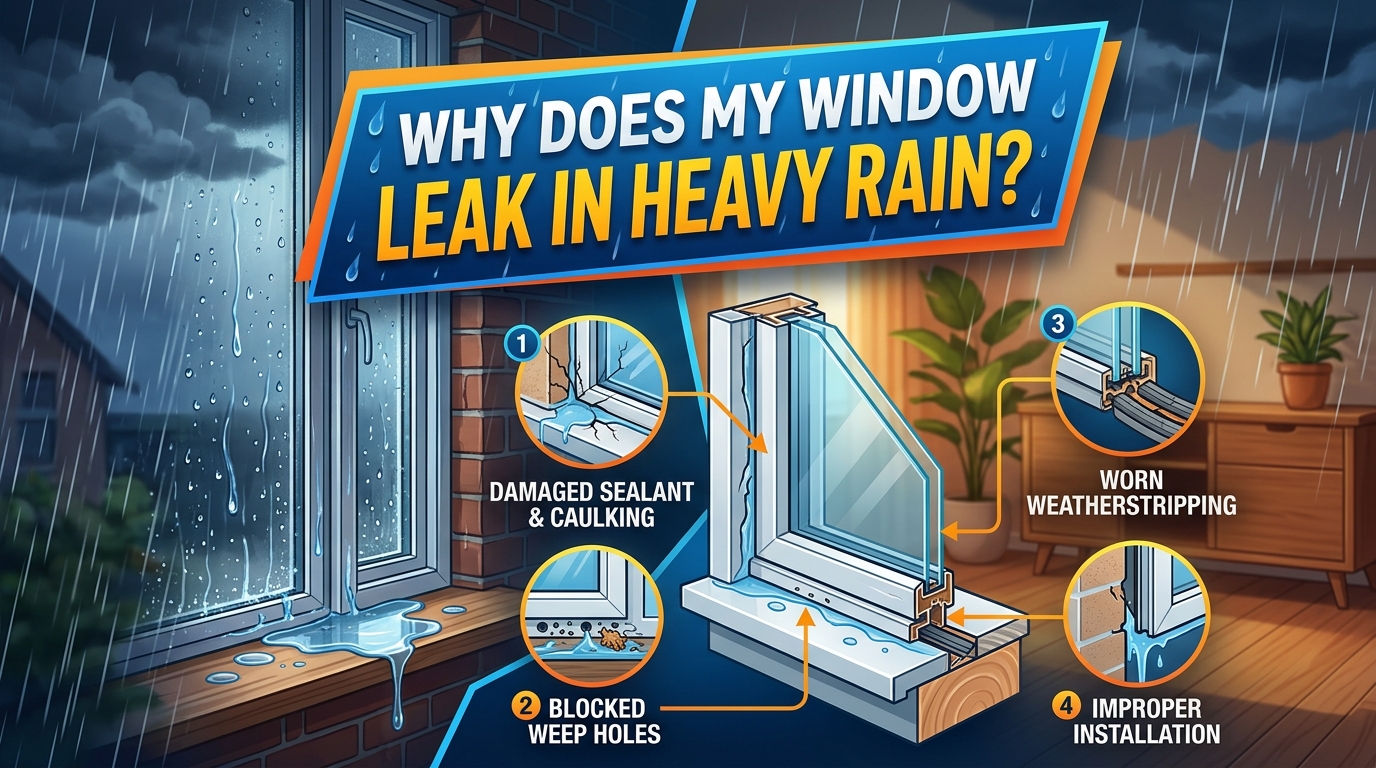
Why Does My Window Leak in Heavy Rain?
Leaking windows during heavy rain usually point to failed exterior sealant, blocked drainage openings, worn weatherstripping, or problems with flashing and installation. Sometimes, water enters through the wall or roof above the window and travels downward before appearing indoors.
For property owners throughout Greater Portland, the important question is where the water enters—not just where it becomes visible. Finding that entry point helps determine whether you need routine maintenance, window repair, glass replacement, or work on the surrounding exterior.
Why Do Windows Leak During Rain?
Heavy rainfall puts more water against windows and exterior walls, while wind can drive it toward vulnerable joints. A small opening that stays dry during light rain may allow water inside during a stronger storm.
Windows also depend on several components working together: the glass, frame, seals, drainage passages, and flashing around the opening. A problem with any of these can contribute to window water intrusion. A window leaking during rain therefore needs an assessment of both the unit and its connection to the building.
Six Common Causes of Leaking Windows
1. Cracked or Separated Exterior Sealant
Exterior sealant helps close designated joints between the window frame and surrounding materials. Over time, it can crack, shrink, or pull away, leaving an entry point for rain.
Look for visible gaps around accessible exterior trim and frame connections. However, not every opening should be sealed: some gaps are intentional drainage outlets. Pella recommends inspecting perimeter sealant at least annually and maintaining it as needed.
2. Blocked Weep Holes or Drainage Channels
Many windows have small drainage openings called weep holes. These let water collected within designated frame channels escape outdoors.
Dirt, debris, paint, or misplaced caulk can interfere with drainage. Andersen explains that temporary water collection in a designed sill channel can occur during heavy rain, but persistent pooling warrants checking the drainage openings. Water overflowing onto interior finishes should be investigated.
3. Missing or Incorrectly Installed Flashing
Flashing directs water away from the window opening and connects it to the wall’s water-management layers. Much of it sits behind exterior finishes.
Missing flashing or incorrect connections can let water reach concealed framing. The Department of Energy’s Building America Solution Center identifies missing window flashing as a potential cause of water infiltration and hidden damage. Adding caulk to visible trim may leave that underlying defect unresolved.
4. Worn Weatherstripping or Poor Sash Closure
Weatherstripping seals the joint between the movable sash and the frame. If it becomes damaged, displaced, or compressed, the window may no longer close tightly.
Check whether the sash closes fully and locks normally without force. Damaged hardware or misalignment can prevent proper contact with the weatherstripping, reducing resistance to wind-driven rain.
5. Installation or Frame Problems
A poorly supported or misaligned window can develop operational and drainage problems. Damaged frame joints may also need closer inspection.
Pella notes that inadequate support can allow a window to sag, affecting alignment and water management. If leakage began after installation, contact the installer and document when and where it occurs before making alterations.
6. Water Entering Above the Window
The window may be where water exits an already-wet wall. Missing roof-to-wall flashing or other exterior defects can admit water above the opening, allowing it to travel behind finishes.
Staining above the window is a reason to widen the inspection. Building America guidance notes that missing roof and wall flashing can lead to concealed water damage.
Is It Rainwater, Condensation, or a Failed Glass Seal?
Before choosing a repair, distinguish among three different moisture problems:
|
What you notice |
What it may indicate |
|
Water appears at trim or frame joints during storms |
Rain intrusion through the window or surrounding exterior |
|
Droplets form on the room-facing glass, including in dry weather |
Interior condensation |
|
Persistent fog or moisture sits between double-pane glass |
A possible insulating-glass seal failure |
Pella distinguishes surface condensation from moisture between panes, which can develop when the insulating-glass seal fails. Between-pane fogging alone does not establish why rainwater is entering the room.
If you see water leaking through window edges, note whether it starts at the glass-to-frame joint, the opening sash, or the surrounding trim. That distinction can help a professional narrow the investigation.
What to Do When Rainwater Comes Through a Window
1. Protect the Area Safely
Move furniture, curtains, electronics, and valuables away from the wet area. Use towels or a container to collect accessible drips without blocking the window’s drainage system.
Keep clear of wet electrical outlets, fixtures, or equipment. Seek urgent professional assistance if water reaches electrical components, glass becomes loose, or nearby finishes begin bulging.
2. Record the Leak Before Wiping It Away
Photograph the first visible wet spot and any spreading stains. Record:
- Whether leakage starts immediately or after prolonged rainfall.
- Whether wind drives rain directly against that wall.
- Whether one window or several are affected.
- Any recent window, siding, or roof work.
These observations help answer “Why is my window leaking?” without assuming the wettest area is the original entry point.
3. Dry Accessible Surfaces Promptly
Remove standing water and begin drying affected areas when safe. The EPA recommends drying wet materials within 24–48 hours to help prevent mold growth; that guidance is not a guarantee that concealed areas are dry.
Persistent dampness, soft trim, spreading stains, or musty odors warrant further assessment.
4. Avoid Improvised Exterior Repairs
Do not climb outside during a storm, remove glass, or cover every frame opening with caulk. Avoid pressure-washing the window to recreate the leak.
Wait for safe conditions and follow the manufacturer’s maintenance instructions for accessible cleaning. Leave glass removal, elevated work, and concealed-wall investigation to qualified professionals.
How to Fix a Leaking Window
The appropriate repair follows the confirmed entry path. Treating every leak as a caulking problem can delay the work the property actually needs.
Restore Drainage or Replace Worn Components
If an inspection identifies obstructed drainage, damaged weatherstripping, or faulty operating hardware, targeted maintenance or component replacement may resolve the problem.
Use manufacturer-compatible parts and methods. Do not drill new drainage holes or alter the frame without approved instructions.
Renew Failed Sealant at the Correct Joints
When deteriorated perimeter sealant is the confirmed cause, a professional can prepare the joint and apply a compatible replacement under suitable conditions.
Applying sealant over loose material or across drainage outlets can undermine the repair. Product-specific instructions determine where sealant belongs.
Correct Flashing and Surrounding Exterior Defects
A flashing problem may require removing selected trim or exterior finishes to reach the affected connection. The repair should restore a drainage path that directs water outdoors.
Andersen’s installation guidance explains that flashing must integrate with the wall drainage plane and overlap to shed water outward. This work may require coordination between a window professional and an exterior contractor.
Replace Glass or the Window When Necessary
Glass replacement may be appropriate for damaged glass or a failed insulated unit when the surrounding assembly remains serviceable. It will not correct missing flashing or water entering through the wall.
Full window replacement may be appropriate when frame deterioration, significant damage, or persistent operational defects make repair impractical. Leaking windows do not automatically require replacement; the condition of the complete assembly should guide that decision.
What Affects Window Leak Repair Costs?
A useful estimate depends on the diagnosed cause and the extent of damage. Cleaning an accessible drainage channel involves a different scope from removing exterior finishes and repairing concealed framing.
Ask the estimate to clarify:
- Inspection and diagnostic work.
- Components or sealant to be replaced.
- Access equipment and removal of surrounding finishes.
- Repairs to any discovered moisture damage.
- How completion and water resistance will be checked.
Window size, construction, height, and access also matter. Commercial storefronts and custom glazing may require different repair methods from residential windows. An on-site assessment provides the basis for a project-specific estimate.
How to Reduce Future Window Leaks
Inspect accessible windows before the wetter season and after storms that reveal a problem. Look for deteriorated sealant, damaged weatherstripping, obstructed drainage outlets, and new staining.
Arrange appropriate gutter maintenance and investigate recurring runoff above windows. Follow the window manufacturer’s care instructions, and avoid painting or caulking over designated drainage openings.
For Portland-area rental and commercial properties, a simple maintenance record can help track recurring leaks across rooms or units. Repeated water leaking around window frame joints deserves investigation even when each incident seems minor.
Frequently Asked Questions
Why does my window leak only in heavy rain?
Heavier rainfall and wind can expose weaknesses in seals, drainage, flashing, or surrounding exterior joints.
Can I fix a leaking window with caulk?
Caulk may help when a failed sealant joint is the confirmed cause, but it cannot correct every drainage or flashing defect.
Why is water collecting in the bottom window track?
Some tracks collect water by design, but persistent pooling or indoor overflow may indicate a drainage problem.
Does water between double-pane glass mean rain is entering my house?
Between-pane moisture suggests a possible insulating-glass seal failure, not proof of rain entering the room.
Can a new window leak?
Yes, installation defects, damaged components, or surrounding wall problems can affect a newly installed window.
Should I replace the glass or the whole window?
The decision depends on whether the defect affects the glass alone, the frame, or the window’s installation.
Who should inspect a window leak?
A window professional can assess the unit, while roof or wall defects may require an appropriate exterior specialist.
Can a small window leak damage the wall?
Repeated moisture intrusion can damage concealed materials even when the visible drip appears minor.
Conclusion
A window that leaks in heavy rain needs a clear diagnosis before repair. Drainage blockages, worn seals, installation defects, and water entering above the opening can produce similar indoor symptoms. Protect the affected area, document the leak, and have persistent water intrusion assessed before damage spreads.
Property owners in Portland, Oregon, and the Greater Portland area who need professional residential, commercial, or custom glass repair, replacement, or installation services can contact The Glass People for expert guidance and a project estimate. Describe the leak’s location and timing to help start the conversation about an appropriate assessment.
General Information Disclaimer
This article is provided for general informational purposes only. Glass requirements, product suitability, project costs, installation methods, and applicable building or safety codes may vary by property and location.
References Used
- Andersen Windows & Doors: Important Product, Care and Maintenance Information; Resource Guide for Andersen Windows and Doors.
- Pella: Owner’s Manual—Maintenance; Windows & Doors for All Weather; The Cost of a Bad Installation; Customer Support Center—Why Are My Windows Foggy?
- Building America Solution Center: Look for Missing Window and Door Flashing; Look for Missing Roof and Wall Flashing.
- US Environmental Protection Agency: A Brief Guide to Mold, Moisture and Your Home.