What Causes a Window to Crack Without Being Hit?
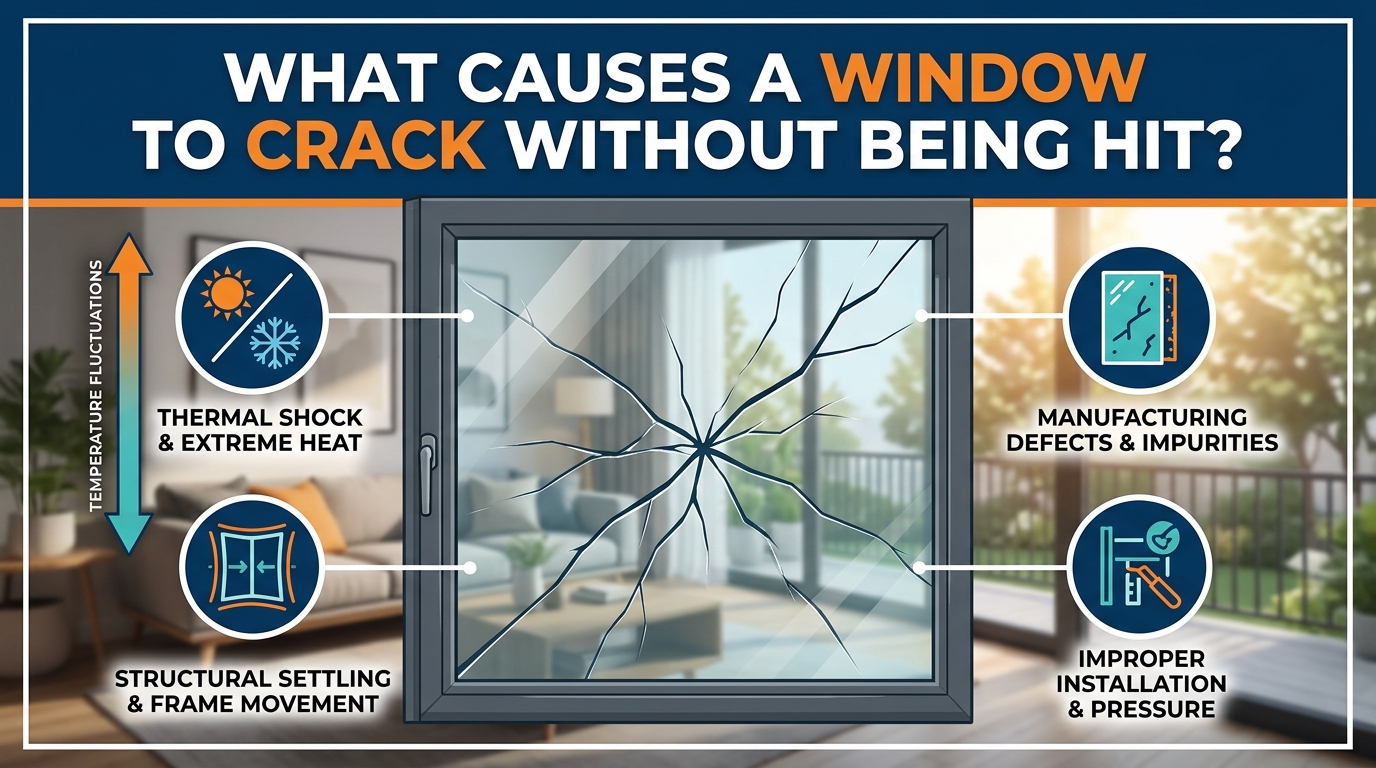
If your window cracked by itself, uneven heating, hidden edge damage, pressure, or stress from the frame may explain what happened. Tempered glass can also break because of a rare internal defect. Although the damage seems sudden, the conditions behind it may have developed long before the crack appeared.
For Portland homeowners and business owners, the priority is to protect people nearby and identify the underlying problem before replacing the glass. A new pane may face the same stresses if an installation or framing issue remains unresolved.
Window Cracked by Itself? Here Are the Main Causes
Glass can withstand normal service conditions, but it has limits. Temperature differences and mechanical loads can create stresses that exceed its strength, particularly when damage has already weakened an edge.
1. Uneven Heating and Cooling
A window thermal crack develops when different areas of the pane expand or contract unevenly. For example, sunlight may warm the exposed center while the edges remain cooler inside the frame. The resulting tension can cause a thermal stress fracture.
Conditions that influence this risk include:
- Partial shade from overhangs, nearby buildings, or landscaping.
- Blinds or drapes that trap heat near the glass.
- Heating registers directing warm air toward one area.
- Glass coatings and tints that affect solar heat absorption.
The important factor is the temperature difference within the glass, rather than outdoor temperature alone. A sunny period on a cool day can create uneven heating without extreme weather. Vitro identifies shading, heating arrangements, coatings, and framing as factors in thermal stress breakage.
2. Hidden Edge Damage
Small chips or flaws along a glass edge can reduce its strength. Damage may occur during fabrication, transport, handling, or installation and remain concealed beneath the frame.
The pane may stay intact initially, then crack when later stresses exceed the weakened edge’s capacity. That delayed failure can make it appear that the window cracked by itself.
Pilkington’s technical guidance explains that edge quality affects resistance to thermal stress. This is why replacing the visible glass without evaluating its support and surrounding frame can leave an important cause unaddressed.
3. Installation Problems or Frame Movement
Glass needs appropriate support and clearance within its framing system. Poor glazing details or movement in the frame can concentrate stress on the pane.
A window stress crack may relate to a distorted opening, inadequate clearance, or contact between the glass and surrounding components. Building movement can also contribute, but one cracked pane does not establish that a property has a foundation problem.
Vitro lists handling damage, building or framing movement, and engineering problems among explanations for glass breaking without an obvious impact.
4. Pressure and Mechanical Loading
Wind places loads on window glass even when no debris strikes it. Insulated glass units also respond to pressure differences between their sealed cavities and the surrounding atmosphere.
A suspected window pressure crack requires an assessment of pane dimensions, glass thickness, support, and service conditions. Manufacturing and installation elevations can matter because atmospheric pressure changes with altitude.
Pressure should not become the automatic explanation simply because the weather changed. Pilkington’s glazing guidance addresses pressure-related considerations for insulating glass, while its specification guidance calls for project-specific load information when selecting glass.
5. Internal Defects in Tempered Glass
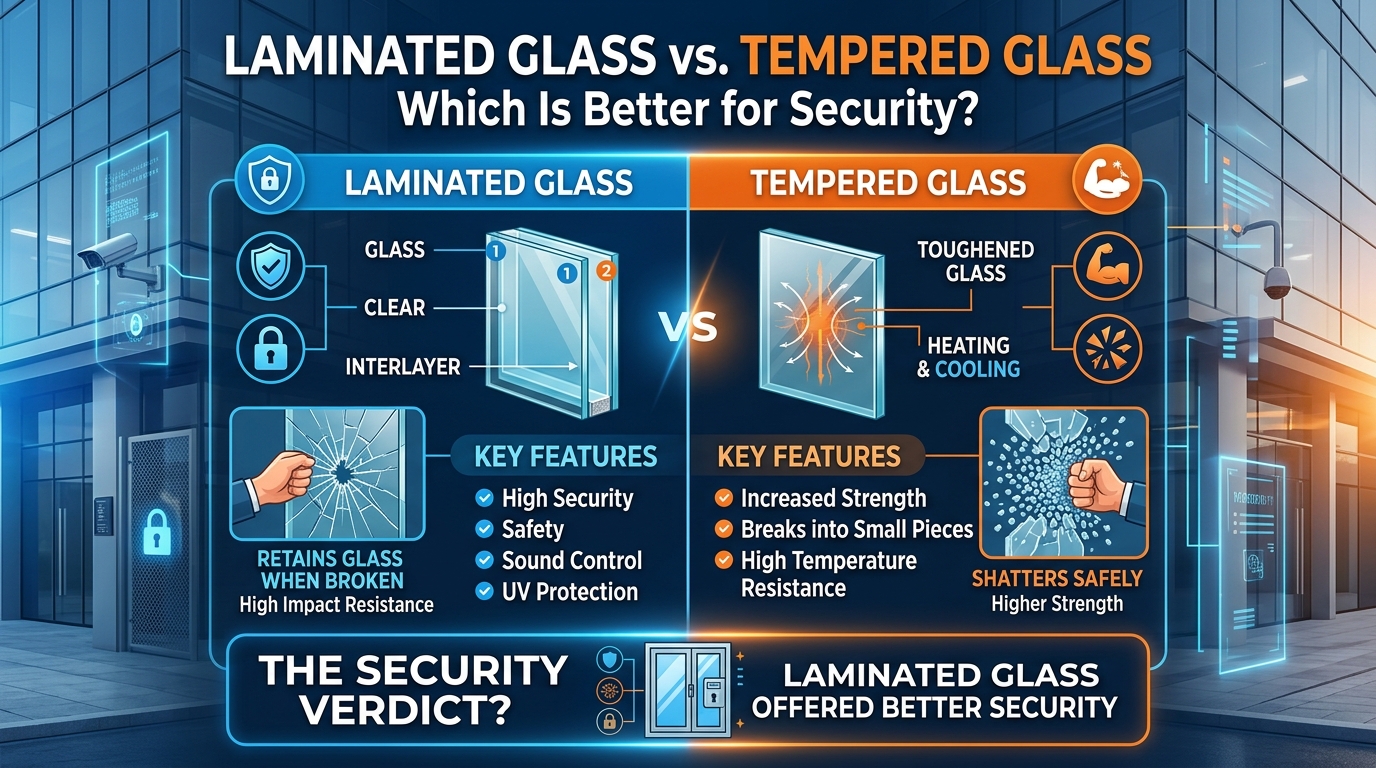
Spontaneous glass breakage sometimes involves a microscopic nickel sulfide inclusion inside tempered glass. Changes in that inclusion can create internal stress and cause the pane to shatter after installation.
This is a rare explanation and should not be assumed whenever glass breaks unexpectedly. Tempered glass breakage can also result from edge damage or installation stresses.
Tempered glass typically fragments into small pieces rather than retaining a single long crack. However, its breakage pattern alone does not prove that an inclusion caused the failure. Specialist examination may be necessary.
What Can the Crack Pattern Tell You?
The pattern can provide clues, but it cannot reliably establish the cause on its own.
A thermal crack often begins at an edge and initially travels approximately perpendicular to it. Unfortunately, the starting point may sit behind the frame, making it difficult to evaluate from a photograph. Vitro describes this edge-origin pattern in its thermal stress guidance.
A visible impact mark may support an impact explanation, while widespread fragmentation may indicate tempered glass. Neither observation replaces inspection. Earlier damage, overlapping stresses, and missing fragments can complicate the investigation.
When asking, “Why did my window crack?” provide the glass company with observations rather than a firm diagnosis. Useful details include when you noticed it, whether the crack grew, and whether nearby work or window alterations occurred recently.
What to Do When You Discover Cracked Window Glass
Treat the pane as damaged even if it remains in place. There is no dependable way to judge its remaining strength by looking at the crack.
- Keep people away. Restrict access around the window, including the exterior area if glass could fall.
- Avoid operating the affected window. Do not press against the pane or test its stability.
- Document it from a safe distance. Photograph the full window and visible damage without touching the glass.
- Arrange professional assessment. Explain whether there are loose fragments, an exposed opening, or glass above a doorway or walkway.
Do not attempt to remove shards, apply pressure to the crack, or handle a large damaged pane. Ask the glass professional whether temporary protection is needed before replacement.
For rental properties and commercial premises, notify the responsible property manager so access control and repair arrangements can begin promptly.
Can a Cracked Window Be Repaired?
For a through-crack in architectural window glass, replacement is generally the appropriate solution. Surface patching does not return the pane to its original condition.
The key question is how much of the window needs replacement.
Glass Replacement or Insulated Unit Replacement
If the frame and sash remain serviceable, replacing the glass may be possible without removing the entire window. Manufacturer service documentation confirms that glass replacement is an option for certain window models; suitability depends on the particular assembly.
For double-pane windows, professionals generally replace the sealed insulated glass unit when one pane cracks. The surrounding sash or frame may remain if its condition and design allow it.
Replacing glass also creates an opportunity to discuss insulation, appearance, and suitable glass construction. Any change should match the window system and the project’s requirements.
Sash or Full Window Replacement
More extensive replacement may be appropriate when the sash or frame is damaged, distorted, deteriorated, or incompatible with a practical glass replacement.
Ask the assessor to explain:
- What likely caused the failure.
- Which existing components can remain.
- Whether frame or installation corrections are needed.
- What replacement assembly suits the opening.
If your window cracked by itself, resolving the cause matters as much as ordering the replacement.
What Affects the Replacement Cost?
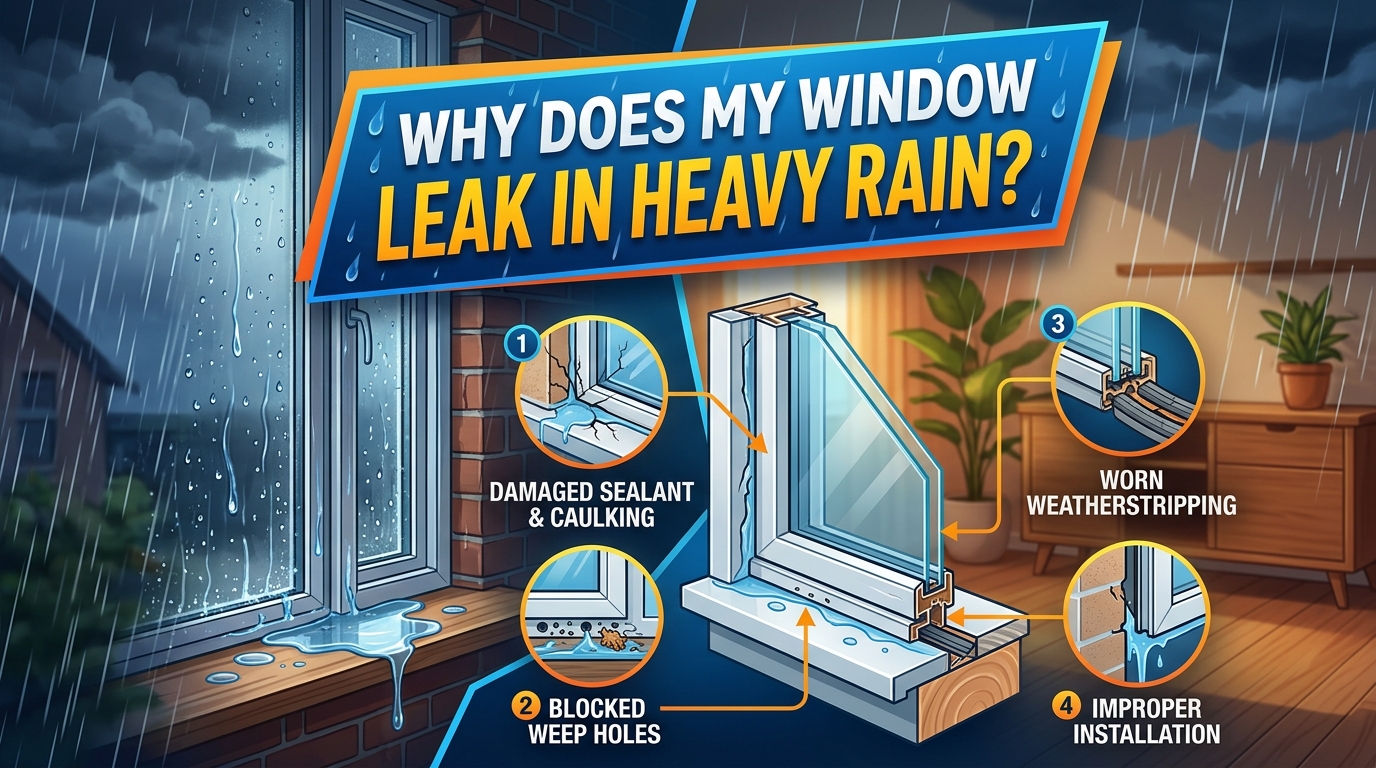
An accurate estimate requires details about the opening and the required work. Pricing can vary with glass size, thickness, construction, coatings, shape, access, and frame condition.
A small accessible residential pane presents different requirements from an elevated commercial panel or custom glass assembly. Temporary protection, equipment, and additional frame repairs may also affect the scope.
Request an itemized estimate that identifies the replacement product, installation work, removal and disposal, and any necessary corrections. Photographs can support an initial discussion, but final specifications may require an on-site assessment.
How to Reduce the Risk of Another Crack
Prevention starts with the findings from the failed window. Ask the installer to evaluate edge protection, glass support, clearances, and the framing condition before fitting a replacement.
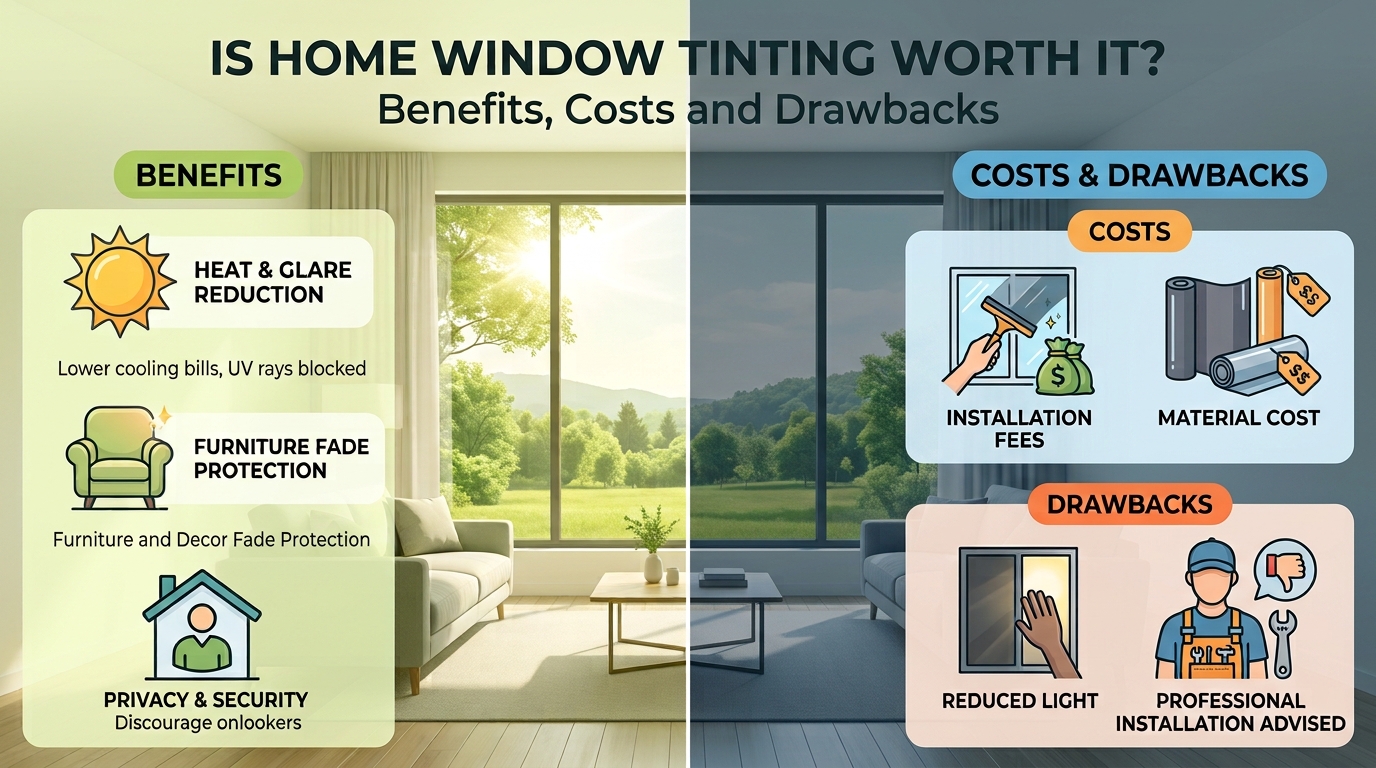
Review proposed window films with the window or glass manufacturer. Film compatibility is product-specific; Andersen, for example, advises against applying reflective or decorative films to its windows and patio doors.
For glass exposed to demanding thermal conditions, a professional may recommend a thermal stress assessment to guide product selection. Pilkington provides tools for evaluating whether particular glass combinations and glazing conditions may require heat treatment.
For Greater Portland properties, describe the individual opening’s sunlight exposure, nearby heat sources, and any recurring frame problems. Those details are more useful than assuming all windows in the area need the same solution.
Frequently Asked Questions
What causes windows to crack without impact?
Uneven heating, weakened edges, installation stress, frame movement, pressure loads, and rare internal defects can cause cracking without a direct hit.
Can cold weather crack a window?
Cold conditions can contribute to temperature differences within the pane, especially when sunlight or indoor heating warms part of the glass.
Why did only the inside pane crack?
The inner pane experiences different temperatures and stresses from the outer pane, so one can fail while the other remains intact.
Does a cracked window mean the house is settling?
No; building movement is one possibility, but thermal stress, edge damage, and installation issues also require consideration.
Will a small window crack spread?
It can spread, and its current size does not reliably predict whether the pane will remain stable.
Can I replace the glass without replacing the frame?
Often yes, provided the frame and sash are sound and the window design permits glass or insulated unit replacement.
Is spontaneous glass breakage always a manufacturing defect?
No; damage, framing movement, and installation stresses can also explain apparently spontaneous failure.
Does tempered glass still need assessment after breaking?
Yes; the cause and replacement requirements should be evaluated even when the fragmented appearance identifies the glass type.
Conclusion
A window that cracks without being hit usually has an underlying stress or weakness that deserves investigation. The visible damage may reveal clues, but professional assessment helps determine whether the problem involves temperature, glass condition, pressure, or framing.
Protect the area, document the damage safely, and arrange an assessment before choosing a replacement. Addressing the cause helps reduce the chance of a repeat failure.
For property owners in Portland, Oregon, The Glass People is a local option for professional residential, commercial, or custom glass repair, replacement, and installation services. Contact the team for expert guidance and a project estimate based on your property’s needs.
General Information Disclaimer
This article is provided for general informational purposes only. Glass requirements, product suitability, project costs, installation methods, and applicable building or safety codes may vary by property and location.
References Used
- Vitro Architectural Glass: “Managing Thermal Stress Breakage”; “Nickel Sulfide and Spontaneous Breakage.”
- Pilkington: “Glass and Thermal Stress”; “Glazing and Handling Guidelines”; “Specification Checklist”; “When Tough Is Not Enough: Solving the Mystery”; “Pilkington Thermal Stress Calculator.”
- Andersen Windows & Doors: Glass replacement service guide for 400 Series casement/awning picture/transom windows; guidance on applying films to window and patio door glass.
- The Glass People: Residential, commercial, and custom glass services overview.