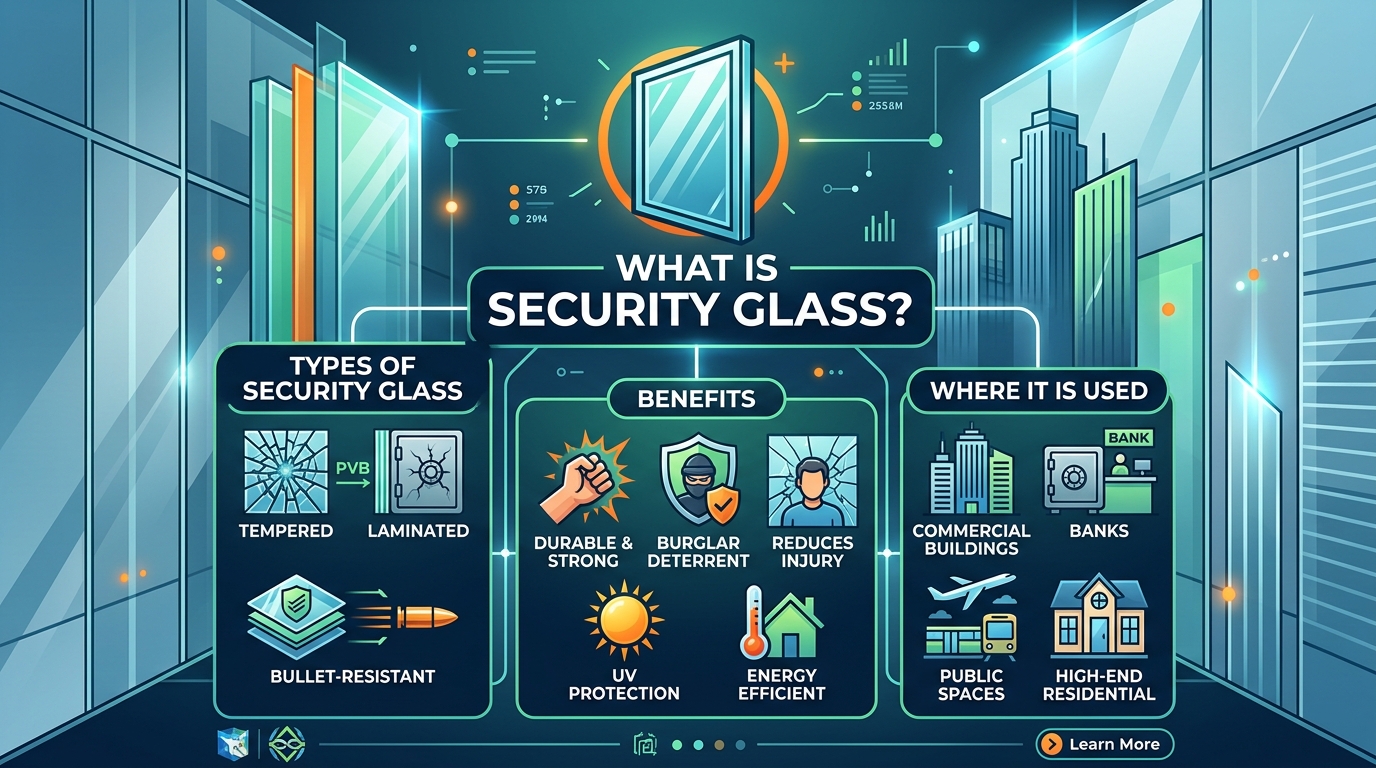
What Is Security Glass? Types, Benefits, and Where It Is Used
Glass brings natural light, visibility, and an open appearance to homes and commercial buildings, but standard glass may not provide enough protection in locations exposed to impact, vandalism, or forced entry. Security glass is designed to improve the performance of vulnerable windows, doors, storefronts, partitions, and other glazed openings.
If you are wondering what is security glass and whether your property needs it, the answer depends on the type of protection required. Some products focus on keeping broken fragments together, while others are engineered to resist repeated impact, delay forced entry, or address specific ballistic threats. Understanding the differences can help homeowners, business owners, property managers, contractors, and developers choose a more appropriate glazing solution.
What Is Security Glass and How Does It Work?
Security glass is a broad term for glazing designed to provide greater resistance to specific hazards than ordinary annealed glass. Depending on the product and system, it may help retain broken fragments, resist penetration, delay unauthorized entry, or protect an opening against certain types of impact.
Security glazing is not one universal type of glass. The National Glass Association recommends considering the building, potential threat, vulnerability, application, framing, and relevant performance requirements when selecting protective glazing. [1]
The entire glazing system matters as well. A strong glass panel installed in an unsuitable frame may not perform as intended. Frames, anchoring, hardware, sealants, glass thickness, and the surrounding construction all influence how a completed system responds to impact or attempted entry.
Security Glass vs. Safety Glass
Security glass and safety glass are related terms, but they do not mean exactly the same thing.
Safety glass is primarily intended to reduce the risk of serious injury when glass is broken. Federal safety glazing requirements under 16 CFR Part 1201 cover certain architectural applications, including doors, shower enclosures, and sliding glass doors. The regulation recognizes materials including tempered and laminated glass. [2]
Security glazing focuses more specifically on protection against an identified threat, such as forced entry, repeated physical attack, or ballistics.
A product can sometimes provide both safety and security characteristics, but property owners should not assume that every piece of safety glazing automatically provides meaningful forced-entry protection.
Types of Security Glass
Different types of security glass address different risks. Choosing the correct product starts with understanding what each option is designed to do.
1. Laminated Security Glass
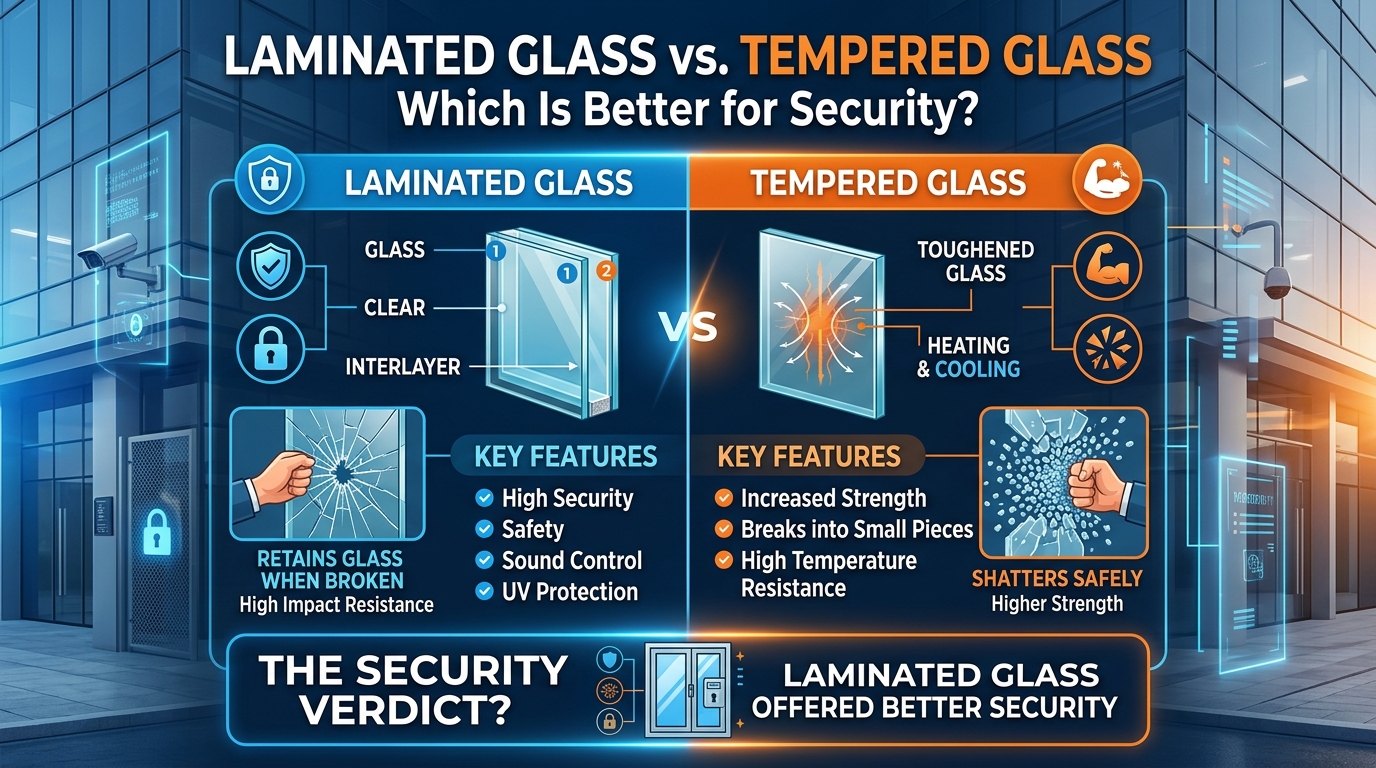
Laminated security glass consists of two or more layers of glass bonded with one or more resilient interlayers. The Consumer Product Safety Commission defines laminated glass as multiple pieces of glass bonded to intervening layers of resilient plastic material. [2]
When laminated glass breaks, the interlayer can help hold fragments together instead of allowing the opening to immediately fall apart. Depending on its construction, this characteristic can make laminated glazing useful for:
- Entry doors
- Ground-floor windows
- Storefronts
- Office glazing
- Interior security partitions
- Other locations where maintaining a barrier after breakage is important
The exact construction should be selected according to the intended application rather than assuming all laminated products offer the same level of protection.
2. Tempered Glass
Tempered glass is commonly used as safety glass. It is heat-treated so that, when broken, it typically fractures differently from ordinary annealed glass, helping reduce certain injury risks.
Tempered glass should not automatically be considered forced entry glass. Once shattered, a tempered panel may lose its ability to continue acting as a barrier. For security applications, tempered glass may instead be incorporated into laminated or other specialized glazing constructions where appropriate.
3. Impact Resistant Glass
Impact resistant glass is designed to perform better when exposed to physical impact than conventional glazing. Depending on the application, impact resistance may come from laminated construction, multiple layers, specialized interlayers, or a combination of materials.
It can be considered for exposed windows, doors, storefronts, and other areas where accidental or intentional impact is a concern.
The phrase “impact resistant” should not be treated as a universal performance rating. The specific product, test method, framing system, and intended threat need to be evaluated.
4. Forced-Entry-Resistant Glazing
Forced-entry-resistant glazing is intended to delay or resist penetration during a physical attack on a window or door system.
This type of shatter resistant glass or protective glazing may use laminated glass, multiple interlayers, glass-clad materials, polycarbonate components, or other engineered constructions. The National Glass Association notes that forced-entry performance should be considered in relation to specific threats and appropriate test methods rather than relying only on general product descriptions. [1]
Delaying entry can be especially important for commercial entrances, restricted areas, public facilities, and other locations where additional time and resistance may support a broader security plan.
5. Ballistic-Resistant Glazing
Ballistic-resistant glazing is a specialized category designed and tested against defined ballistic threats.
UL 752 is one standard used to evaluate bullet-resisting equipment. UL Solutions explains that ballistic protection depends on the material or assembly absorbing and managing the energy created by projectile impact. [3]
It is more accurate to describe these systems as bullet-resistant rather than simply “bulletproof,” because performance is associated with defined test conditions and threat levels.
Ballistic glazing may be considered for transaction areas, controlled-access environments, service counters, and other specialized applications after a professional risk assessment.
Key Benefits of Security Glass
Installing appropriate protective glazing can provide several practical advantages.
1. Better Fragment Retention
Laminated constructions can help keep fractured glass attached to the interlayer. This may reduce loose fragments and help the damaged opening remain more intact after breakage.
2. Increased Resistance to Penetration
Properly selected security glazing can make a window or door more difficult to penetrate than standard glass. Forced-entry systems are intended to delay penetration rather than make a building completely impenetrable.
3. Continued Visibility and Natural Light
Many security glass windows maintain the transparent appearance people expect from conventional glazing. Property owners can therefore strengthen selected openings without replacing them with opaque barriers.
4. Options for Different Threat Levels
A home entry door does not necessarily need the same glass system as a storefront, school entrance, or controlled transaction area. Security products can be selected around the actual use and risk of the opening.
5. Compatibility With Other Glass Features
Depending on the selected product and project design, protective glazing may also be combined with requirements involving privacy, insulation, solar control, appearance, or other building needs. Compatibility should be verified for the specific glazing system.
Where Is Security Glass Used?
Security glass can be useful anywhere an exposed glazed opening requires more protection than standard glass provides.
Residential Properties
Homeowners may consider protective glazing for:
- Front and side entry doors
- Ground-floor windows
- Patio doors
- Accessible basement windows
- Glass near vulnerable entrances
For an existing home, the frame should be inspected before upgrading to thicker or heavier glazing.
Retail Stores and Storefronts
Large storefront windows provide valuable product visibility but can also create exposed areas at street level. Laminated or other security glazing may help maintain a barrier after glass is struck or cracked.
Storefront projects require consideration of the complete framing and anchoring system, not just the replacement panel.
Offices and Commercial Buildings
Security glazing may be installed around reception areas, entrance doors, interior partitions, service counters, and restricted spaces.
Businesses should select glazing according to how each area is used and the type of protection required.
Schools and Public-Facing Buildings
Security glazing is also used in educational, medical, public, religious, and other facilities where delayed forced entry may form part of a broader security strategy. The National Glass Association specifically identifies these building categories in its security glazing guidance. [1]
Product selection for these facilities should be based on an appropriate threat and vulnerability assessment.
Controlled-Access and Transaction Areas
Locations requiring specialized protection may use forced-entry or ballistic-resistant glazing around payment windows, reception counters, secure workspaces, or other controlled areas.
How to Choose the Right Security Glass
There is no single product that is best for every property. Before choosing a glazing system, consider these major factors:
- Type of threat
Determine whether the concern is accidental impact, vandalism, burglary, forced entry, or a specialized threat. - Location of the opening
Street-facing storefront glass may require a different solution than an interior partition or residential door. - Existing frame condition
The frame must have suitable dimensions, strength, engagement, and compatibility for the proposed glazing. - Visibility and privacy
Consider whether the area requires clear visibility, obscured glass, privacy, or communication through the opening. - New installation or replacement
An existing frame may limit available glass thicknesses or constructions, while new construction can provide greater flexibility. - Tested performance requirements
For higher-security applications, discuss applicable testing standards and the required performance level with qualified professionals rather than relying on terms such as “unbreakable.”
The Glass People similarly notes that security glass installation should account for the opening, frame system, exposure, building use, anchoring, sealants, and surrounding hardware. [4]
When Should Security Glass Be Replaced?
Protective glass may still remain in its frame after an impact, but visible damage can mean the original system performance has been compromised.
A professional assessment is advisable when you notice:
- Deep or spreading cracks
- An exposed or damaged laminate interlayer
- Edge damage
- Delamination or separation between layers
- Loose glass or movement inside the frame
- Damaged seals, stops, or framing
- Previous impact or attempted forced entry
Do not attempt to cut, remove, lift, or replace damaged security glazing without appropriate equipment and expertise. Protective glass can be heavy, and fractured panels can present serious handling hazards.
Security Glass Installation in Portland
Properties throughout the Greater Portland area range from older homes and neighborhood storefronts to offices, apartments, commercial facilities, and newer developments. Because openings and framing systems vary considerably, security glazing should be evaluated for the individual property.
An assessment can determine whether an existing frame can accept laminated security glass or whether changes to the complete glazing system are necessary. Applicable building and safety requirements should also be confirmed for the specific project rather than assuming one glass type is appropriate for every Portland property.
Frequently Asked Questions
1. What is security glass?
Security glass is protective glazing designed to provide greater resistance to hazards such as impact, penetration, forced entry, or other specified threats.
2. Is security glass completely unbreakable?
No; protective glazing can resist or delay breakage and penetration, but no glass should be assumed to be completely indestructible.
3. What is the most common type of security glass?
Laminated glass is widely used in protective applications because its interlayer can help retain broken glass and maintain the opening.
4. Is laminated glass stronger than tempered glass?
They perform differently: laminated glass focuses on retaining fragments, while tempered glass is primarily designed for safer breakage characteristics.
5. Can security glass prevent a break-in?
Properly designed forced-entry glazing can delay penetration, but it should be considered part of a complete security system rather than a guarantee against entry.
6. Can security glass be installed in existing windows?
Sometimes, but the existing frame must be evaluated for size, condition, strength, and compatibility with the proposed glazing.
7. Where are security glass windows commonly used?
They are commonly considered for ground-floor windows, storefronts, entry areas, commercial buildings, and other exposed openings.
8. Is ballistic glass the same as regular security glass?
No; ballistic-resistant glazing is a specialized system tested against defined projectile threats.
9. When should damaged security glass be replaced?
Have it professionally assessed when you see cracks, delamination, edge damage, exposed interlayers, loose glazing, or damage to the supporting frame.
Conclusion
Security glass provides property owners with more protective options than standard glazing, but choosing the right system requires understanding the specific risk, opening, frame, and desired level of performance. Laminated, impact-resistant, forced-entry-resistant, and ballistic glazing all serve different purposes, so the best solution depends on where the glass will be installed and what it needs to resist.
Professional evaluation is especially important when upgrading existing windows or doors because the complete glazing system must work together. Selecting the appropriate glass and compatible framing can provide a practical balance of security, visibility, appearance, and everyday functionality.
Professional Glass Services in Portland, Oregon
For property owners who need professional residential, commercial, or custom glass repair, replacement, or installation services, The Glass People serves customers in Portland, Oregon, with guidance based on the individual opening and project requirements. Its security glazing services include laminated, impact-resistant, forced-entry, security window and door, and specialized glazing applications.
Contact The Glass People to discuss your property, explore appropriate glass options, and request a project estimate based on the actual conditions and requirements of your installation.
General Information Disclaimer
This article is provided for general informational purposes only. Glass requirements, product suitability, project costs, installation methods, and applicable building or safety codes may vary by property and location.
References Used
- National Glass Association — Security Glazing Glass Technical Paper and security glazing guidance covering threat assessment, forced-entry glazing, framing considerations, applications, and performance standards.
- U.S. Consumer Product Safety Commission — 16 CFR Part 1201, Safety Standard for Architectural Glazing Materials, including definitions and requirements relating to laminated and other safety glazing materials.
- UL Solutions — UL 752 guidance covering testing and terminology for bullet-resisting equipment and protective barriers.
- The Glass People — Security Glass Installation in Portland service information covering laminated safety glass, security windows and doors, impact-resistant glazing, forced-entry-resistant glazing, ballistic systems, replacement, and complete glazing-system considerations.