
How to Soundproof Windows and Reduce Outside Noise
Traffic, barking dogs, and nearby construction can make a comfortable room feel anything but peaceful. If you’re wondering how to soundproof windows, start by identifying where noise enters, correcting gaps, and choosing an upgrade that suits your existing windows and the sounds you hear.
For homes and businesses throughout Greater Portland, the goal is realistic noise reduction. Products marketed as soundproof windows can reduce outside sound, but they cannot guarantee complete silence. The glass, frame, seals, and installation all affect the result.
Why Outside Noise Gets Through Windows
Noise can travel through the glazing and through openings around the window. Worn weatherstripping, loose sashes, and gaps between the frame and wall can undermine otherwise suitable glass. Correcting these weaknesses matters before investing in a more expensive window.
Start with a simple observation: close and latch the window, then listen near its edges and across the room. Note whether the main disturbance is conversation, passing cars, or a low engine rumble. This will not replace acoustic testing, but it gives a professional useful information.
Learning how to block noise through windows also means checking nearby doors, vents, and other openings. Ask the assessor whether these pathways could limit the benefit of a window upgrade.
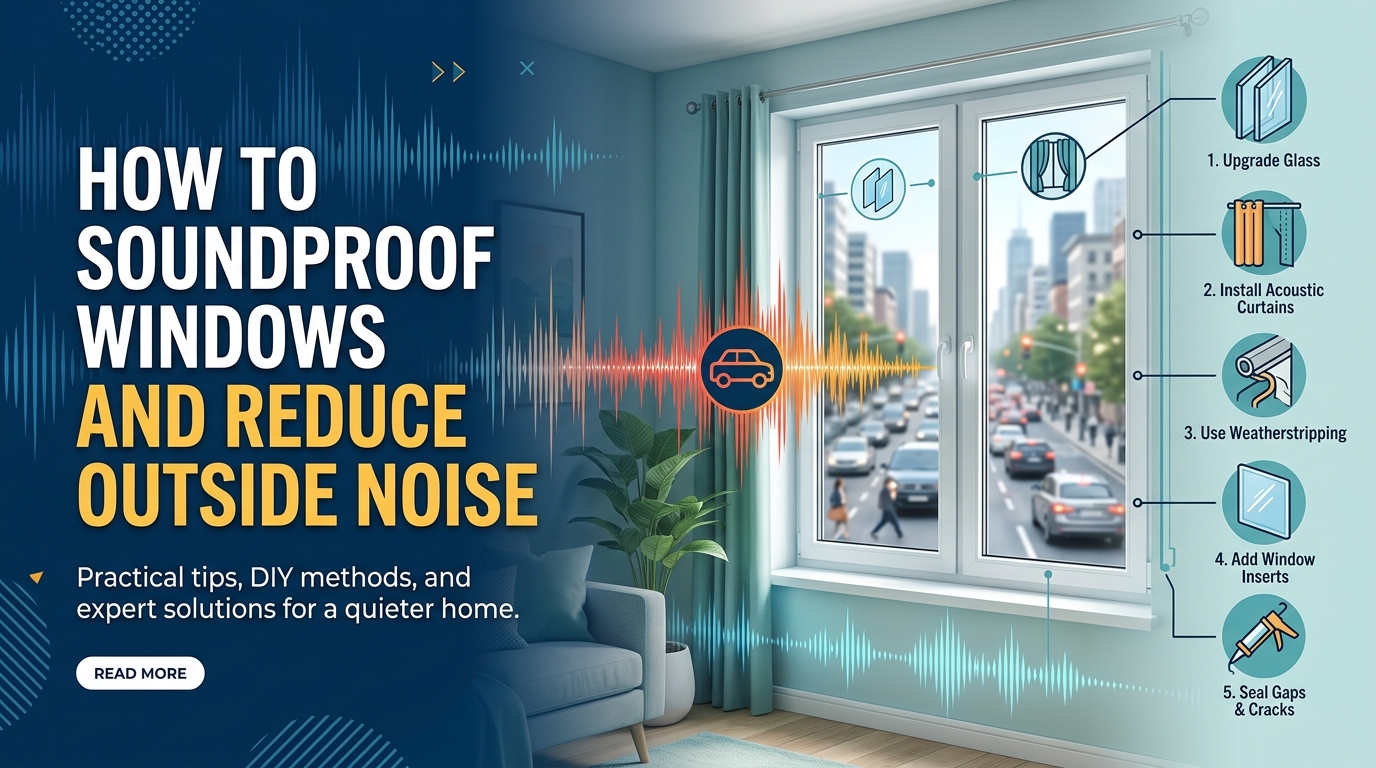
How to Soundproof Windows: Start With These Five Options
1. Repair Gaps and Worn Seals
When windows no longer close tightly, have the seals, sash alignment, and hardware checked.
Caulk generally seals joints between stationary components, while weatherstripping seals movable parts such as window sashes. The US Department of Energy distinguishes these applications in its air-sealing guidance.
Use materials compatible with the window and follow manufacturer instructions. Do not seal drainage openings, designed ventilation paths, or moving joints with caulk.
Sealing addresses leakage; it does not change the acoustic properties of the glass. If the window already closes tightly, ask whether glazing or another sound pathway is the main issue.
2. Consider Interior Window Inserts
Soundproof window inserts add a secondary panel inside an existing window opening. Depending on the product, the panel may be glass or acrylic, with a perimeter gasket or other sealing system.
Interior storm windows can improve sound control while retaining the original window. However, they do not repair deteriorated exterior frames or protect those frames from weather damage. Pacific Northwest National Laboratory recommends inspecting existing windows before choosing this approach.
Ask the supplier about:
- Acoustic test results for the proposed combination.
- Required spacing between the existing window and insert.
- Access for cleaning and opening the original window.
- Compatibility with blinds, handles, and emergency escape needs.
An insert deserves consideration when the existing window is sound and preserving its appearance matters.
3. Use Curtains as a Supporting Measure
Heavy curtains can supplement window soundproofing, particularly when you also want light control and privacy. Window manufacturer Pella includes heavier fabrics among its suggestions for reducing sound and light intrusion.
Treat curtains as an additional layer rather than a guaranteed solution for persistent traffic noise. Ask for relevant acoustic test data before paying a premium for a product labeled “soundproof.”
Keep curtains clear of heaters and avoid arrangements that obstruct window operation.
4. Ask About Acoustic Glass Replacement
If the frame and sash remain serviceable, ask whether they can accommodate an acoustically improved glass unit.
Acoustic laminated glass combines glass layers with a specially designed interlayer. Pilkington explains that different glass thicknesses and an acoustic interlayer can be combined to meet particular sound-reduction requirements.
A professional must check the proposed glass unit’s thickness, weight, and compatibility with the existing system. Replacing glass alone does not resolve a damaged frame or poorly fitted sash.
Leave glass removal and installation to qualified professionals, particularly for large, heavy, or damaged panes.
5. Replace Windows When the Existing System Is Failing
Full replacement may be appropriate when windows show substantial deterioration or damage. An interior insert cannot correct an underlying structural or water-intrusion problem.
For replacement projects, request noise reduction windows with documented acoustic performance. Ask the installer to explain both the selected product and how the perimeter will be sealed.
Before deciding how to soundproof windows in several rooms, prioritize the spaces where noise causes the greatest disruption. A bedroom or street-facing office may deserve attention before a less-used room.
How to Soundproof Windows Without Replacing Them
The practical choices are repairing defective seals, improving closure, adding a suitable interior insert, and using curtains as a supplementary measure.
Choose according to the existing problem:
|
Existing condition |
Option to investigate |
Important limitation |
|
Gaps or worn weatherstripping |
Seal and hardware repairs |
Does not upgrade the glass |
|
Serviceable window you want to retain |
Interior acoustic insert |
Requires suitable fit and access |
|
Suitable frame but inadequate glazing |
Compatible acoustic glass unit |
Existing sash must support the upgrade |
|
Significant deterioration or water damage |
Repair assessment or full replacement |
Covering the problem will not fix it |
Renters should obtain the property owner’s approval before making changes. For removable products, confirm how they attach and whether installation could damage finishes.
Choosing the Best Windows for Noise Reduction
Understand STC and OITC Ratings
Two ratings commonly appear in acoustic window information:
- Sound Transmission Class (STC) summarizes resistance to airborne sound and emphasizes frequencies associated with sounds such as voices.
- Outdoor-Indoor Transmission Class (OITC) gives more attention to lower-frequency outdoor noise, making it particularly relevant when comparing soundproof windows for traffic noise.
Higher values generally indicate better performance within the same rating system. Compare STC with STC and OITC with OITC; the numbers are not interchangeable.
Ask whether the report covers the complete window assembly or only its glazing. Also confirm that the tested configuration represents the window being quoted.
Look Beyond the Number of Panes
Double-pane and triple-pane windows are not acoustically identical within their categories. Glass thickness, frame construction, and overall design affect actual sound performance. Pane count alone is therefore an incomplete buying guide.
Glass thickness, laminated construction, and spacing between panes are among the variables used to improve sound insulation. Their combination matters more than a broad “double-glazed” or “acoustic” label.
The best windows for noise reduction are those with verified performance suited to your noise source, property, and installation conditions.
Ask What “Acoustic Window Insulation” Includes
This phrase can describe several different products or approaches. Ask whether a proposal includes new glazing, a secondary panel, perimeter sealing, or a complete window.
Request an itemized specification so you can compare equivalent work. A general promise of a “quieter room” gives you less useful information than an identified product, acoustic report, and clear installation scope.
What Affects Window Soundproofing Costs?
There is no reliable universal price for this work. A small seal repair and a custom replacement assembly involve very different materials and labor.
Ask an estimator to account for window dimensions, quantity, glass specification, access, frame condition, installation details, and finish repairs. For inserts, include any changes needed to accommodate existing blinds or hardware.
Request separate prices for feasible alternatives. Also ask what happens if the installer discovers concealed damage and whether disposal and trim restoration are included.
When deciding how to soundproof windows on a limited budget, use the inspection findings to set priorities. Paying for an upgrade without identifying the main sound pathway can leave the original problem unresolved.
Planning a Project in Greater Portland
For a Portland home near a busy road, describe when traffic is most disruptive and which rooms face it. For an office or storefront, explain whether the priority is clearer conversations, fewer distractions, or a quieter customer area.
Contractors and property managers should establish the acoustic goal before requesting bids. Where expectations are demanding or the noise source is complex, consider an acoustic assessment before specifying products.
Include moisture management in the discussion. Interior panels can develop condensation between layers if humid indoor air reaches cold surfaces through an imperfect seal. Ask how the proposed system manages this risk.
After installation, follow the manufacturer’s cleaning instructions, check seals periodically, and report recurring moisture or difficulty closing the window.
Frequently Asked Questions
1. Can windows block all outside noise?
No; a suitable window system can reduce noise, but complete silence is not a realistic guarantee.
2. What should I check first?
Check whether the window closes and latches properly and whether seals or surrounding joints show visible gaps.
3. Do soundproof window inserts work?
Suitable, properly fitted inserts can improve sound control, but results depend on the existing window and proposed system.
4. Can I reduce noise without replacing the frame?
Possibly; seal repairs, interior inserts, or compatible acoustic glass replacement may suit a serviceable frame.
5. Are triple-pane windows always quieter?
No; compare tested acoustic performance because glass thickness and overall design also matter.
6. Which rating matters for traffic noise?
OITC is particularly useful because it gives greater attention to lower-frequency outdoor sound.
7. Are heavy curtains enough?
They may help as a supplementary measure, but do not assume they will resolve persistent exterior noise.
8. Can an insert affect emergency escape?
Yes; its design must preserve required access and operation, so confirm suitability before installation.
9. How much will my project cost?
A meaningful estimate requires the window measurements, existing condition, proposed specification, and installation scope.
Conclusion
Effective window soundproofing starts with understanding the problem. Address gaps and closure issues first, then compare inserts, acoustic glass, or replacement windows using documented performance and an assessment of the existing opening. The right combination can make a room quieter without promising more than the system can deliver.
For property owners in Portland, Oregon, The Glass People is a local option to discuss glass needs. Readers seeking professional residential, commercial, or custom glass repair, replacement, or installation services can contact The Glass People for expert guidance and a project estimate. Ask which approach suits your existing windows and noise concerns.
General Information Disclaimer
This article is provided for general informational purposes only. Glass requirements, product suitability, project costs, installation methods, and applicable building or safety codes may vary by property and location.
References Used
- US Department of Energy, Energy Saver: “Air Sealing Your Home.”
- Pacific Northwest National Laboratory, Building America Solution Center: “Install Interior Storm Windows.”
- Pilkington: “Pilkington Optiphon” and “Noise Control: How It Works.”
- Pella: “How to Choose Soundproof Windows for Your Project.”
- Pella: “Triple Pane vs. Double Pane Windows: Which Is Right for You?”
- Pella: “Sound Resistant Windows Mute America’s Noisiest City.”
- The Glass People: company homepage and contact information.