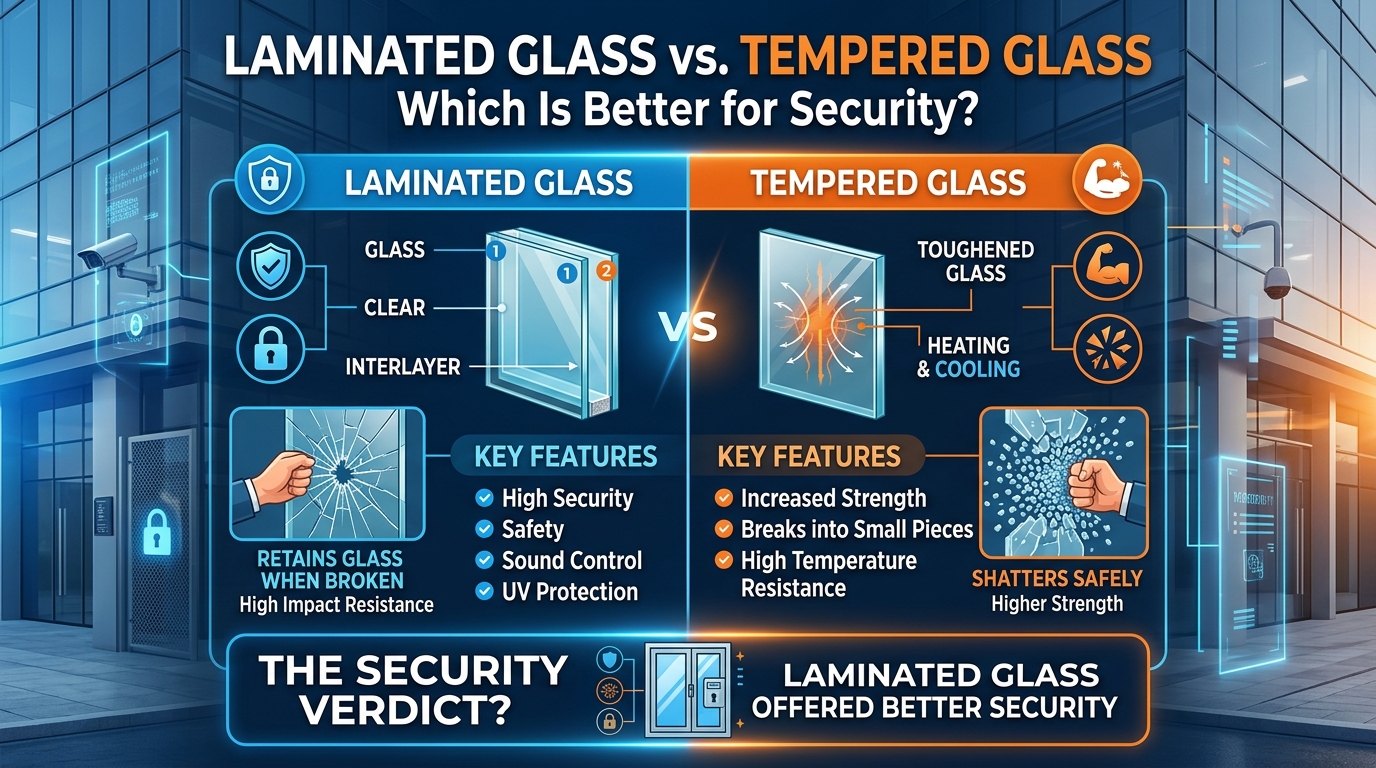
Laminated Glass vs. Tempered Glass: Which Is Better for Security?
When comparing laminated glass vs tempered glass, the biggest difference is what happens after impact and breakage. Tempered glass is designed to break into many small fragments instead of large sharp shards, while laminated glass uses an interlayer that can help keep broken pieces bonded together. For homeowners, business owners, property managers, contractors, and developers, that difference affects safety, security, cleanup, and whether a glazed opening remains covered after damage.
Neither option is right for every project. The better choice depends on whether the priority is safer breakage, delayed entry, post-breakage retention, occupant protection, appearance, framing, or a combination of goals. This guide explains tempered vs laminated glass in practical terms and helps Greater Portland property owners know what to discuss with a glass professional before repair, replacement, or installation.
Laminated Glass vs Tempered Glass: Key Differences
Feature |
Laminated Glass |
Tempered Glass |
|
Construction |
Multiple glass plies bonded with an interlayer |
Glass strengthened through heat treatment |
|
Breakage behavior |
Broken pieces can remain attached to the interlayer |
Breaks into many small fragments |
|
Post-breakage barrier |
Can remain in the opening, depending on the system and damage |
Usually loses its ability to act as a barrier once shattered |
|
Security potential |
Can be engineered into forced-entry-resistant systems |
Primarily provides safer breakage rather than prolonged intrusion resistance |
|
Main selection goal |
Retention, security, safety, or other performance needs |
Strength and safer breakage |
The National Glass Association advises that security glazing should be selected according to the threat, application, laminate construction, framing, and relevant test method rather than by glass type alone. “Laminated” does not automatically mean forced-entry rated, and “tempered” does not automatically make a window or door a security system. [1]
What Is Laminated Glass?
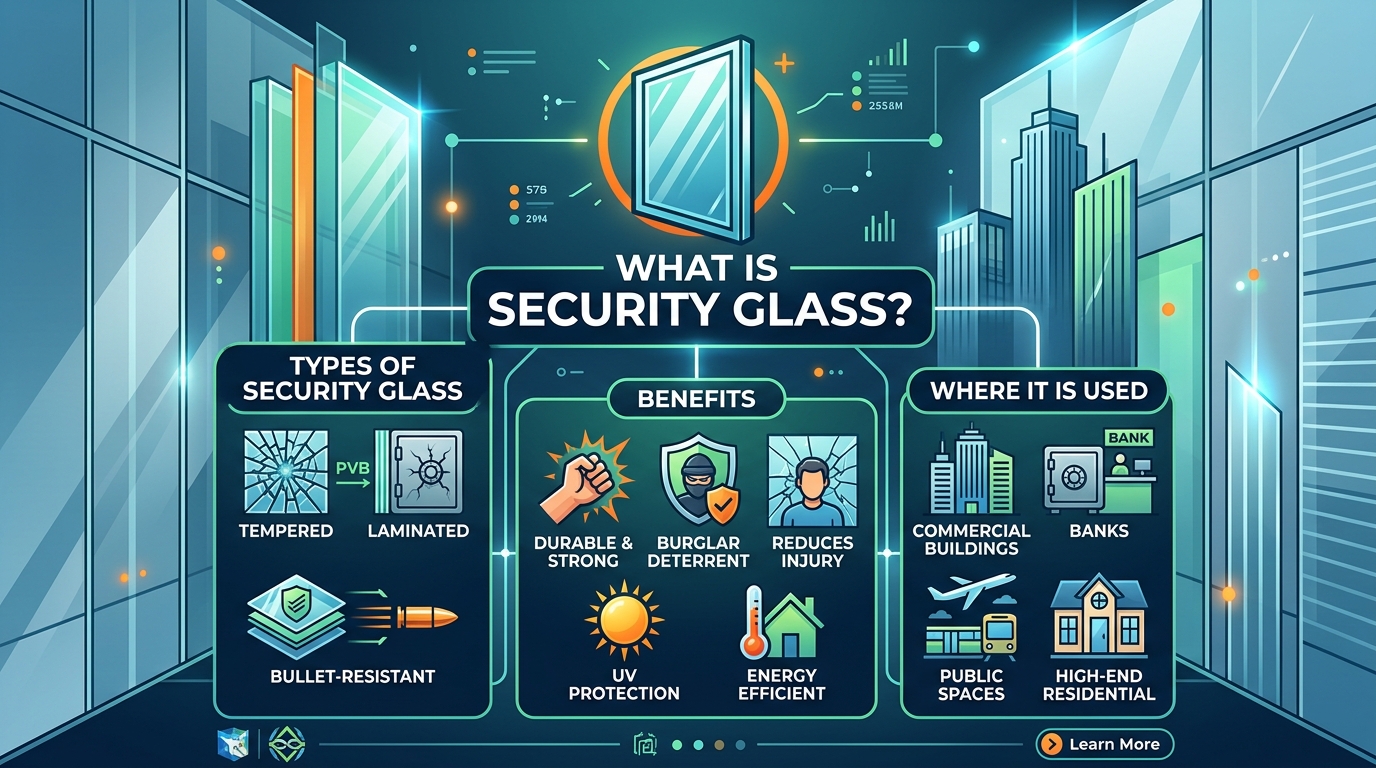
Laminated glass is made by bonding multiple layers of glass with one or more interlayers. If it fractures, the interlayer can retain broken pieces and help the glazing remain together. Laminated constructions can also be designed for specialized applications involving physical attack, blast, ballistics, sound control, and other performance requirements. [1][2]
For everyday residential or commercial projects, laminated glass security can be useful because the damaged pane may continue to cover the opening rather than immediately leaving it exposed. How much resistance it provides depends on the complete construction.
Security Benefits of Laminated Glass
- Post-breakage retention
The interlayer can keep fractured glass attached after impact. - Potential for delayed forced entry
Specialized laminated security glass can use multiple glass plies, interlayers, and other materials to provide greater resistance to physical attack. [1] - Better control of broken fragments
Retaining fractured pieces can reduce loose glass after breakage. - Flexible construction
Laminated glazing can use annealed, heat-strengthened, or fully tempered glass plies depending on the design. [1]
What Is Tempered Glass?
Tempered glass is heat-treated to increase strength and change how it breaks. When it fails as intended, it fractures into many small pieces rather than large shards. The U.S. Consumer Product Safety Commission describes tempered glass as a technology designed to fail safely in this way. [3]
That is why tempered glass is widely associated with safety. However, tempered glass security and laminated glass security are not the same. Once a monolithic tempered pane shatters, it generally no longer provides the same physical barrier across the opening.
Tempered glass may be appropriate when the main goal is safer breakage, added glass strength for the application, or safety glazing in a suitable location. ANSI Z97.1 establishes safety performance specifications and test methods for safety glazing materials, but the standard itself does not specify which glazing type belongs in every location. [4]
Which Is Safer: Laminated or Tempered Glass?
If you are asking which is safer laminated or tempered glass, the answer depends on the hazard.
For accidental human impact, tempered glass offers an important safety advantage because of its breakage pattern. Laminated glass can also provide safety benefits by holding fractured pieces together. For security against intrusion, a properly designed laminated system is generally the stronger starting point because it can continue occupying the opening after breakage and can be configured for forced-entry resistance.
A storefront entrance, interior door, residential window, guard area, or security-sensitive opening may therefore require a different solution.
Laminated vs Tempered Glass for Security: Which Is Better?
For a project where the main concern is security after impact, laminated glass is usually the more appropriate starting point. Its interlayer provides a retention mechanism that monolithic tempered glass does not have after shattering.
However, the security of an opening depends on the complete assembly. The National Glass Association notes that security glazing systems can involve the glass, frame, sealants, and other components, and performance should be evaluated against the intended threat and test method. A stronger pane in an unsuitable frame may not deliver the intended level of protection. [1]
Do not rely on labels such as impact resistant glass or shatter resistant glass alone when security is the goal. Ask what the complete proposed system is designed and tested to resist.
Can Laminated and Tempered Glass Be Combined?
Yes. A laminated assembly can use fully tempered glass as one or more of its plies when that construction is appropriate. [1] This can combine characteristics of heat-treated glass with the retention provided by lamination.
Performance still depends on interlayer type and thickness, glass thickness, number of plies, dimensions, framing, anchorage, and installation. Comparing laminated glass vs tempered glass should therefore lead to a system-level decision, not just a material label.
Common Residential and Commercial Applications
Residential Properties
Homeowners may consider laminated glass for windows or doors where post-breakage retention or added security is a priority. Tempered glass may be suitable where safer breakage is the main concern. Exact requirements vary by opening and installation.
Storefronts and Commercial Buildings
Businesses may place greater emphasis on keeping a damaged opening covered and delaying unauthorized entry. Depending on the risk assessment, laminated or purpose-designed security glass may be more suitable than standard monolithic tempered glass.
Multifamily and Custom Projects
Property managers, contractors, and developers often need to balance safety, durability, security, appearance, replacement logistics, and budget across many openings. Custom dimensions, hardware, coatings, insulating glass configurations, and framing can also influence the final glass makeup.
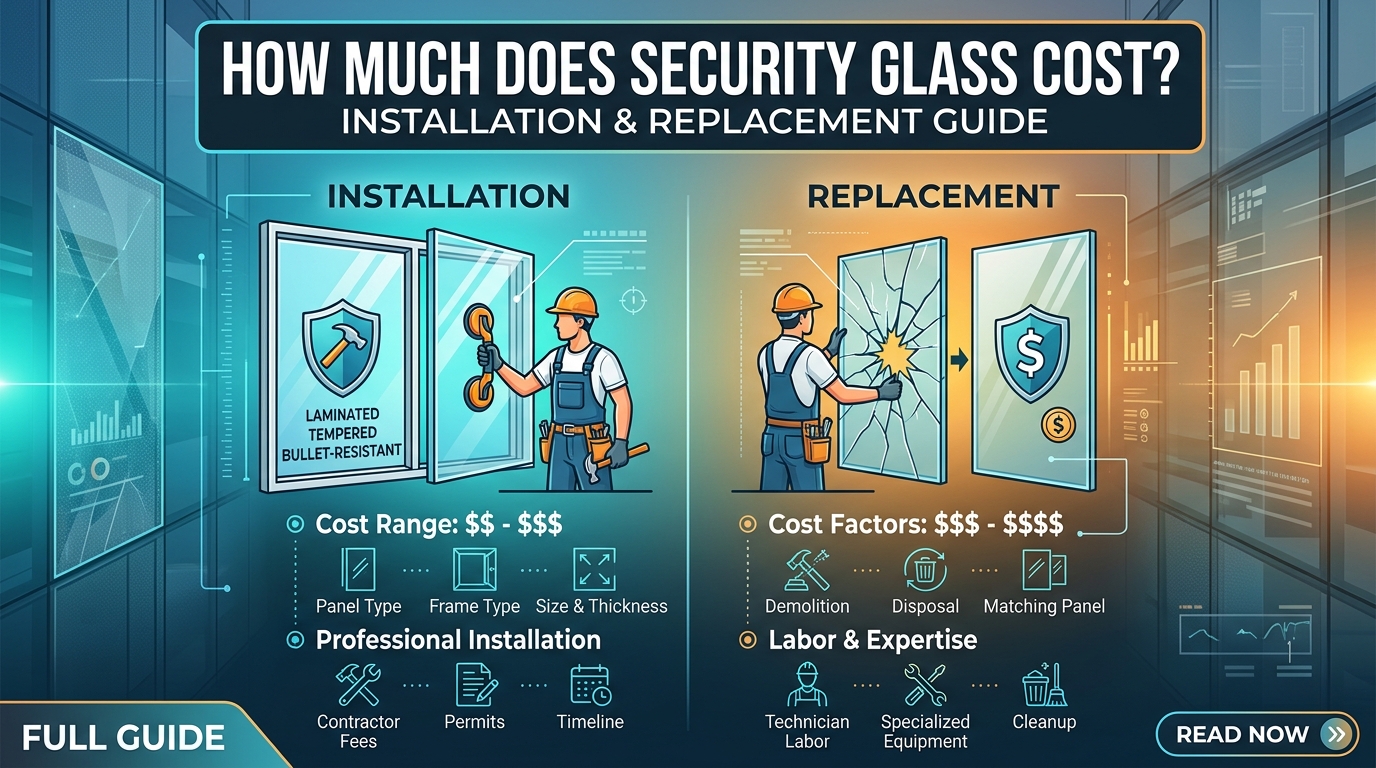
What Affects the Cost?
There is no single dependable price difference for every project. A site-specific estimate is more useful than a generic figure because glass cost depends on the exact product and installation.
Common cost factors include:
- Glass dimensions and thickness
- Interlayer and laminated makeup
- Tempering and other fabrication
- Holes, notches, polished edges, or specialty shapes
- Coatings, tints, patterns, or insulating glass construction
- Frame condition and compatibility
- Accessibility and installation complexity
- Removal and replacement requirements
- Requested level of tested security performance
If security is the reason for upgrading, compare the performance of the full proposed system rather than choosing only by initial glass cost.
Repair, Replacement, and Maintenance
Cracked tempered or laminated safety glass should be professionally evaluated. Damage near edges, hardware, framing, seals, or support points can affect the replacement decision.
Broken tempered glass requires replacement. Cracked laminated glass may remain held together, but that does not mean it should stay in service indefinitely. A glass professional can identify the existing product, assess the opening and surrounding frame, and recommend a compatible replacement.
For maintenance, arrange an assessment if you notice cracks, chips, unusual movement, clouding, seal failure, or visible deterioration. Avoid attempting to cut, remove, or install broken or heavy glass without proper professional training and equipment.
How to Choose the Right Security Glass
Ask these questions before selecting a product:
- Is the main concern accidental breakage, burglary, forced entry, impact, or another hazard?
- Does the glazing need to remain in the opening after breakage?
- Is the existing frame suitable for the proposed glass?
- Does the project require a product or complete system tested to a particular performance standard?
- Are insulation, sound reduction, appearance, hardware, or custom sizing also important?
For many security-focused openings, laminated glass offers the most useful starting point. For many safety-focused openings, tempered glass may be appropriate. Some projects benefit from laminated glazing that incorporates tempered plies.
FAQs
1. Is laminated glass better than tempered glass for security?
Generally, laminated glass is better suited to security-focused applications because its interlayer can retain broken glass and support engineered forced-entry-resistant constructions.
2. Is tempered glass considered security glass?
Tempered glass improves strength and safer breakage, but monolithic tempered glass should not automatically be treated as forced-entry security glazing.
3. Can laminated glass be broken?
Yes; the glass can crack or break, while the interlayer can help retain the fragments.
4. Is laminated glass burglar-proof?
No glass should be called burglar-proof without defining and verifying the tested performance of the complete system.
5. Does tempered glass stay in place after breaking?
Typically, monolithic tempered glass fractures into many small pieces and does not provide the same post-breakage barrier as laminated glass.
6. Can tempered glass be laminated?
Yes, tempered glass can be used as a ply within certain laminated glazing constructions.
7. Is impact resistant glass always laminated?
Not necessarily; “impact resistant” describes a performance objective, so the tested product or system specification matters more than the label.
8. Which glass is better for storefront security?
Laminated or purpose-designed security glazing may be preferable when post-breakage retention or delayed entry is required, subject to professional assessment.
9. Should I replace standard glass with laminated glass?
It depends on the opening, frame, security goals, applicable requirements, and site conditions, so professional assessment is recommended.
Conclusion
In the laminated glass vs tempered glass comparison, neither material is universally better. Tempered glass excels at safer breakage, while laminated glass adds post-breakage retention and can be engineered into systems intended to resist forced entry. For security-focused windows and doors, laminated glazing is generally the stronger starting point, but the complete glass-and-frame system must match the intended application.
Professional Glass Guidance in Greater Portland
If you need professional residential, commercial, or custom glass repair, replacement, or installation services in the Greater Portland area, The Glass People can help evaluate the existing opening, discuss suitable glass options, and provide a project estimate. Professional assessment is especially important when security, safety glazing, custom fabrication, framing, or replacement of damaged glass is involved.
General Information Disclaimer:
This article is provided for general informational purposes only. Glass requirements, product suitability, project costs, installation methods, and applicable building or safety codes may vary by property and location.
References Used
[1] National Glass Association, “Security Glazing (FB43-14),” updated 2020, and related NGA security glazing guidance.
[2] National Glass Association, “GANA Glazing Manual,” 2022 edition, including laminated glazing and physical attack-resistant laminate guidance.
[3] U.S. Consumer Product Safety Commission, “Tempered Glass Safety Alert.”
[4] ANSI / Glazing Industry Secretariat Committee, “ANSI Z97.1-2026: For Safety Glazing Materials Used in Buildings — Safety Performance Specifications and Methods of Test.”