When Do You Need Emergency Commercial Glass Repair for Your Property?
Not every scratch or small chip requires an immediate response. However, shattered storefront glass, an unsecured entrance, loose fragments, or damage blocking an exit can create an urgent safety and security problem. Emergency commercial glass repair becomes necessary when waiting could expose people, inventory, equipment, or the building itself to further harm.
For business owners and property managers throughout Greater Portland, the key is knowing whether the damage can wait for a scheduled appointment or requires immediate professional attention. This guide explains the warning signs, safe first steps, repair process, cost factors, and questions to ask when choosing a commercial glass company.
When Emergency Commercial Glass Repair Cannot Wait
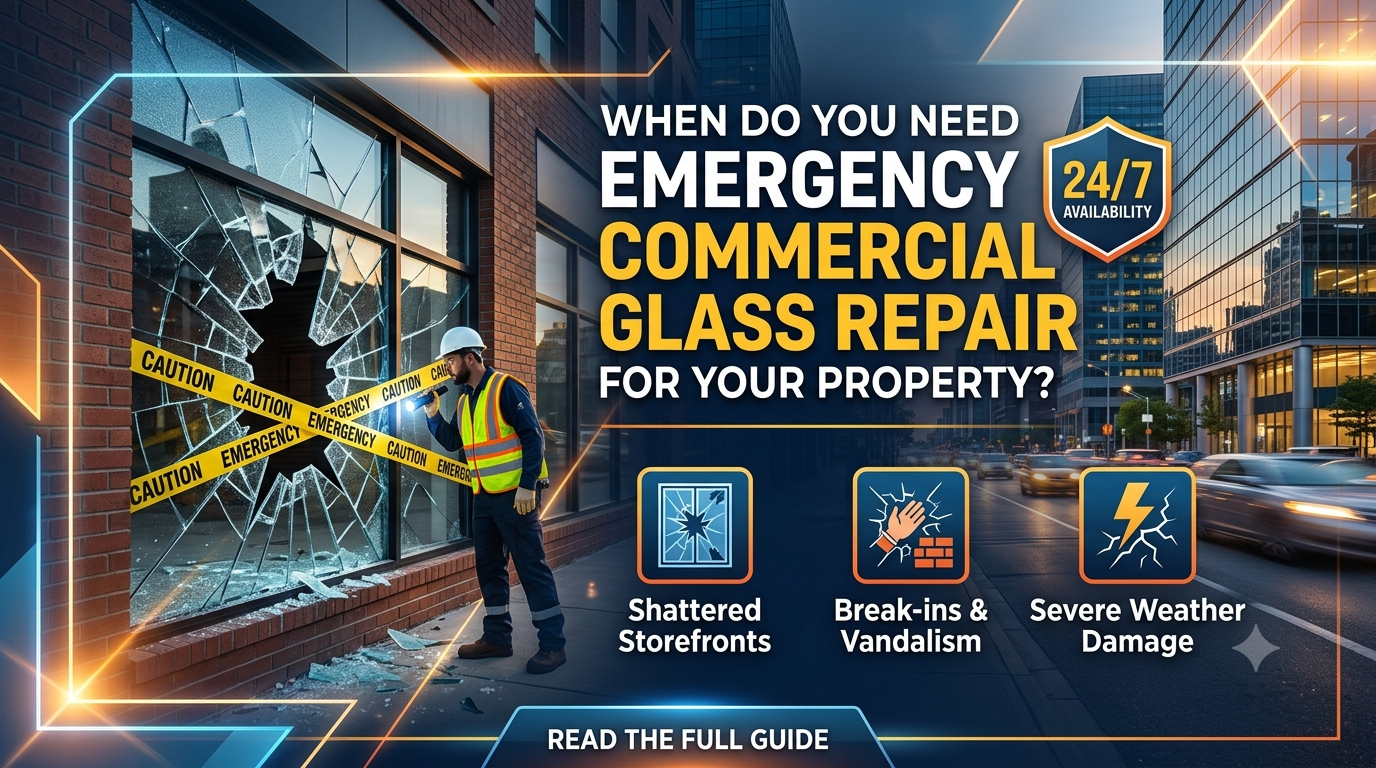
Call a professional promptly whenever damaged glass presents an immediate risk to people, property security, weather protection, or business operations.
1. The Glass Is Shattered, Missing, or Unstable
A shattered panel requires urgent attention even when some of the glass remains inside the frame. Broken pieces can loosen without warning, particularly when exposed to vibration, wind, door movement, or contact from customers and employees.
Warning signs include:
- Loose fragments hanging from the frame
- Glass bowing or shifting inside the opening
- Cracking or popping sounds
- Debris in an entrance, aisle, sidewalk, or work area
- A completely open storefront or window frame
Do not assume a cracked panel is safe simply because it has not fallen. Restrict access and arrange an inspection by a qualified glass professional.
2. A Storefront or Window Can No Longer Secure the Property
Broken storefront glass repair becomes an emergency when the damaged opening leaves a business exposed to unauthorized entry, theft, vandalism, animals, or weather.
Immediate service may be appropriate if:
- A door or window cannot be locked
- A large opening provides access to the interior
- The frame, lock, or door hardware was damaged during an attempted break-in
- The glass protects valuable merchandise or sensitive equipment
- The damage compromises an alarmed entry point
Emergency business window repair may initially involve securing the opening rather than installing the permanent glass immediately. Custom glass often requires precise measurement and fabrication.
3. Damage Affects an Entrance or Exit
A broken glass door, sidelite, or panel near a designated exit can interfere with safe movement through the building. Shards on the floor, a jammed door, or an unstable panel beside a walkway can make the route unsafe.
Federal workplace standards require walking-working surfaces to remain free from sharp or protruding hazards and exit routes to remain unobstructed [1][2]. Businesses should therefore isolate the damaged area without blocking another required exit or creating a new obstacle.
If the only available exit is affected, follow the property’s emergency plan and seek guidance from emergency or fire authorities as appropriate.
4. Overhead or Elevated Glass Is Cracked
Damage to glass canopies, transoms, skylights, elevated interior panels, or other overhead glazing deserves immediate professional evaluation. Even laminated glass that continues holding fragments may no longer provide its intended performance after breakage.
Keep people away from the area below the panel. Do not stand underneath it to inspect, photograph, tape, or support the glass.
5. Wind or Rain Can Enter the Building
Greater Portland’s rain and changing weather can turn an open window or storefront into a larger property problem. Water may reach flooring, inventory, electronics, wall finishes, or electrical components, while wind can dislodge remaining fragments.
Call for emergency glass repair when the opening cannot be safely isolated or protected until normal business hours. If water has reached electrical equipment, avoid the area and contact the appropriate emergency or electrical professional.
6. Damage Followed a Vehicle Impact, Fire, Storm, or Earthquake
A major impact may affect more than the visible pane. Mullions, anchors, door frames, surrounding walls, and adjacent panels may also have moved or failed.
Leave the immediate area and contact emergency services when you notice fire, smoke, exposed wiring, a gas odor, severe frame movement, wall cracking, or other signs of structural damage. Ready.gov advises people to leave and move away from a damaged building rather than re-entering it after an earthquake [6].
A glass contractor can assess the glazing system after authorities or qualified building professionals determine that the area is safe to approach.
7. A Crack Is Spreading or Reaches the Edge
A stable surface scratch is usually a scheduled maintenance concern. A crack that is growing, reaches the edge, surrounds an impact point, or changes when the door or frame moves requires faster attention.
Edge damage can weaken a panel and may indicate contact between the glass and frame. An intact, isolated pane may not require an after-hours response, but a professional should evaluate it promptly before conditions worsen.
When to Call for Emergency Glass Repair: A Quick Guide
Glass condition |
Recommended response |
Main concern |
|
Shattered, missing, or loosely retained glass |
Request emergency service immediately |
Injury, falling glass, and exposure |
|
Storefront or entrance cannot be secured |
Request emergency board-up or repair |
Unauthorized access and weather |
|
Damage blocks or endangers an exit |
Isolate the hazard and obtain immediate help |
Safe evacuation |
|
Vehicle impact or visible frame movement |
Contact emergency services first when needed, then a glass professional |
Possible structural or utility damage |
|
Stable crack in an isolated panel |
Arrange a prompt professional inspection |
Potential progression |
|
Fogging inside an insulated unit without breakage |
Schedule an assessment |
Seal failure and reduced performance |
|
Minor surface scratch |
Schedule service if appearance or visibility is affected |
Cosmetic damage |
This guide cannot replace an on-site assessment. Glass location, size, type, frame condition, pedestrian exposure, and building use can all change the appropriate response.
What to Do While Waiting for a Glass Professional
Your first priority is keeping people away from the hazard. Oregon OSHA recommends identifying workplace hazards and eliminating or controlling the associated risk [3].
Take these precautions:
- Move customers, employees, and visitors away from the damaged area.
- Establish a visible perimeter on both sides of the opening when possible.
- Call 911 when there is an injury, active break-in, fire, suspected gas leak, exposed electrical hazard, or potentially unstable building condition.
- Do not touch, pull, push, tape, sweep, or attempt to remove unstable glass.
- Stop using a damaged glass door, even if it still opens.
- Keep unaffected exits and evacuation paths clear.
- Photograph the damage from a safe position for documentation purposes.
- Notify the property owner, manager, security provider, and insurer as required by your procedures.
- Contact a commercial glass repair company and explain whether the glass is loose, the property is unsecured, or an entrance is unusable.
When searching for 24-hour commercial glass repair, confirm whether the company provides live after-hours response, temporary board-up, permanent replacement, or only an answering service. Availability and capabilities vary, so do not assume the final panel can always be installed during the first visit.
What Professional Emergency Glass Service May Include
The exact response depends on the building and damage, but a professional visit generally begins with hazard control and an inspection of the complete opening.
Initial Triage
The glass company may ask for:
- The property address and safe access instructions
- The location of the damaged glass
- Whether the panel is cracked, shattered, loose, or missing
- Whether the building can still be locked
- Approximate dimensions taken without approaching the glass
- Photographs captured from a safe location
- Information about damaged frames, doors, locks, or nearby panels
Clear information helps the provider prepare suitable materials, access equipment, and personnel.
Making the Area Safe
After evaluating the site, trained technicians may secure loose material, control debris, and establish a safer work zone. Damaged frames, glazing stops, seals, anchors, and hardware should also be inspected because replacing the visible pane alone may not address the complete problem.
Temporary Board-Up or Closure
A temporary board-up can help limit entry and weather exposure when permanent glass is unavailable. It is a short-term protective measure, not the finished repair.
Temporary materials should not obstruct required exits, damage surrounding components, or be treated as a permanent substitute for the specified glazing system.
Measurement and Permanent Replacement
The contractor identifies the required dimensions, thickness, glass type, tint, coating, edge treatment, and safety characteristics. The replacement panel may then require fabrication before installation.
The final visit may include removing temporary protection, preparing the frame, installing the new panel, addressing compatible seals or hardware, and cleaning the controlled work area.
Does Damaged Commercial Glass Get Repaired or Replaced?
In commercial glazing, “glass repair” often describes the overall service, even when the broken panel must be replaced. Fillers and surface treatments do not restore a cracked architectural pane to its original condition or verified performance.
The correct solution depends partly on the glass type:
Tempered Glass
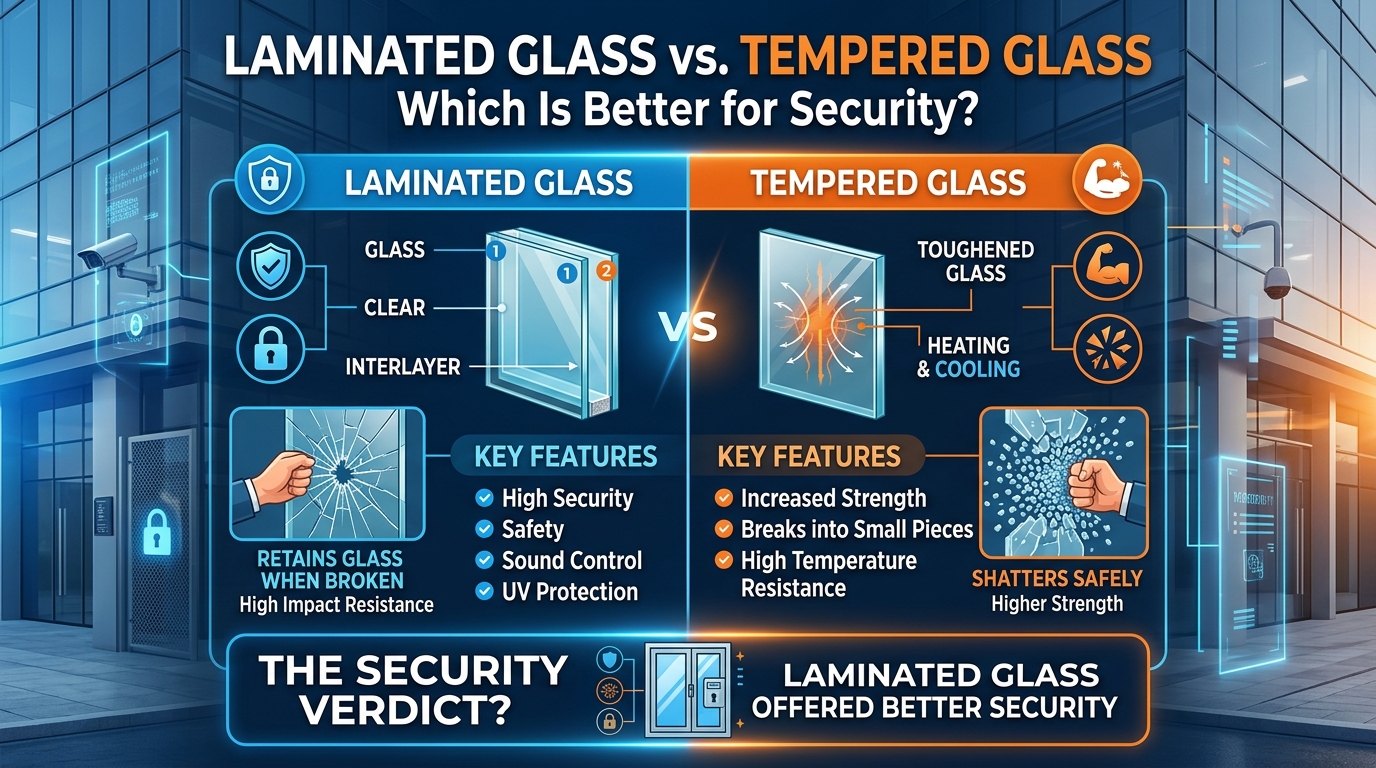
Tempered glass is designed to break into many small, roughly cubical pieces and may leave the opening when it fails [7]. A shattered tempered panel requires replacement rather than crack repair.
Laminated Glass
Laminated glass contains an interlayer that helps retain pieces after breakage [8]. Retention can reduce fallout, but it does not mean the damaged panel should remain in service. A professional must evaluate and replace it as appropriate.
Insulated Glass Units
An insulated glass unit contains multiple panes separated by a sealed space. A cracked pane generally requires unit replacement. Interior fogging without cracked or unstable glass normally supports a scheduled assessment rather than an emergency response.
Specialty and Safety Glazing
Doors, sidelites, fire-rated assemblies, coated panels, security glazing, decorative glass, and other specialty systems may have specific performance requirements. The federal Safety Standard for Architectural Glazing Materials applies to specified products and hazardous locations [4]. A contractor should verify the required product rather than assuming any tempered or laminated panel is suitable.
What Affects Emergency Commercial Glass Repair Costs and Timing?
There is no responsible universal estimate without inspecting the property. The cost and completion time may depend on:
- Panel dimensions, thickness, shape, and weight
- Tempered, laminated, insulated, coated, tinted, or specialty construction
- Damage to the frame, door, lock, closer, or surrounding materials
- Ground-level access versus elevated or equipment-assisted access
- After-hours labor and site security requirements
- Temporary board-up or weather protection
- Custom fabrication and material availability
- Debris control and disposal needs
- Permit, design, or inspection requirements
In Portland, official commercial permitting guidance lists replacing or adding windows and doors among work that may require a building permit [5]. A glass-only replacement may have a different scope, so the property owner or contractor should confirm requirements with Portland Permitting & Development before permanent work begins.
Documenting the Incident
Do not delay urgent safety measures while gathering paperwork. Once the area is controlled, retain photographs, the incident time, witness information, police or fire reports when applicable, service invoices, and descriptions of damaged property.
Contact your insurer to ask about notification requirements, covered work, preferred documentation, deductibles, and authorization procedures. Coverage varies by policy, cause of loss, and property responsibilities.
Reducing the Risk of Future Glass Emergencies
Routine inspections can help identify problems before a panel fails. Property managers should arrange professional evaluation when they notice:
- Edge chips or unexplained cracks
- Loose glazing stops, gaskets, or sealants
- Doors striking frames or adjacent panels
- Corroded or visibly damaged framing
- Water entering around a glazing system
- Repeated impacts in loading, parking, or high-traffic areas
Maintain current emergency contacts, document the glass used throughout the property, and discuss appropriate protective or security glazing options with a qualified professional. No glass product eliminates every risk, so selection should reflect the specific opening and verified project requirements.
Frequently Asked Questions
1. What qualifies as emergency commercial glass repair?
It is service required when damaged glass creates an immediate safety, security, weather, access, or operational risk.
2. Is every cracked storefront window an emergency?
No; a stable, isolated crack may allow a scheduled inspection, while spreading, loose, or accessible damage requires faster action.
3. When should a business call for emergency glass repair?
Call immediately when glass is falling, an opening cannot be secured, an exit is affected, or people could encounter the damage.
4. Can a business remain open after storefront glass breaks?
Only when the hazardous area can be fully isolated and the property owner determines that continued operation is safe and appropriate.
5. Does 24-hour commercial glass repair guarantee same-night replacement?
No; an after-hours visit may provide hazard control and temporary security while custom glass is fabricated.
6. Is temporary board-up the same as broken storefront glass repair?
No; board-up is temporary protection, while permanent repair restores the opening with the properly specified glazing.
7. Can cracked commercial glass be repaired without replacement?
Cracked architectural panels generally require replacement, although separate frame, seal, or hardware problems may sometimes be repaired.
8. How long does emergency business window repair take?
Timing depends on site conditions, glass specifications, access, frame damage, and whether custom fabrication is required.
Conclusion
Commercial glass damage becomes an emergency when it threatens people, leaves the property unsecured, exposes the interior to weather, affects an entrance or exit, or suggests wider building damage. Isolate the area, involve emergency authorities when appropriate, avoid handling unstable glass, and obtain a professional assessment before deciding on temporary protection or permanent replacement.
Professional Glass Assistance in Portland, Oregon
Property owners who need professional residential, commercial, or custom glass repair, replacement, or installation services can contact The Glass People in Portland, Oregon. Their team can evaluate the project’s specific requirements, explain suitable options, and provide expert guidance and a project estimate based on an on-site assessment.
General Information Disclaimer
This article is provided for general informational purposes only. Glass requirements, product suitability, project costs, installation methods, and applicable building or safety codes may vary by property and location.
References Used
- Occupational Safety and Health Administration, 29 CFR 1910.22, “General Requirements—Walking-Working Surfaces.”
- Occupational Safety and Health Administration, 29 CFR 1910.37, “Maintenance, Safeguards, and Operational Features for Exit Routes.”
- Oregon Occupational Safety and Health, “Identifying Hazards” and “Hazard Identification.”
- U.S. Consumer Product Safety Commission, 16 CFR Part 1201, “Safety Standard for Architectural Glazing Materials.”
- City of Portland, Portland Permitting & Development, “Do You Need a Permit for Your Commercial Project?”
- Federal Emergency Management Agency, Ready.gov, “Earthquakes” and “Are You Ready? An In-Depth Guide to Citizen Preparedness.”
- Vitro Architectural Glass, Technical Document TD-138, “Heat-Treated Glass for Architectural Glazing.”
- Vitro Architectural Glass, Technical Document TD-128, “Laminated Glass—Thermal and Optical Properties.”