Kitchen Cabinet Glass: How to Choose Between Clear, Reeded, and Seeded Panels
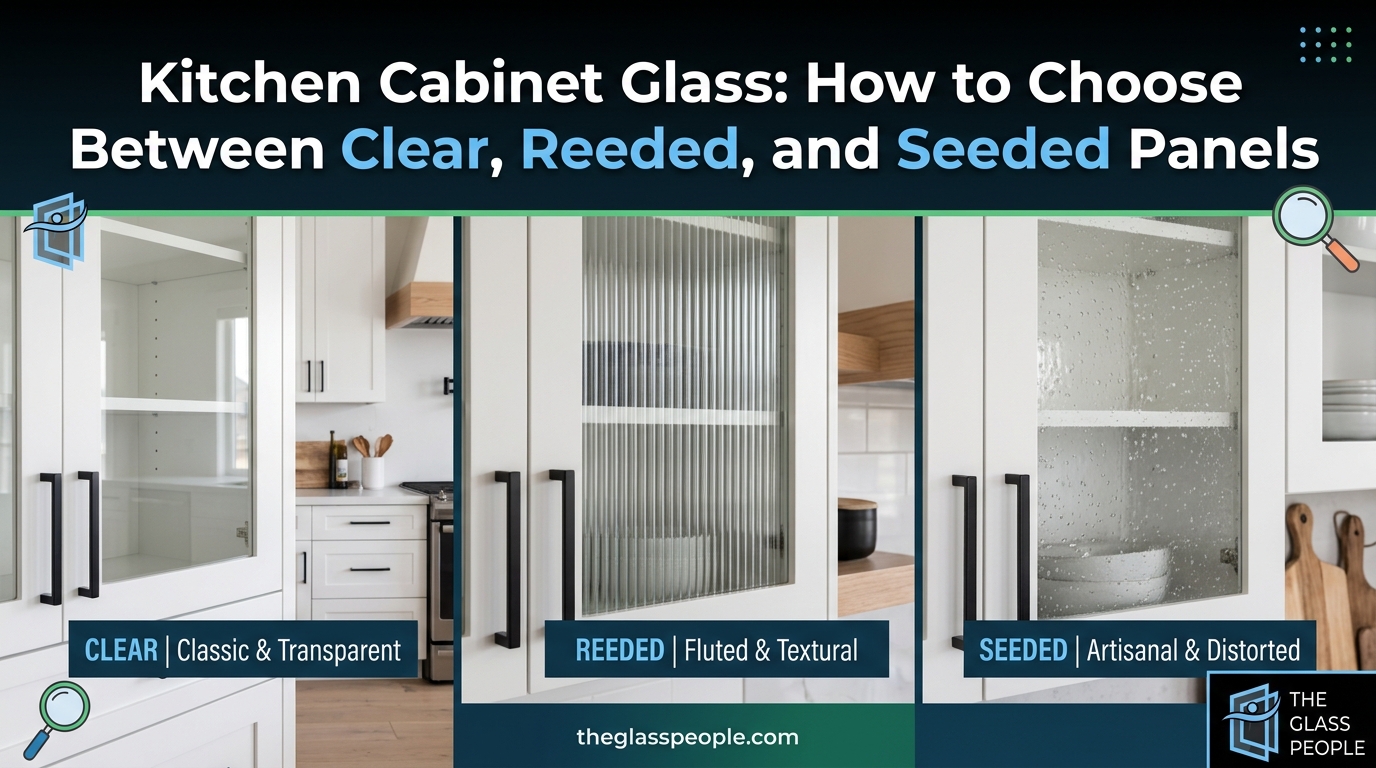
Choosing kitchen cabinet glass starts with one practical question: do you want to display everything inside, soften the view, or add decorative character? Clear panels showcase your dishes, reeded panels introduce a linear pattern that blurs details, and seeded panels add small bubbles for a vintage-inspired appearance.
The right choice also depends on your cabinet frames, lighting, cleaning routine, and safety requirements. Whether you are updating a Portland home, renovating rental housing, or planning a commercial kitchenette, compare the actual glass and installation requirements before ordering.
Kitchen Cabinet Glass: Comparing Clear, Reeded, and Seeded
These cabinet glass types serve different design goals. The table summarizes their typical appearance; actual visibility varies by product.
Glass type |
Appearance |
View of cabinet contents |
Best suited to |
|
Clear |
Smooth, transparent surface |
Details remain visible |
Displaying coordinated dishes or glassware |
|
Reeded |
Repeating linear ribs or flutes |
Blurs details; silhouettes may remain visible |
Softening everyday storage while adding pattern |
|
Seeded |
Small bubbles within the glass |
Often remains largely transparent, depending on bubble density |
Adding decorative character while retaining a display effect |
Clear Glass Cabinet Doors: The Display-Focused Choice
Clear glass cabinet doors put the contents on display with minimal visual distortion. They work well when attractive dishes, matching glasses, or a few decorative pieces are part of the kitchen design. Homecrest describes its clear glass inserts as a way to show off stored items.
The tradeoff is straightforward: mismatched containers and crowded shelves stay visible, too. Clear panels also make smudges and streaks easy to notice.
Choose clear glass when you enjoy organized displays and want the cabinet interior to remain visually open. For storage that changes frequently, consider limiting clear panels to selected upper cabinets.
Reeded Glass Cabinet Doors: Pattern With Partial Concealment
Reeded glass cabinet doors use parallel ribs or flutes to distort the view through the panel. Suppliers may also call this ribbed or fluted glass, although pattern spacing and profiles vary. Different patterns provide different levels of obscurity.
This makes reeded panels worth considering for everyday dishes and mixed glassware. They soften visual clutter without necessarily hiding the contents completely.
Check the pattern direction across neighboring doors. Vertical lines can support a taller-looking design, while horizontal lines create a different visual rhythm. Confirm the specified orientation before fabrication rather than relying on a product name or photograph.
Seeded Glass Cabinet Doors: Bubbles and Decorative Character
Seeded glass cabinet doors contain small bubbles created during manufacturing. Some products are machine-made, so a seeded appearance does not automatically mean the glass is handmade or antique. Bendheim’s Clear Seeded product, for example, uses bubbles introduced into molten glass.
The effect can complement traditional, cottage, or farmhouse interiors. It can also add a subtle decorative detail to simpler cabinetry.
Seeded glass generally preserves more of a display effect than strongly obscuring textures. Bubble size, density, and the surrounding glass determine how clearly you see through it. Choose it primarily for character, and inspect a sample before expecting it to conceal storage.
Reeded vs Seeded Cabinet Glass: What Matters Most?
When comparing reeded vs seeded cabinet glass, look first at the pattern: reeded glass creates repeated lines, while seeded glass introduces scattered bubbles. Neither description alone guarantees a particular level of privacy.
As a design starting point, choose reeded glass when you want a structured pattern that softens shelf contents. Choose seeded glass when you want a lightly irregular appearance while keeping dishes recognizable.
For strong concealment, compare more obscuring options, such as etched or frosted glass. Textured cabinet glass offers varying degrees of visibility, and its appearance changes with lighting, viewing angle, and distance.
How to Choose the Best Glass for Kitchen Cabinets
The best glass for kitchen cabinets is the option that suits both your storage habits and the door construction. Use these four checks to narrow the choice.
- Decide what you want people to see. When weighing clear vs textured cabinet glass, consider your normal shelves rather than a styled photograph. Clear panels favor displays; reeded panels can soften mixed contents; seeded panels add character with limited concealment.
- Match the surrounding materials. Compare samples against the cabinet finish, hardware, countertop, and backsplash. In a Portland Craftsman-style kitchen, seeded panels may complement traditional details; in a contemporary remodel, reeded panels may echo simpler lines. These are design possibilities, not rules.
- Test the glass under real lighting. View samples with daylight and cabinet lights, placing representative dishes behind them. Keep the objects at a realistic distance from the glass. A small sample helps narrow the choice, but a larger mockup better reveals the overall effect.
- Confirm the practical specifications. Ask your glass professional to review the frame, panel size, glass thickness, retention method, hinges, and required safety treatment before ordering kitchen cabinet glass.
Among useful glass cabinet door ideas, a balanced approach is to add glass to a few upper doors while keeping solid fronts for food packaging and bulky supplies. This reduces the amount of storage you need to maintain as a display.
Frame Compatibility, Thickness, and Safety
Will the New Panel Fit the Existing Door?
A replacement panel must fit the door’s opening and the space designed to hold the glass. Rounded corners, divided panes, irregular shapes, and damaged frames can complicate the work.
A thicker panel is not automatically a better choice. It may require more space or add weight that the existing hardware was not designed to carry. A professional should check the complete door assembly rather than selecting thickness from appearance alone.
Solid cabinet doors also need assessment before conversion. Some designs require purpose-built replacement doors instead of modification.
Decorative Texture Does Not Determine Safety Performance
Clear, reeded, and seeded describe appearance. Annealed, tempered, and laminated describe different glass constructions or treatments.
Annealed glass can break into large, sharp pieces. Tempered glass breaks into smaller fragments, while laminated glass uses an interlayer that helps retain fragments after breakage. These differences do not make any glass unbreakable.
Availability varies by the exact decorative product. Ask which safety options the selected pattern supports and whether they fit your cabinet.
Your installer should assess the intended use, impact exposure, and applicable requirements. Do not assume a decorative panel meets local building or safety codes simply because it is marketed for cabinets.
Repair, Replacement, and Professional Installation
If an existing pane is cracked or broken, plan for professional replacement rather than assuming an adhesive repair will restore its integrity. Keep people away from damaged glass and avoid operating the affected door until it has been assessed.
When the frame remains sound, replacing the glass insert may allow you to keep the cabinet door. Loose glass, rattling, or damaged retaining components also deserve attention; the cause may involve the frame or hardware.
A professional installation begins with measurements and a review of the door. It includes confirming the pattern, arranging appropriate fabrication, securing the panel with a suitable system, and checking door operation.
For older cabinets, allow for possible frame repairs or hardware adjustments. Contractors and property managers should document the selected pattern and specifications so future replacements are easier to match.
What Affects Cabinet Glass Replacement Costs?
There is no reliable universal installed price for kitchen cabinet glass. A useful estimate separates the glass and fabrication from labor and any cabinet work.
The main cost factors include:
- Panel quantity, dimensions, and custom shapes.
- The selected pattern and manufacturing method.
- Glass thickness and available safety treatment.
- Edge finishing and special corner requirements.
- Removal, installation, disposal, and access.
- Repairs to frames, retaining components, or hardware.
Compare estimates using the same specifications. A material-only price does not show the complete installed cost, and replacing one damaged insert differs from converting several solid doors.
Ask what the estimate includes and whether the selected pattern requires special ordering. Confirm lead time with the provider before scheduling related cabinet work.
Cleaning and Maintaining Cabinet Glass
Follow the glass manufacturer’s care instructions, especially for coated or specially finished products. General glass-care guidance recommends a soft, clean, grit-free cloth and a mild, nonabrasive cleaner; metal scrapers and abrasive particles can scratch glass.
For cabinet cleaning, apply cleaner to the cloth to limit excess liquid around the frame. Wipe gently and dry the surface to reduce streaks.
Reeded surfaces may need extra attention along the grooves. Seeded bubbles sit within the glass and are not dirt to scrub away. Texture may make some marks less noticeable, but it does not eliminate cleaning.
Arrange an assessment if you notice chips, cracks, loose panels, or worsening door operation.
Frequently Asked Questions
1. Which glass is best for everyday kitchen storage?
Reeded glass is worth considering when you want to soften the view of mixed dishes, but check the chosen pattern’s visibility.
2. Does reeded glass completely hide clutter?
No; silhouettes, colors, and some details can remain visible depending on the pattern, lighting, and object distance.
3. Is seeded glass always handmade?
No; seeded glass can be machine-made, with bubbles intentionally created during manufacturing.
4. Can I replace the glass without replacing the cabinet door?
Often, provided the frame, glass-retaining system, and hardware remain suitable.
5. Do cabinet glass inserts need to be tempered?
The appropriate safety treatment depends on the product, application, and applicable requirements, which your installer should verify.
6. Can clear and textured panels be used together?
Yes; use clear panels for selected displays and textured panels elsewhere if the combination suits the design.
7. Can an exact replacement match older textured glass?
An exact match depends on identifying the original pattern and confirming current availability.
8. How much will replacement cost?
Request an estimate based on panel dimensions, glass specifications, installation needs, and the condition of the cabinet doors.
Conclusion
Choose clear panels for visible displays, reeded panels for linear texture and softened views, and seeded panels for decorative bubbles and character. Compare samples in your kitchen, then confirm frame compatibility, safety options, and the complete installation scope before committing.
For professional residential, commercial, or custom glass repair, replacement, or installation in Portland, Oregon, contact The Glass People for expert guidance and a project estimate. The company lists services across the Portland metro area. For a cabinet project, ask about suitable materials and confirm current decorative glass availability.
General Information Disclaimer:
This article is provided for general informational purposes only. Glass requirements, product suitability, project costs, installation methods, and applicable building or safety codes may vary by property and location.
References Used
- Homecrest Cabinetry — “Square Traditional Mullion Cabinet Door with Clear Glass Insert”: clear inserts for displaying contents. Homecrest
- Architectural Glass — “Cabinet Glass Insert Types”: reeded terminology and variations in obscurity. Glass Options for Cabinet Doors
- Bendheim — “Clear Seeded,” “Textured Glass,” and “European Clear Fluted”: bubble construction, viewing conditions, and glass safety options. Clear Seeded
- Viracon — “Glass Cleaning and Maintenance Recommendations”: cleaning materials and scratch prevention.
- The Glass People — “Our Services”: residential, commercial, and custom services in the Portland metro area. The Glass People
- Google Search Central — “SEO Starter Guide”: guidance on content length and rankings.