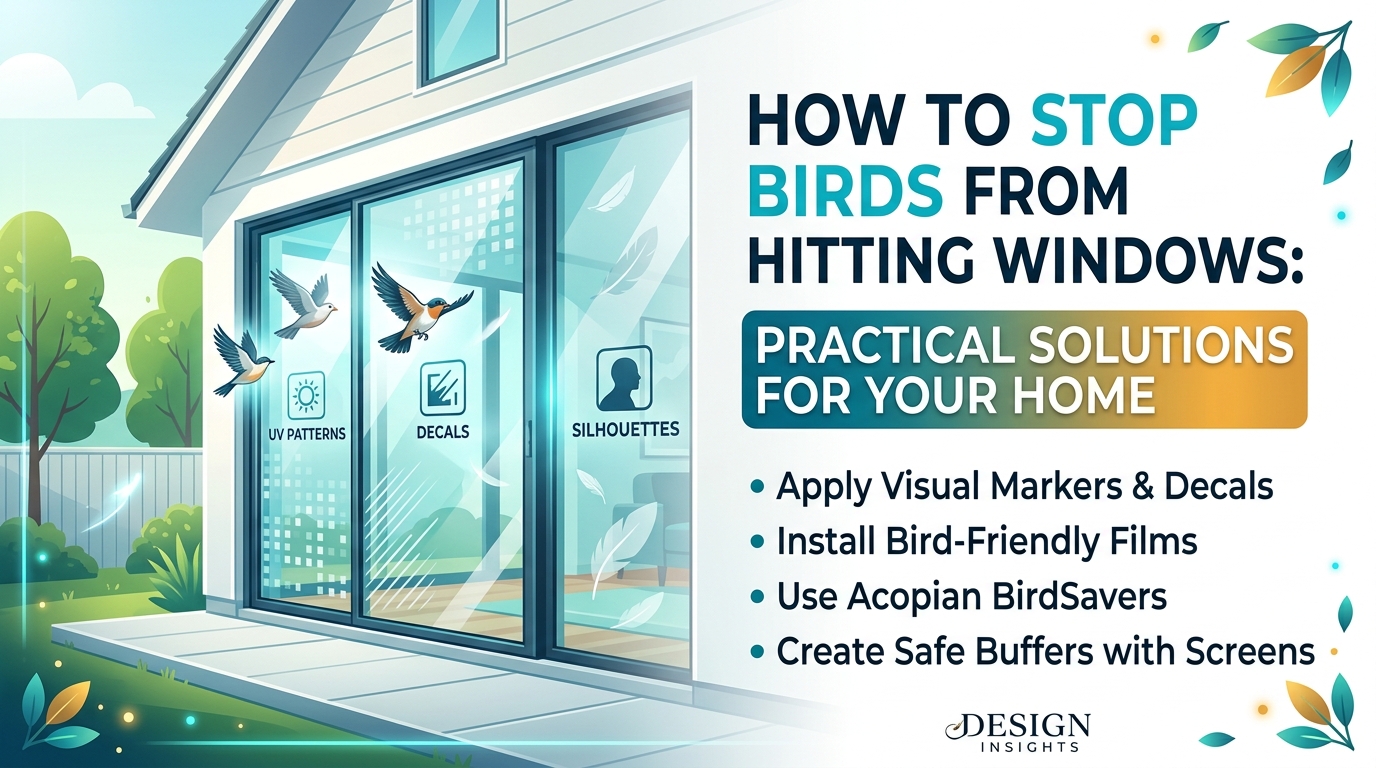
How to Stop Birds From Hitting Windows: Practical Solutions for Your Home
A bird striking your window is upsetting, especially when it happens repeatedly. The glass may look obvious to you, but a bird can mistake reflected trees or a clear view through your home for somewhere it can fly.
To stop birds hitting windows, make the glass recognizable as a barrier from outside. Closely spaced exterior markings, screens, and suitable glass treatments can help. For Portland homeowners, the best choice depends on the window’s condition, accessibility, and how much daylight and visibility you want to preserve.
Why Birds Hit Windows
Two common explanations answer why birds hit windows: reflections and transparency. Glass can reflect branches, sky, or landscaping that birds perceive as real habitat. A bird may also see greenery through a window and attempt to reach it.
Large windows are an obvious concern, but smaller panes can also present hazards. Bird window collisions happen throughout the year, with increased risk during spring and fall migration.
Repeated pecking is a different behavior: a territorial bird may attack its own reflection. Reducing exterior reflections can help address that problem, too.
Identify the Windows That Need Attention First
Walk around your property and examine the glass from outside at different times of day. Prioritize windows with previous strikes, strong reflections of vegetation, nearby feeders, or clear views through to another window. Include picture windows, corner windows, and sliding glass doors in your inspection.
Keep a simple record of collision locations and times so you can evaluate changes. For rentals or managed properties, coordinate exterior treatments with the owner or property manager before making alterations.
How to Stop Birds Hitting Windows: 6 Practical Solutions
1. Apply Exterior Markers With Proper Spacing
To stop birds hitting windows, use a visible pattern across the entire outside surface, rather than placing a few stickers near the center.
For dots or individual decals, follow these guidelines:
- Space markers no more than 2 inches apart horizontally and vertically.
- Use dots at least ¼ inch in diameter.
- Cover the whole pane, including its edges.
- Choose a pattern that contrasts with the reflections behind it.
This close spacing helps protect small birds, including hummingbirds. Exterior placement matters because reflections can obscure markings applied indoors.
One hawk silhouette leaves most of the window looking open. Correct bird window decal spacing matters more than the sticker’s shape.
2. Cover the Glass With Exterior Screens
Exterior insect screens can reduce reflections and make a window easier for birds to recognize. They should cover the entire glass area; a half-screen leaves the uncovered section untreated.
Ask about a screen system suited to the window and its operation. Purpose-built protective screens require the appropriate clearance and mounting arrangement, so follow the system’s instructions.
For upper-story windows or difficult access, arrange professional installation.
3. Use Closely Spaced Exterior Cords
Hanging cord systems create a visible barrier in front of the glass while allowing a view outdoors. They can suit picture windows where adhesive treatments are less appealing.
Certain purpose-designed paracord systems use spacing of approximately 4 inches; follow the system’s specifications.
That spacing applies to those visible cord systems; it does not replace the 2-inch guidance for window decals. The cords should extend across the window’s full height and width.
4. Choose a Suitable Bird-Safe Window Film
Bird-safe window film can provide patterned markings or an exterior appearance that helps birds recognize a barrier. Some perforated films preserve an outward view while changing how the glass looks from outside.
Check the product’s intended application surface and collision-prevention evidence. A general-purpose tint, clear film, or privacy label does not establish that it prevents bird strikes.
Before installation, have the supplier confirm compatibility with your specific glass, particularly insulated units and low-E coatings. Ask about cleaning instructions and any applicable manufacturer terms.
UV-only markings need careful evaluation: their visibility varies with lighting conditions and bird species. For shaded windows, ask for evidence relevant to that setting.
5. Add Temporary DIY Bird Window Protection
For intact glass you can safely reach from the ground, washable tempera paint or soap patterns can provide a temporary exterior treatment. Follow the same close-spacing principle rather than drawing a small design in one corner.
Check that the material is suitable for the window’s surface, and refresh the pattern whenever weather or cleaning removes it.
This can help while you arrange a lasting solution. Leave cracked glass, heavy panels, and windows requiring ladder access to professionals.
6. Reduce Nighttime Lighting and Apparent Flight Paths
Turn off unnecessary lights at night, particularly during migration. Where lighting is needed, use fixtures that direct light downward and limit spill toward windows. Artificial light can attract migrating birds toward buildings.
Inside, closing a shade on an opposite window can interrupt a clear view through the home. However, indoor curtains do not reliably address reflections on the exterior surface.
Treat windows near feeders and birdbaths instead of assuming that moving these features makes untreated glass safe. Feeder placement alone should not be your prevention plan.
Should You Retrofit or Replace the Glass?
How to Stop Birds Flying Into Windows Without Replacing Glass
If the window is intact and otherwise meets your needs, consider exterior markers, screens, cords, or an appropriate film first. These approaches allow you to address collisions using the existing glass.
Request an assessment if you see cracks, chipped edges, or moisture between panes. A bird deterrent will not repair damaged glazing or resolve the cause of trapped moisture.
Choosing Bird-Safe Windows During Replacement
If replacement is already necessary, discuss bird-safe windows during product selection. Options may include factory-applied ceramic frit or etched patterns designed to make glass visible to birds.
Ask where the pattern sits in the finished assembly and whether collision testing covers the exact glass and coating combination. Low-E coatings can influence a product’s tested performance.
Tempered glass and double-pane construction alone do not establish bird-collision protection. Review that performance separately from the project’s safety-glazing and energy requirements.
No treatment guarantees that every collision will stop under all conditions. Continue monitoring after installation.
What Affects the Cost of Bird-Collision Protection?
Before paying for a solution to stop birds hitting windows, define which panes need treatment and whether the glass requires repair.
An estimate should account for:
- The number, size, and shape of the panes.
- The selected markers, film, screen system, or replacement glass.
- Existing glass condition and product compatibility.
- Exterior access and installation labor.
- Preparation, cleaning, and future maintenance.
Compare proposals for the same treated area and scope. A small decal pack may cost less initially but contain too few markers to cover the window properly.
For Portland homes, storefronts, and managed buildings, request a property-specific estimate. Photos can help explain the problem, but final product selection may require an on-site assessment.
Maintain the Treatment and Monitor Results
Inspect exterior treatments after window cleaning and severe weather. Replace missing markers, repair loose components, and renew faded patterns so untreated gaps do not develop.
Follow the film or glass manufacturer’s cleaning instructions. Avoid abrasive materials that could damage the treatment, and confirm when a newly installed film can first be cleaned.
For exterior applications in Portland, follow the product’s temperature and moisture requirements rather than applying it to wet glass. Schedule work when conditions meet those instructions.
If strikes continue, review coverage, contrast, spacing, and adjacent untreated panes before assuming the approach cannot work.
What to Do if a Bird Hits Your Window
A bird that appears stunned may have injuries you cannot see. Contact a licensed wildlife rehabilitator promptly for advice rather than assuming recovery.
If you can safely contain a small bird, place it gently in a ventilated cardboard box lined with paper towels. Keep the closed box in a quiet, dark place away from pets and children. Do not provide food or water, and follow the rehabilitator’s instructions.
Portland residents can contact the Bird Alliance of Oregon’s Wildlife Care Center for guidance. Call before transporting wildlife to confirm current intake instructions.
Frequently Asked Questions
1. Do Bird Window Decals Work?
Yes, when visible decals cover the exterior glass with sufficiently close spacing; a few isolated stickers leave dangerous gaps.
2. How Far Apart Should Window Decals Be?
Space individual markers no more than 2 inches apart horizontally and vertically across the entire pane.
3. Should Bird Deterrents Go Inside or Outside?
Apply visual markers outside, where they can interrupt the reflections birds see.
4. Will Closing Blinds Prevent Bird Strikes?
Blinds may block a view through the home, but they do not reliably eliminate exterior reflections.
5. Are Double-Pane Windows Automatically Bird-Safe?
No; multiple panes do not supply a visible pattern or exterior barrier for collision prevention.
6. Can I Use Film on Low-E Glass?
Possibly, but the film supplier must confirm compatibility with the specific glass and coating arrangement.
7. Why Does a Bird Keep Pecking My Window?
It may be defending its territory against its reflection; reducing the reflection can help.
8. Should I Release a Stunned Bird When It Looks Better?
Contact a wildlife rehabilitator first because an apparently recovered bird may still have internal injuries.
Conclusion
Protecting birds starts with making glass visible from outdoors. Choose a treatment that covers the full pane, use appropriate spacing, and maintain it. When windows need repair or replacement, include collision prevention in the discussion so the finished solution suits both the property and its surroundings.
For property owners in Portland, Oregon, The Glass People is a local company to contact when assessing glass concerns alongside planned window improvements.
Readers who need professional residential, commercial, or custom glass repair, replacement, or installation services can contact The Glass People for expert guidance and a project estimate. Discuss your collision concerns so suitable options can be evaluated for your property.
General Information Disclaimer:
This article is provided for general informational purposes only. Glass requirements, product suitability, project costs, installation methods, and applicable building or safety codes may vary by property and location.
References Used
- American Bird Conservancy: “Why Birds Hit Glass”; “Frequently Asked Questions About Birds and Glass”; “Solutions for Homes”; “Glass Collisions Products.”
- Cornell Lab of Ornithology: “Why Birds Hit Windows—and How You Can Help Prevent It.”
- U.S. Fish & Wildlife Service: “Threats to Birds: Collisions (Buildings & Glass).”
- FLAP Canada: “How to Stop Birds from Hitting Windows”; “How to stop birds attacking windows.”
- International Window Film Association: “Frequently asked Questions about Window Film.”
- Bird Alliance of Oregon: “Wildlife Care Center.”
- Google Search Central: “SEO Starter Guide: The Basics.”