Repairing A Cracked Glass: Safe Fixes, Limitations, and Replacement Signs
Cracked glass can create safety, security, weather, and energy-efficiency concerns. Knowing how to repair cracked glass starts with determining whether the damage is a superficial blemish, a limited chip, or a structural crack running through the pane.
Although certain minor defects may be treatable, most cracks in architectural glass require professional replacement. This guide explains what cracked glass repair can realistically accomplish, how to reduce immediate risks, and when homeowners or property managers in Portland should arrange a professional assessment.
Can Cracked Glass Be Repaired?
The answer depends on what “repair” means and what type of glass is damaged. A repair may improve the appearance of a shallow scratch or stabilize a small chip, but it does not necessarily restore the glass to its original strength.
A crack that extends through the pane changes how the glass handles stress. Resin or adhesive may make the line less visible, but it generally cannot restore factory tempering, safety performance, coatings, edge strength, or the seal of an insulated glass unit.
The practical answer to how to repair cracked glass is therefore based on three distinctions:
- Surface scratches may sometimes be polished by a qualified professional.
- Small chips in noncritical glass may be evaluated for specialized treatment.
- Through-cracks, spreading cracks, and damage in safety-sensitive locations generally require replacement.
Automotive windshield repair methods should not be assumed to work on residential or commercial glass. Windshields use specialized laminated constructions, while windows, doors, mirrors, tabletops, storefronts, and shower enclosures may contain entirely different glass products.
How to Repair Cracked Glass Safely: Start With an Assessment
Before deciding how to fix cracked glass, protect people and avoid disturbing the damaged pane.
1. Restrict access to the area
Keep children, pets, customers, employees, and other occupants away from the glass. If fragments are falling, the pane is moving in its frame, or the opening is overhead, near a walkway, or part of a door, treat the situation as urgent.
2. Do not test the crack
Avoid pressing, tapping, cleaning, scraping, opening, or closing the damaged unit. Even a crack that appears stable can spread when exposed to pressure, vibration, or temperature changes.
Do not attempt to cut, drill, grind, or remove heat-treated glass. Industry guidance states that tempered and heat-strengthened glass cannot be safely cut after heat treatment.[2]
3. Identify the general type of glass
Without touching the pane, note whether it appears to be:
- A single-pane window
- A double- or triple-pane insulated unit
- Tempered safety glass
- Laminated glass
- A mirror
- Decorative or patterned glass
- Part of a door, shower enclosure, railing, skylight, tabletop, or storefront
A small permanent marking in a corner may identify tempered or safety glass. Do not rely on appearance alone when the marking is missing or unclear.
4. Document the damage from a safe distance
Photograph the crack, its starting point, and the surrounding frame. Note whether it followed an impact, sudden temperature change, storm, construction activity, or difficulty operating the window or door. This information can help a glazier evaluate the likely cause.
5. Request a professional inspection
A glass professional can determine whether the project needs glass-only replacement, a new insulated glass unit, a sash or panel replacement, or work on the surrounding frame.
Cracked Glass Repair Options by Damage Type
The appropriate response depends on the glass construction, location, and extent of the damage.
Damage or glass type |
Realistic response |
|
Shallow surface scratch |
Professional polishing may be possible if it will not distort or weaken the glass |
|
Small chip in noncritical glass |
Professional evaluation may determine whether treatment or replacement is appropriate |
|
Through-crack in single-pane glass |
Pane replacement is generally the dependable solution |
|
Cracked double- or triple-pane window |
The sealed insulated glass unit usually needs replacement |
|
Cracked tempered glass |
Replace the glass; do not drill, cut, or attempt structural repair |
|
Cracked laminated glass |
Replace the damaged glazing even if the interlayer holds fragments together |
|
Cracked mirror |
Replacement is usually preferable because cracks can spread and damage the reflective backing |
|
Door, shower, railing, overhead, or storefront glass |
Restrict access and obtain an urgent professional assessment |
Safety glazing standards address how designated glazing products perform when broken to reduce injury risks. They do not mean a cracked pane remains safe for continued use.[1]
What a Glass Crack Repair Kit Can and Cannot Do
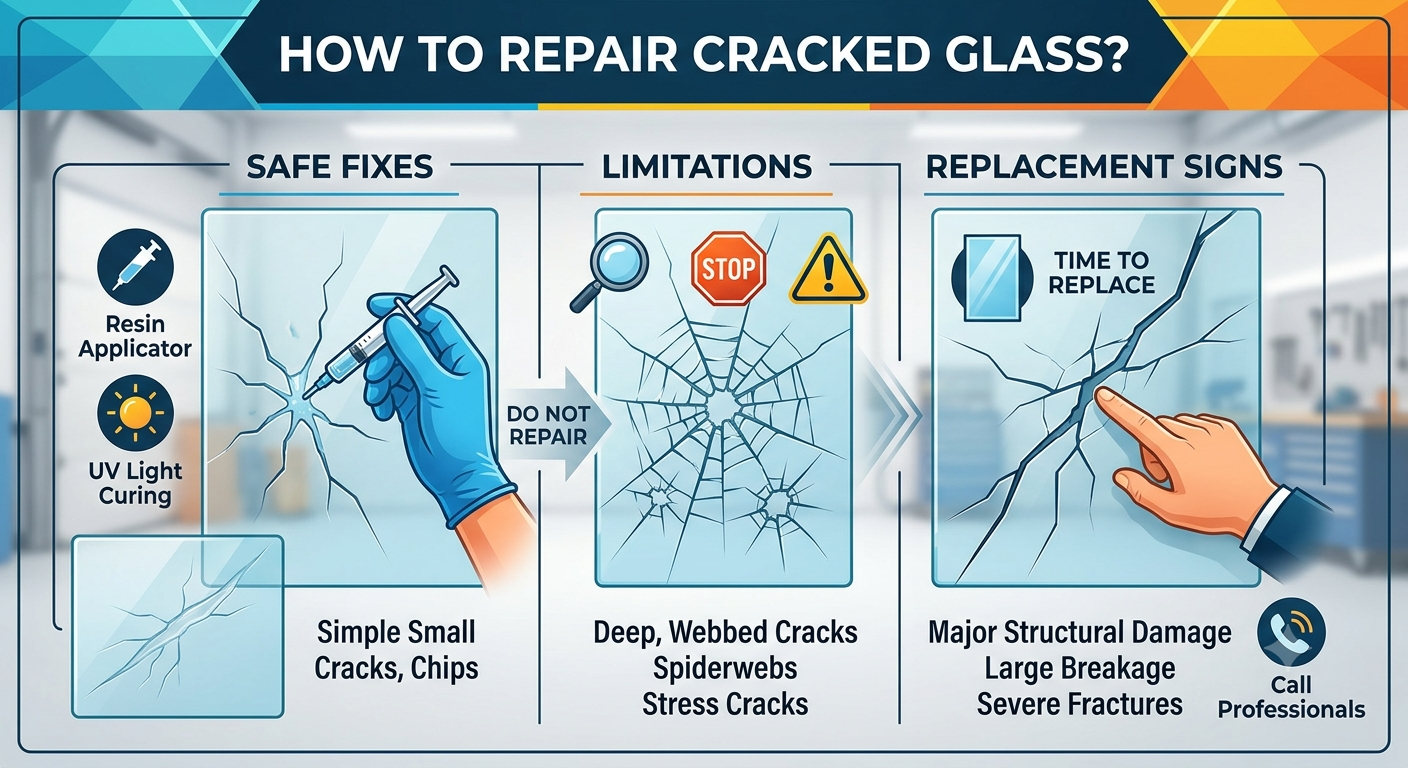
A glass crack repair kit may contain resin intended to fill a small chip or limited defect. Some products are designed specifically for automotive windshields and are unsuitable for architectural glass.
Even when a product is compatible, resin should not be expected to:
- Restore the pane’s original structural capacity
- Recreate factory tempering
- Repair a failed insulated-glass seal
- Restore damaged Low-E or reflective coatings
- Return safety glass to a tested condition
- Correct frame pressure or installation problems
- Make a growing or edge-connected crack permanently safe
Never use a kit unless its manufacturer expressly identifies the exact glass type and application. A kit should not substitute for professional evaluation of windows, doors, shower glass, railings, tabletops, skylights, storefronts, or other safety-sensitive glazing.
How to Stop Glass Crack From Spreading Without Taking Risks
No temporary method can guarantee that a crack will stop growing. The safest approach is to reduce stress on the pane while arranging professional service.
- Stop operating the damaged unit. Do not open a cracked window, slide a damaged door, or move a glass panel.
- Reduce vibration. Avoid slamming nearby doors or performing construction work that shakes the frame.
- Prevent sudden temperature changes. Do not apply hot water, ice, a hair dryer, a heat gun, or a portable heater directly to the glass.
- Avoid pressure and cleaning. Do not push on the pane or scrub around the crack.
- Control access. Keep people and objects away from both sides of the glass whenever possible.
- Arrange prompt assessment. Exterior glazing, loose pieces, spreading cracks, and damage affecting security or weather protection require timely attention.
A temporary glass crack fix is a risk-control measure, not a permanent repair. If the opening needs stabilization, covering, or boarding, have a qualified professional select a method appropriate for the frame and glass condition.
Online suggestions such as drilling the end of a crack, forcing adhesive into it, or removing loose pieces can cause sudden breakage and serious injury.
When to Replace Cracked Window Glass
Replacement is generally the right choice when a crack affects the pane’s integrity, performance, or safety. Signs that it is time to replace cracked window glass include:
- The crack reaches an edge of the pane.
- It has grown or developed multiple branches.
- The damage passes through the glass.
- The pane moves, rattles, bows, or separates from the frame.
- Pieces are loose or beginning to fall.
- Moisture, fogging, or residue appears between insulated panes.
- The window allows noticeable air or water infiltration.
- The damaged glass is tempered, laminated, or required for a safety-sensitive location.
- The crack affects a door, shower enclosure, railing, skylight, tabletop, storefront, or overhead panel.
- The opening no longer provides dependable security or weather protection.
- Similar cracks have occurred repeatedly, suggesting frame pressure or movement.
Does the entire window need replacement?
Not always. If the sash and frame remain sound, a glazier may be able to replace only the glass or sealed insulated glass unit.
A larger window replacement may be appropriate when the frame is deteriorated, distorted, leaking, difficult to operate, or contributing to repeated glass failure. Some products also integrate the glass into a sash or panel that must be replaced as a complete component.
Insulating glass consists of multiple panes that are spaced apart and hermetically sealed as one unit.[4] Consequently, a crack in one pane is not normally corrected by filling the visible line while leaving the sealed assembly in service.
How Different Glass Types Respond to Cracks
Annealed glass
Standard annealed glass can form long, sharp shards when it breaks. A through-crack usually calls for replacement, particularly when it reaches the edge or continues growing.
Tempered glass
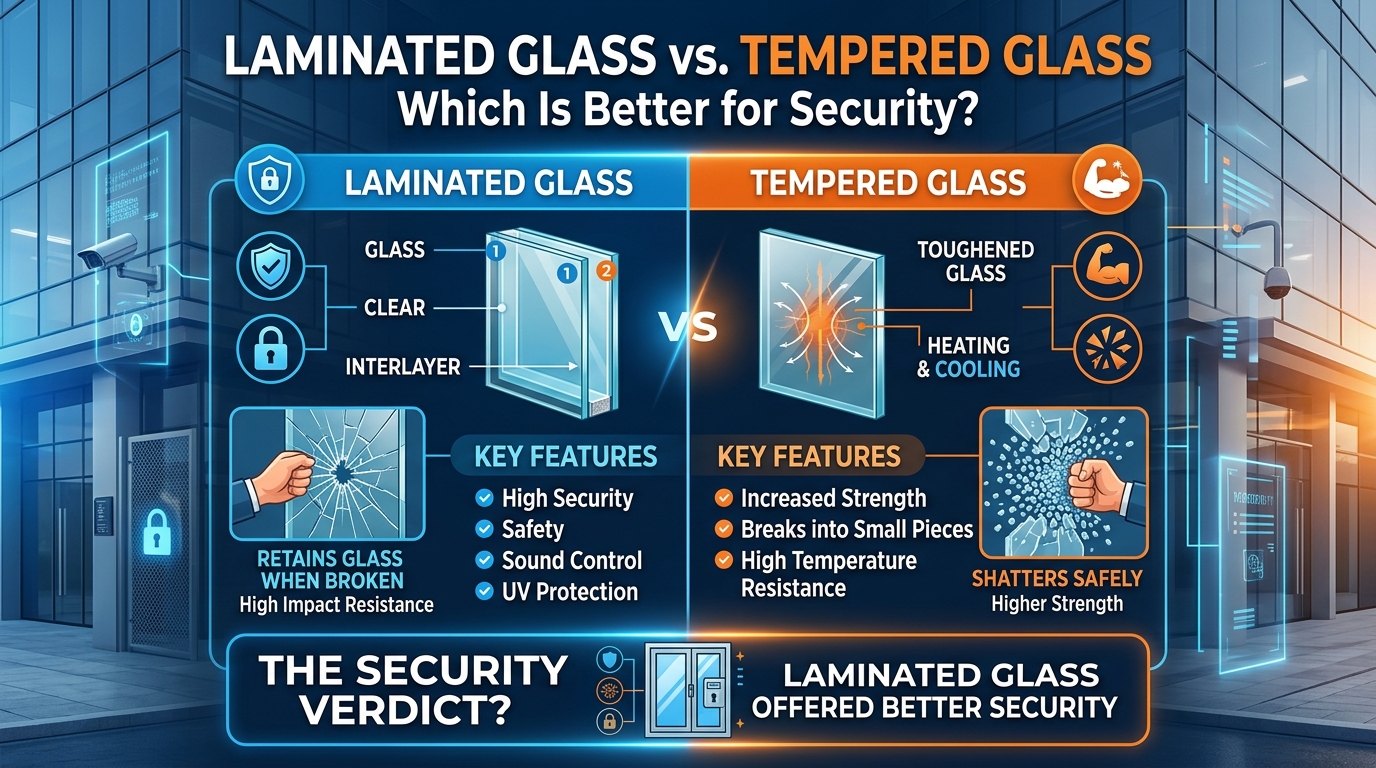
Tempered glass is heat-treated for increased strength and a safer break pattern. Once damaged, it cannot be restored through household resin, cutting, or drilling. Cracked or shattered tempered glass requires replacement with an appropriate product.
Laminated glass
Laminated glass contains an interlayer that helps retain fragments after breakage.[3] Fragment retention can reduce immediate fallout, but it does not mean the cracked panel remains suitable for normal use.
Insulated glass units
A double- or triple-pane window functions as a sealed assembly. A cracked lite can compromise weather protection and may eventually affect the unit’s insulating performance. Replacement usually involves the complete sealed glass unit rather than spot repair.
Mirrors and decorative glass
A cracked mirror can continue spreading and may develop loose, sharp sections. Decorative, etched, patterned, or coated glass may require custom matching, so professional identification is important before ordering replacement material.
Why Glass Cracks
Finding the cause can help prevent repeated damage. Common causes include:
- Direct impact from an object or tool
- Damage to an exposed or poorly protected edge
- Sudden temperature differences across the pane
- Pressure from a distorted or settling frame
- A binding window or door
- Incorrect clearances or installation conditions
- Building movement
- Stress around holes, notches, or hardware
- Existing chips that developed into longer cracks
In Greater Portland, wet conditions can expose deteriorated frames, glazing materials, or drainage problems around windows. Moisture may not be the direct cause of a crack, but surrounding deterioration can affect how the glazing system performs.
A professional should evaluate recurring cracks, cracks without an obvious impact point, and damage associated with a sticking or distorted frame.
Ways to Reduce Future Glass Damage
While no glass is immune to breakage, basic maintenance can reduce avoidable stress:
- Repair windows and doors that stick, slam, or fail to close correctly.
- Keep hard objects and moving furniture away from exposed glass.
- Avoid placing intense heat sources directly beside cold glazing.
- Use only films, coverings, hardware, and cleaning products compatible with the glass manufacturer’s instructions.
- Maintain frames, seals, drainage paths, and surrounding building materials.
- Request an assessment when a chip, edge defect, loose panel, or unexplained stress line first appears.
- Use professionally specified glass for doors, showers, railings, and other safety-sensitive applications.
Applicable product requirements and safety-glazing locations depend on the property, application, and governing regulations. Product selection should be verified for the specific project rather than assumed from general guidance.
What Affects Cracked Glass Replacement Costs?
Replacement costs vary too widely for a general article to provide a dependable estimate. Important factors include:
- Glass dimensions and thickness
- Single-pane or insulated construction
- Tempered, laminated, annealed, or specialty glass
- Low-E coatings, tinting, patterns, or decorative finishes
- Custom shapes, holes, notches, and polished edges
- Accessibility and installation location
- Condition of the sash, frame, seals, and hardware
- Need for temporary site protection
- Residential, commercial, or custom glazing requirements
Anyone researching how to repair cracked glass should obtain a project-specific assessment. A photograph may help with initial planning, but final measurements and product suitability may require an on-site inspection.
What to Expect From a Professional Glass Assessment
A professional cracked glass repair assessment typically involves:
- Identifying the glass type and intended application
- Evaluating the crack, edges, frame, seals, and surrounding materials
- Checking for movement, water entry, or operational problems
- Determining whether glass-only, sealed-unit, sash, panel, or full-frame replacement is appropriate
- Measuring the opening and identifying coatings, patterns, thickness, and required fabrication
- Explaining temporary protection and replacement options
- Providing a project-specific estimate
Manufacturers recommend protective equipment when trained personnel handle broken glass.[5] Property owners should avoid removing broken or heavy glass unless they have the required training and equipment.
Frequently Asked Questions
- Can cracked glass be repaired?
Minor surface damage may be treatable, but a through-crack in architectural glass usually requires replacement.
- How do you fix cracked glass safely?
Keep the area undisturbed, prevent access, and have a glass professional determine the correct replacement approach.
- Can super glue permanently fix a glass crack?
No, household adhesive does not restore the pane’s original strength, seal, or safety performance.
- Will resin make cracked window glass strong again?
Resin may improve the appearance of certain limited defects, but it does not restore the original structural condition.
- How can I keep a window crack from getting longer?
Reduce movement, vibration, pressure, and sudden temperature changes while arranging prompt professional service.
- Do I have to replace the entire window?
Not necessarily, because the glass or sealed unit may be replaceable when the sash and frame remain serviceable.
- Can one pane of a double-pane window be repaired?
A cracked lite usually requires replacement of the complete sealed insulated glass unit.
- Can tempered glass be repaired after it cracks?
No, damaged tempered glass should be replaced rather than cut, drilled, or filled.
- How quickly should cracked glass be inspected?
Seek immediate help for loose, spreading, overhead, door, shower, railing, or security-related damage and prompt assessment for any through-crack.
Conclusion
Most architectural glass cracks cannot be restored to their original condition with glue or resin. Safe decision-making depends on the glass type, crack pattern, location, frame condition, and function of the opening. Avoid disturbing damaged glass, use temporary measures only for risk control, and rely on a professional assessment to determine whether glass-only or more extensive replacement is appropriate.
Professional Glass Assistance in Portland, Oregon
Readers who need residential, commercial, or custom glass repair, replacement, or installation services can contact The Glass People in Portland, Oregon. Their team can assess the damaged glazing, explain suitable options, and provide expert guidance and a project estimate based on the specific property and application.
General Information Disclaimer:
This article is provided for general informational purposes only. Glass requirements, product suitability, project costs, installation methods, and applicable building or safety codes may vary by property and location.
References Used
- U.S. Consumer Product Safety Commission — Safety Standard for Architectural Glazing Materials, 16 CFR Part 1201.
- Vitro Architectural Glass — TD-124: Fabrication of Heat-Treated Glass.
- National Glass Association — Glass Technical Paper FB37-12 (2019): Laminated Glass Use in Furniture.
- Vitro Glass Education Center — Glossary: Insulating Glass.
- Andersen Windows & Doors — General Maintenance and Safety Tips for Andersen Windows and Patio Doors.