How to Repair a Chipped Glass Edge Before the Damage Gets Worse
A small chip along a glass edge can look harmless, but the edge is one of the most stress-sensitive parts of a pane. Pressure from a frame, door movement, impact, or temperature changes can turn an existing weak point into a longer crack or sudden break. Prompt chipped glass repair starts with protecting the area and identifying the glass—not reaching immediately for sandpaper, resin, or a do-it-yourself kit.
Some shallow defects in non-safety annealed glass may be suitable for professional polishing. Tempered, heat-strengthened, laminated, insulated, structural, and safety glazing require a different approach. This guide explains when repair may be possible and when replacement is the responsible solution.
Why a Chipped Glass Edge Needs Prompt Attention
Glass carries and transfers stress across its surface and perimeter. A chip removes material and creates an irregular point where stress can concentrate. The National Glass Association notes that edge damage or poor edge quality can significantly reduce glass strength and may offset the benefits of heat treatment.[1]
Not every chip will spread, but waiting can expose the weak point to repeated loads. Common sources of additional stress include:
- A sliding or swinging door that vibrates or closes hard
- Glass touching metal, screws, tile, stone, or another hard material
- A frame that is tight, twisted, or improperly supported
- Hardware pressure near the damaged area
- Direct impact during cleaning, construction, or furniture movement
- Uneven heating, cooling, or strong sunlight across the pane
- Wind and building movement on exterior glazing
Some edge damage causes immediate breakage, while other damage can lead to fracture later.[2] That uncertainty makes early professional assessment important.
What to Do Immediately After Finding a Chipped Edge
The safest first response is to prevent contact and avoid adding stress. Do not remove a large pane, loosen hardware, or attempt to reshape the edge yourself.
- Restrict access to the area. Keep people and pets away. If the pane is loose, moving, or cracked, stop using the door, fixture, or surrounding area.
- Avoid touching or testing the chip. Do not run a finger over it, press on the pane, flex the glass, or tap nearby to see whether it feels stable.
- Pause vibration and impact. Stop operating the affected door, partition, or panel, and remove loads from chipped tabletops or shelves.
- Do not tighten nearby hardware. Extra pressure from clamps, fasteners, hinges, or brackets may increase stress. A professional should inspect the glass and its supports before adjustments are made.
- Document it from a safe distance. Photograph the pane, chip, frame, and nearby hardware, and note any recent impact or construction work.
- Arrange a glass assessment promptly. Treat the issue as urgent when the glass is overhead, load-bearing, exposed to human impact, or used in a door, shower enclosure, railing, storefront, entrance, or other high-traffic location.
These steps may reduce immediate exposure, but they do not repair the glass or guarantee that a crack will not form.
Can Chipped Glass Be Repaired?
Sometimes—but the answer depends more on the glass type and application than on how small the chip appears. Refinishing must not compromise the pane’s dimensions, support, appearance, or intended performance.
When professional glass edge repair may be possible
A glass specialist may consider controlled edge grinding and glass edge polishing when all of the following are true:
- The pane is confirmed to be annealed glass rather than tempered or heat-strengthened glass.
- The chip is shallow, localized, and free of radiating cracks.
- The glass is a low-risk decorative or furniture component.
- The damaged edge is accessible without unsafe removal or handling.
- Enough material can remain after refinishing to preserve the needed fit and edge profile.
- The pane is not serving as safety glazing, structural glazing, a guard, an overhead panel, or another critical component.
Glass edge repair is not simply a matter of filling the missing area. Professional edgework removes damaged material, forms a consistent edge, and preserves the required fit.
When replacement is usually the safer choice
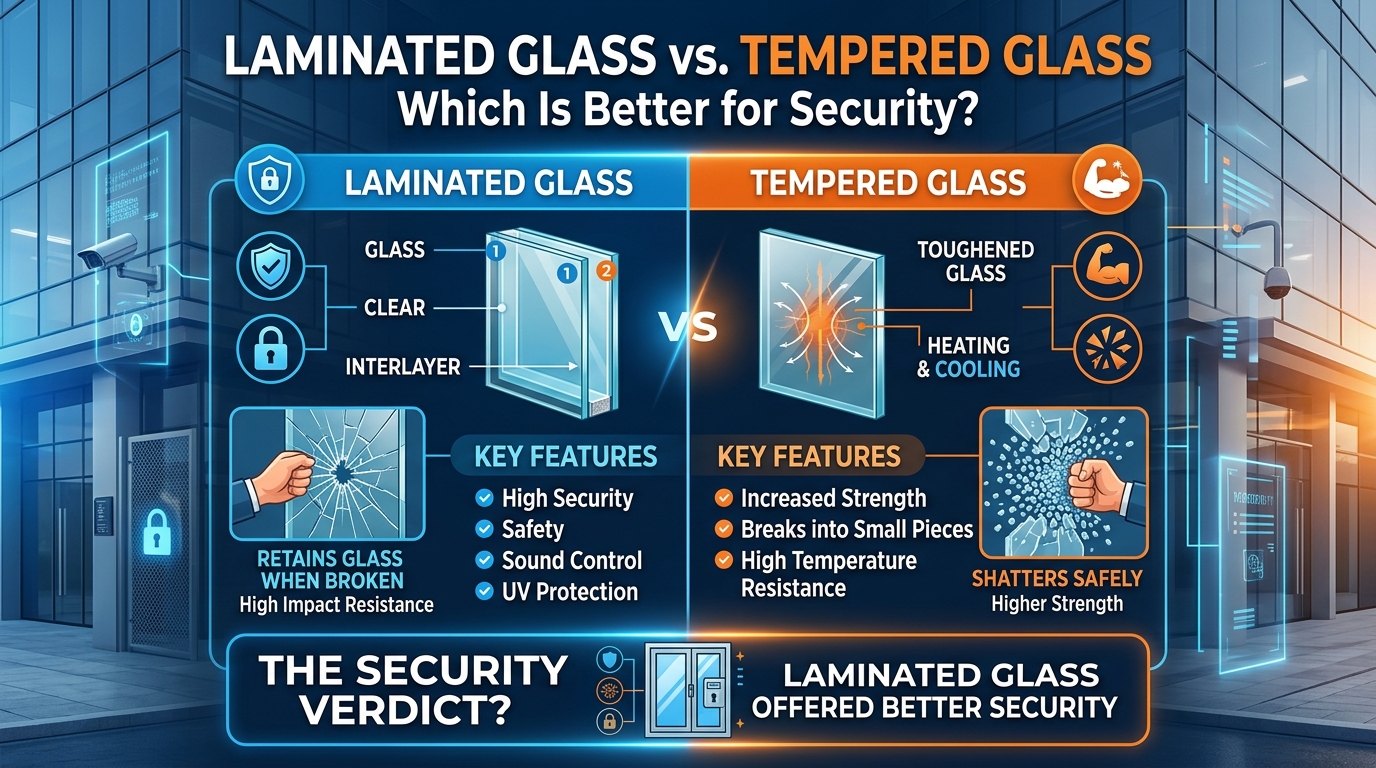
Chipped glass replacement is generally favored when the pane is tempered or heat-strengthened, contains a crack, supports a load, protects a fall, or sits where people could strike it. Replacement is also commonly appropriate when damage reaches an insulated glass unit’s edge seal or affects laminated glass near an exposed interlayer.
Federal safety requirements apply to architectural glazing in specified applications, and project-specific building or safety requirements may also govern the replacement glass.[3] The correct product must be determined for the actual opening and use rather than assumed from appearance alone.
Chipped Glass Repair Starts With the Right Assessment
Knowing how to repair chipped glass begins with understanding what was damaged and why. A qualified glass professional typically evaluates the following factors before recommending polishing, another limited remedy, or replacement.
1. Glass type and construction
Annealed, tempered, heat-strengthened, laminated, coated, mirrored, and insulated glass behave differently. A safety mark may help identify some products, but its absence does not reliably establish the glass type.
Tempered and heat-strengthened glass must receive cutting, drilling, notching, and edge treatment before heat processing. Industry guidance warns that later edge grinding or similar alterations can cause premature failure.[4] A chipped tempered edge should therefore not be treated as a candidate for on-site sanding or polishing.
2. Chip shape, depth, and location
A shallow flake differs from a deep V-shaped chip. The professional will look for branching cracks, crushed material, sharp points, and damage on both faces.
Location also matters. Damage near a corner, hole, notch, hinge, clamp, fastener, or setting block may be subject to concentrated loads. A chip hidden inside a frame can signal contact between the glass and a hard component.
3. The glass application
Application changes the decision: a cabinet shelf and a frameless shower door do not carry the same consequences. Doors, showers, railings, overhead glazing, storefronts, and large partitions require especially cautious evaluation.
4. Frame, hardware, and installation condition
The assessment should check for tight clearances, displaced setting blocks, protruding fasteners, binding doors, uneven support, and direct glass-to-metal contact that could damage a replacement.
5. Coatings, seals, and finish requirements
Grinding can change the dimensions and appearance of an edge. It can also affect a mirror backing, decorative finish, surface coating, laminate edge, or insulating-glass seal. If the work would disturb one of these components, replacement may provide the more dependable result.
How to Fix a Chipped Glass Edge: Professional Options
After assessment, the practical options usually fall into three categories.
Professional edge smoothing and polishing
For suitable annealed, non-safety glass, a fabricator may remove the damaged portion and produce a uniform arrised, ground, or polished edge.
This is the proper route for anyone asking how to smooth chipped glass edges. Hand sanding an installed pane can enlarge the defect, create fine glass particles, damage coatings, change the edge unevenly, or place unsafe pressure on the glass. Large or installed panes should never be removed or processed by an untrained person.
Limited cosmetic treatment
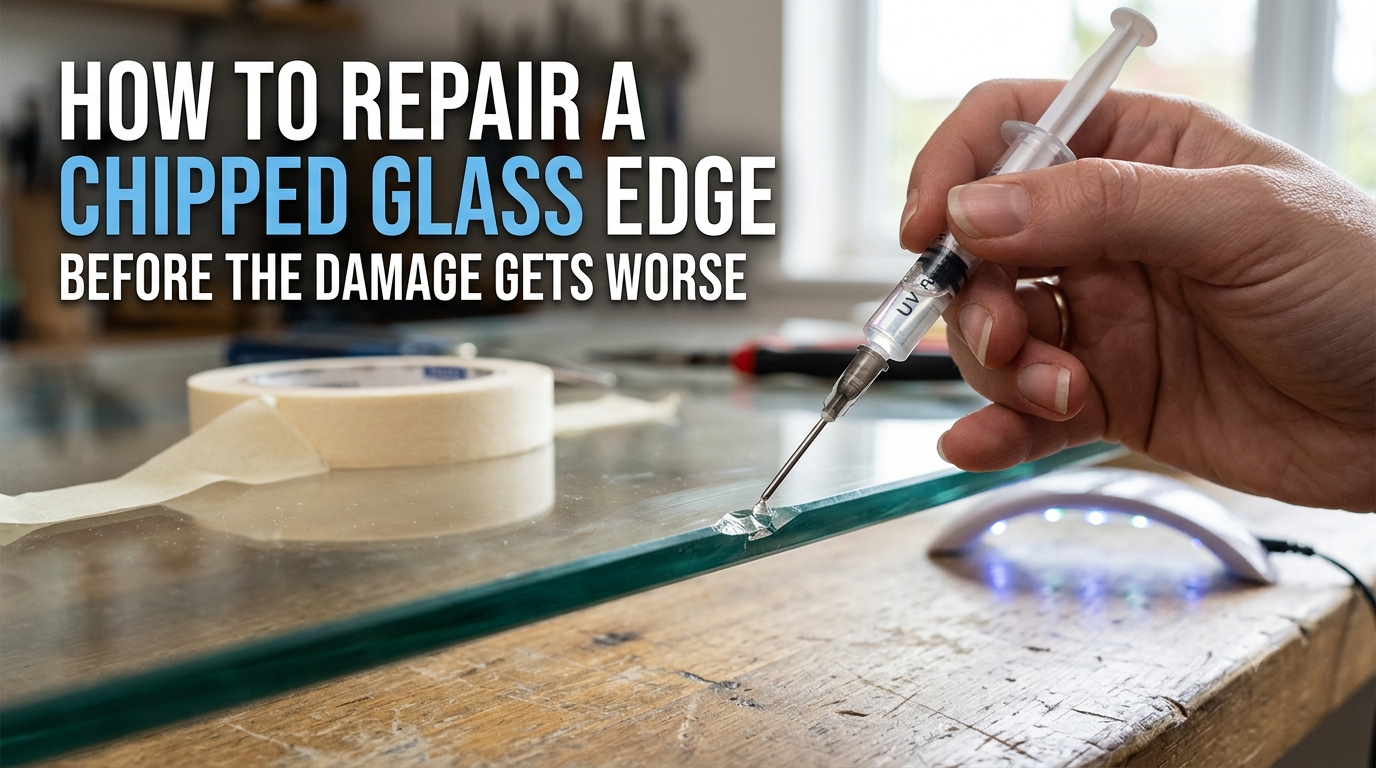
A glass chip repair kit or resin may make a compatible surface flaw less noticeable, but it does not restore missing edge material, original strength, safety status, or structural performance.
Windshield systems are not a general solution for architectural glass; a product intended for automotive laminates may be unsuitable for windows, showers, tabletops, storefronts, mirrors, or insulated units.
Replacement with properly specified glass
Replacement allows the glass, thickness, treatment, finish, and dimensions to be selected for the application. Tempered products require fabrication before tempering, while insulated units are typically replaced as sealed assemblies.
Professional chipped glass repair sometimes ends with a replacement recommendation. That is not a failure to repair; it is a determination that polishing or resin cannot responsibly address the pane’s function and risk.
Repair or Replace? A Practical Comparison
Condition |
Likely professional recommendation |
Main reason |
|
Small, shallow chip on accessible annealed decorative glass |
Edge polishing may be considered |
Controlled refinishing may remove the defect while preserving the item |
|
Chip in tempered or heat-strengthened glass |
Replacement |
Post-treatment edge alteration can cause premature failure |
|
Any chip with a radiating crack |
Replacement |
The damage has progressed beyond a localized edge defect |
|
Shower door, entrance, railing, guard, or overhead glass |
Urgent assessment; replacement often appropriate |
Human-impact, fall, or fallout consequences require a cautious approach |
|
Chipped edge on a double- or triple-pane sealed unit |
Replace the affected glass unit |
Edgework can disturb the perimeter seal and unit construction |
|
Laminated glass with edge or interlayer damage |
Specialist assessment; replacement may be required |
Damage can affect retention, appearance, or moisture protection |
|
Mirror or coated glass with finish damage |
Case-specific; replacement may look better |
Grinding or filling may not restore the backing or coating |
|
Repeated chipping near hardware or a frame |
Correct the support issue and replace or assess the glass |
The underlying contact or alignment problem may damage new glass |
This comparison is a starting point, not a substitute for inspecting the actual pane and installation.
How to Stop Chipped Glass From Cracking
There is no household treatment that can guarantee a chip will not become a crack. The goal is to avoid new stress until a professional can assess it.
- Keep the damaged glass out of service when movement or loading is involved.
- Prevent people and objects from contacting the chipped edge.
- Avoid abrupt heating or cooling near the pane.
- Do not place hot items on damaged glass or direct a heater at it.
- Do not add clamps, screws, adhesive patches, or extra hardware pressure.
- Do not attempt to cut, drill, grind, or polish installed glass.
- Address door binding, frame contact, loose hardware, or construction activity nearby.
- Schedule inspection rather than monitoring a high-risk pane indefinitely.
Portland-area exterior glass also experiences wet weather, wind, and changing surface temperatures. Those conditions make sound edge clearance, drainage, framing, and installation especially important. A professional should examine both the chip and the surrounding system.
What Affects the Cost of Glass Edge Repair or Replacement?
It is not responsible to estimate a project from the chip alone. Cost depends on the complete glass configuration and the access needed to work safely. Factors may include:
- Glass type, thickness, tint, pattern, coating, and edge finish
- Pane dimensions and shape
- Tempering, lamination, or insulating-glass construction
- Holes, notches, cutouts, or custom fabrication
- Frame and hardware condition
- Interior, exterior, elevated, or restricted access
- Removal, disposal, installation, and site protection needs
- Whether surrounding components require correction
- Matching adjacent glass in an existing property
Clear photos and approximate dimensions can help begin the conversation, but a final recommendation or project estimate may require an on-site assessment.
Frequently Asked Questions
1. Can chipped glass be repaired?
Some shallow chips in low-risk annealed glass may be professionally polished, while safety, tempered, structural, cracked, or sealed glass often requires replacement.
2. How do you fix a chipped glass edge safely?
Restrict access, stop using the affected item, avoid touching the chip, and have a glass professional identify the glass and assess the damage.
3. Can I sand a chipped glass edge myself?
Do not sand installed, heavy, tempered, safety, or unidentified glass because the process can add stress, spread damage, and create sharp particles.
4. Will resin keep a glass chip from cracking?
Resin may improve the appearance of certain compatible surface defects, but it does not guarantee crack prevention or restore verified glass strength.
5. Can a chipped tempered glass edge be polished?
Tempered glass should not receive edge grinding after tempering, so a chipped tempered pane generally calls for replacement.
6. Is a tiny edge chip dangerous?
Size alone does not determine risk because glass type, chip depth, location, support, and application all affect the likelihood and consequences of breakage.
7. Does a chipped double-pane window need full window replacement?
The affected insulated glass unit may need replacement, but the existing frame may be reusable if it is sound and suitable.
8. How quickly should chipped glass be inspected?
Arrange prompt inspection, and treat damage as urgent when the pane is cracked, loose, moving, overhead, structural, or exposed to human impact.
9. What should I provide when requesting an estimate?
Share safe-distance photos, approximate dimensions, the glass location and use, visible markings, and details about any impact, movement, or hardware problem.
Conclusion
A chipped glass edge deserves more than a cosmetic cover-up. Protect the area, avoid adding pressure, and let a professional determine whether controlled polishing is appropriate or chipped glass replacement is the safer solution. Acting early also creates an opportunity to correct frame, hardware, or support conditions before they damage the glass further.
Professional Glass Guidance in Portland, Oregon
Property owners, managers, contractors, and developers who need professional residential, commercial, or custom glass repair, replacement, or installation services can contact The Glass People in Portland, Oregon. Their team can evaluate the glass and surrounding system, explain suitable options, and provide expert guidance and a project estimate based on the actual site conditions.
General Information Disclaimer
This article is provided for general informational purposes only. Glass requirements, product suitability, project costs, installation methods, and applicable building or safety codes may vary by property and location.
References Used
- National Glass Association, “Recommended Applications for Heat-Treated Glass,” Glass Technical Paper FB45-14 (2019)
- Pilkington, “When Tough Is Not Enough: Solving the Mystery”
- Electronic Code of Federal Regulations, 16 CFR Part 1201—Safety Standard for Architectural Glazing Materials
- Guardian Glass, Residential Glass Technical Reference Guide