
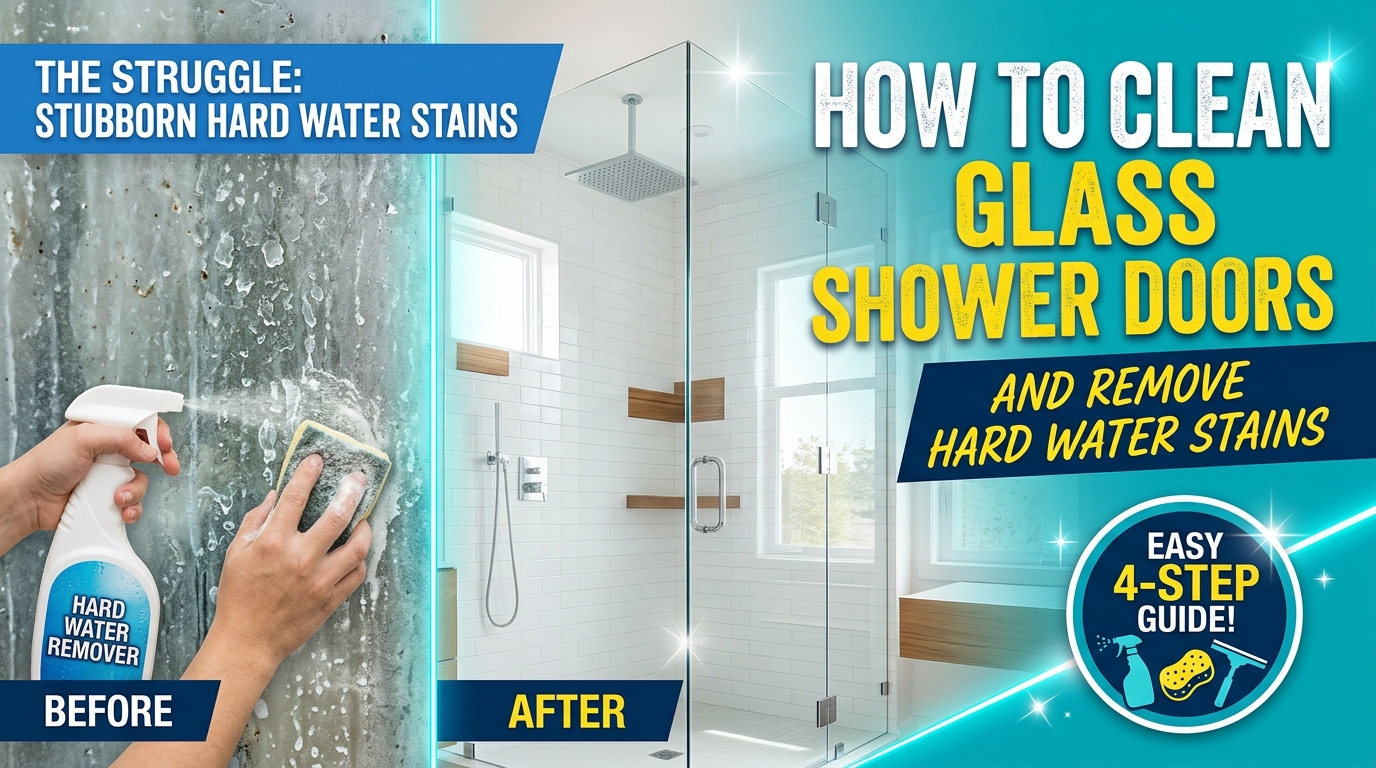
How to Clean Glass Shower Doors and Remove Hard Water Stains
Clear shower glass can make an entire bathroom feel brighter and better maintained. Unfortunately, dried water, soap residue, body oils, and cleaning-product buildup can quickly leave the surface cloudy. Learning how to clean glass shower doors correctly helps restore their appearance without scratching the glass, damaging protective coatings, or discoloring nearby hardware.
The right method depends on what is covering the glass and whether the door has a factory-applied or aftermarket protective coating. Begin with the mildest suitable cleaner, follow the enclosure manufacturer’s care instructions, and only move to a stronger product when necessary.
Why Do Glass Shower Doors Become Cloudy?
Water hardness refers primarily to the amount of dissolved calcium and magnesium in water. When droplets evaporate, minerals and other dissolved material can remain on the surface. Hard-water minerals may also react with soap and contribute to the film commonly called soap scum.[1]
Shower door cloudiness usually comes from one or more of the following:
- Mineral deposits left by drying water
- Soap scum, shampoo, and body oils
- Cleaner residue that was not rinsed away
- Mildew around seals, tracks, or caulking
- Scratches, coating deterioration, or changes to the glass surface
Shower glass water spots may look similar to permanent surface damage. If a mark does not respond to an appropriate cleaner, do not immediately reach for a sharper tool or more abrasive product.
A Portland Water Note
The Portland Water Bureau reports that Bull Run water, the city’s primary supply, is soft, while Portland’s groundwater supply is moderately hard. Water conditions elsewhere in the Greater Portland area may differ by utility, building plumbing, or private well.[2] Regularly drying the glass remains helpful regardless of the water source.
Before You Begin Cleaning
First, check whether the glass has a protective treatment. Coated glass may require specific products, and using an unapproved cleaner could affect its performance or applicable warranty terms.
Inspect the entire enclosure before cleaning. If the glass is cracked, chipped, loose, or separating from its hardware, stop using the shower and contact a glass professional. Do not press, scrub, remove, or attempt to repair a damaged panel.
Take these precautions before applying any cleaner:
- Ventilate the bathroom.
- Wear gloves if the product label recommends them.
- Test the cleaner on a small, inconspicuous area.
- Protect metal finishes, painted surfaces, seals, and adjacent tile.
- Never mix different cleaning products.
The Centers for Disease Control and Prevention advises never mixing household bleach or disinfectants with other cleaners because the combination can release dangerous vapors.[3] In particular, never combine bleach with vinegar, ammonia, or a commercial hard water stain remover.
Supplies for Cleaning Shower Glass
For most routine cleaning, you will need:
- Clean microfiber cloths
- A clean, undamaged soft-blade squeegee
- Mild liquid dish detergent
- Warm water
- A nonabrasive spray bottle
- White vinegar, if approved for the enclosure
- A manufacturer-approved glass shower door cleaner for stubborn buildup
Keep separate cloths for washing and drying. Dirt trapped in a reused cloth or damaged squeegee blade can drag across the glass and leave scratches.
How to Clean Glass Shower Doors Safely
This method works well for routine grime and light water spotting on glass that does not require specialized care.
- Review the care instructions
Confirm which cleaners are approved for the glass, coating, frame, hardware, and surrounding materials. If the instructions are unavailable, start with mild dish detergent and water.
- Rinse the glass
Use warm water to loosen surface residue. Avoid suddenly exposing very cold glass to extremely hot water.
- Apply a mild cleaning solution
Mix a small amount of nonabrasive dish detergent with warm water. Apply it with a microfiber cloth rather than saturating the door’s hardware, seals, or frame.
- Wipe the entire panel
Work from top to bottom using light, overlapping motions. Pay additional attention to the lower portion of the door, where water and soap often collect.
- Rinse thoroughly
Remove all cleaner from the glass. Residual detergent can leave streaks and attract more grime.
- Squeegee and dry
Pull a clean squeegee from top to bottom, wiping its blade between passes. Dry the edges, corners, and hardware with a clean microfiber cloth.
This basic process is often all that is needed to clean shower glass when the enclosure receives regular maintenance. Shower-door manufacturers commonly recommend mild detergent, soft cloths, and routine squeegee use while warning against abrasive tools.[4]
How to Remove Hard Water Stains From Shower Doors
If routine washing leaves white spots or a cloudy mineral film, a diluted vinegar solution may help—provided the glass manufacturer approves it and there are no acid-sensitive materials nearby.
Clean Shower Doors With Vinegar
To remove hard water stains from glass safely:
- Mix one part white vinegar with four parts water.
- Apply the solution to the glass without soaking the hardware or seals.
- Allow it to remain for several minutes, but do not let it dry.
- Wipe with a clean microfiber cloth.
- Rinse thoroughly with clean water.
- Squeegee and dry the glass.
This dilution follows published care guidance from a shower-glass coating manufacturer.[5] However, requirements vary between products. Do not assume vinegar is suitable for every coated, tinted, patterned, or treated panel.
Repeat the process rather than increasing pressure if deposits remain. A suitable commercial hard water stain remover may be the next option, but it must be approved for the glass and nearby finishes and used exactly as its label directs.
Never use vinegar on marble, travertine, limestone, or other acid-sensitive stone. The Natural Stone Institute warns that vinegar and other acids can dull or etch calcareous stone.[6] If these materials surround the shower, use a stone-safe method and prevent runoff.
How to Remove Soap Scum From Shower Glass
Soap scum often feels waxy or greasy rather than chalky. To remove soap scum from shower glass, apply a small amount of mild dish detergent diluted in warm water and wipe it with a microfiber cloth.
For heavier film:
- Let the mild solution remain briefly without drying.
- Wipe the affected area several times using light pressure.
- Rinse thoroughly between applications.
- Dry the glass to check the result before repeating.
Using too much soap can create another film. Start with a small amount and rinse until the glass no longer feels slippery.
Choosing the Best Cleaner for Glass Shower Doors
The best cleaner for glass shower doors is one that removes the specific residue without harming the door’s coating, hardware, seals, or surrounding finishes. No single product is appropriate for every enclosure.
Choose a cleaner based on these priorities:
- Manufacturer approval: Follow the care guide for the installed product.
- Type of buildup: Use mild detergent for oily residue and an approved mineral remover for water deposits.
- Surface compatibility: Check glass, metal, sealant, tile, and stone restrictions.
- Nonabrasive application: Use clean microfiber rather than aggressive scrubbing tools.
- Clear instructions: Follow the required dilution, contact time, ventilation, and rinsing directions.
Test any new glass shower door cleaner in an inconspicuous location. If it changes the sheen, color, or water-beading behavior, stop using it.
Cleaning Mistakes That Can Damage Shower Glass
Avoid these common mistakes:
- Using steel wool, scouring pads, abrasive powders, or gritty creams
- Scraping the glass with razor blades or sharp instruments
- Applying excessive pressure to doors, hinges, or unsupported edges
- Allowing cleaners to dry on the glass or metal
- Using highly acidic or alkaline products without manufacturer approval
- Mixing vinegar, bleach, ammonia, or commercial cleaners
- Assuming a stronger chemical will repair etched or scratched glass
Cleaning can remove deposits, but it cannot reliably correct deep scratches, damaged coatings, loose hardware, or every form of surface alteration.
How to Keep Shower Glass Clean Longer
A simple maintenance schedule reduces the need for aggressive cleaning.
Frequency |
Recommended care |
|
After each shower |
Rinse visible soap residue, squeegee the glass, and dry edges or hardware. |
|
Weekly |
Wash with mild detergent and a microfiber cloth, then rinse and dry. |
|
As needed |
Treat mineral deposits with a manufacturer-approved method. |
|
Periodically |
Inspect seals, hinges, handles, tracks, chips, and coating condition. |
Good bathroom ventilation also helps the enclosure dry more quickly. Keep the door positioned according to the manufacturer’s instructions so air can circulate without placing stress on hinges or seals.
When Professional Glass Service Is the Better Choice
Professional assessment is appropriate when:
- Cloudiness remains after repeated compatible cleaning
- The surface appears etched, scratched, or uneven
- A protective coating seems damaged
- Water leaks around seals or fixed panels
- Hardware is loose, corroded, or pulling away
- The glass has a chip, crack, or damaged edge
- A commercial property requires consistent care across several enclosures
A glass professional can determine whether the problem involves removable buildup, surface restoration, hardware maintenance, resealing, or replacement. An on-site inspection is especially important before making decisions about damaged or heavy glass.
Frequently Asked Questions
1. Can I use straight vinegar on shower doors?
Only if the glass or coating manufacturer approves it and no acid-sensitive stone or finish could be exposed.
2. How often should I clean shower glass?
Squeegee after use and perform a mild, thorough cleaning approximately weekly or as the enclosure’s care guide recommends.
3. Why do water spots return after cleaning?
New droplets leave residue when they dry, so regular squeegee use is essential.
4. Can vinegar remove every hard water stain?
No; some marks may require an approved mineral cleaner or professional evaluation.
5. Is baking soda safe for shower glass?
Its abrasive action may damage some glass coatings or finishes, so use it only when specifically approved.
6. Can I use a razor blade on glass shower doors?
Avoid sharp instruments because they can scratch glass, damage coatings, or create safety risks.
7. How can I clean textured shower glass?
Follow the manufacturer’s instructions and use a soft microfiber cloth with an approved nonabrasive cleaner.
8. What should I do if the glass stays cloudy?
Persistent haze may indicate embedded buildup, scratching, coating damage, or surface alteration that needs professional assessment.
9. Should I clean a chipped or cracked shower door?
No; keep people away from the enclosure and arrange a professional glass inspection.
Conclusion
Knowing how to clean glass shower doors comes down to matching the method to the residue and the enclosure. Mild detergent, clean microfiber, thorough rinsing, and regular drying can handle routine maintenance, while an approved vinegar solution or mineral cleaner may remove stubborn water deposits. Always respect coating instructions and protect nearby stone and metal finishes.
Professional Glass Help in Portland, Oregon
If cleaning does not restore the glass—or the enclosure has damaged panels, worn hardware, leaks, or persistent cloudiness—The Glass People can evaluate the condition and explain the available options. Homeowners, businesses, property managers, contractors, and developers can contact The Glass People for expert guidance and a project estimate for professional residential, commercial, or custom glass repair, replacement, and installation services throughout the Greater Portland area.
General Information Disclaimer:
This article is provided for general informational purposes only. Glass requirements, product suitability, project costs, installation methods, and applicable building or safety codes may vary by property and location.
References Used
- U.S. Geological Survey, “Hardness of Water.”
- Portland Water Bureau, “2026 Drinking Water Quality Report.”
- Centers for Disease Control and Prevention, “Cleaning and Disinfecting with Bleach.”
- Sterling by Kohler, “How to Clean & Care for Bath & Shower Doors.”
- EnduroShield, “Glass Cleaning Essentials” and “Care Instructions.”
- Natural Stone Institute, “Learn About Cleaning Products for Natural Stone.”