Double-Pane Patio Door Glass Replacement: The Complete Guide to Cracked or Foggy Glass
A crack across a patio door or mist trapped between its panes is more than a cosmetic problem. Damaged glass can create a safety concern, while persistent interior fog usually signals seal failure. Patio door glass replacement can often restore a sound door without replacing the entire frame.
The right solution depends on the glass, sash, frame, seals, hardware, and surrounding opening. This guide explains when glass-only replacement works, how professionals approach it, what affects cost, and what Greater Portland property owners should consider before requesting an estimate.
How Double-Pane Patio Door Glass Works
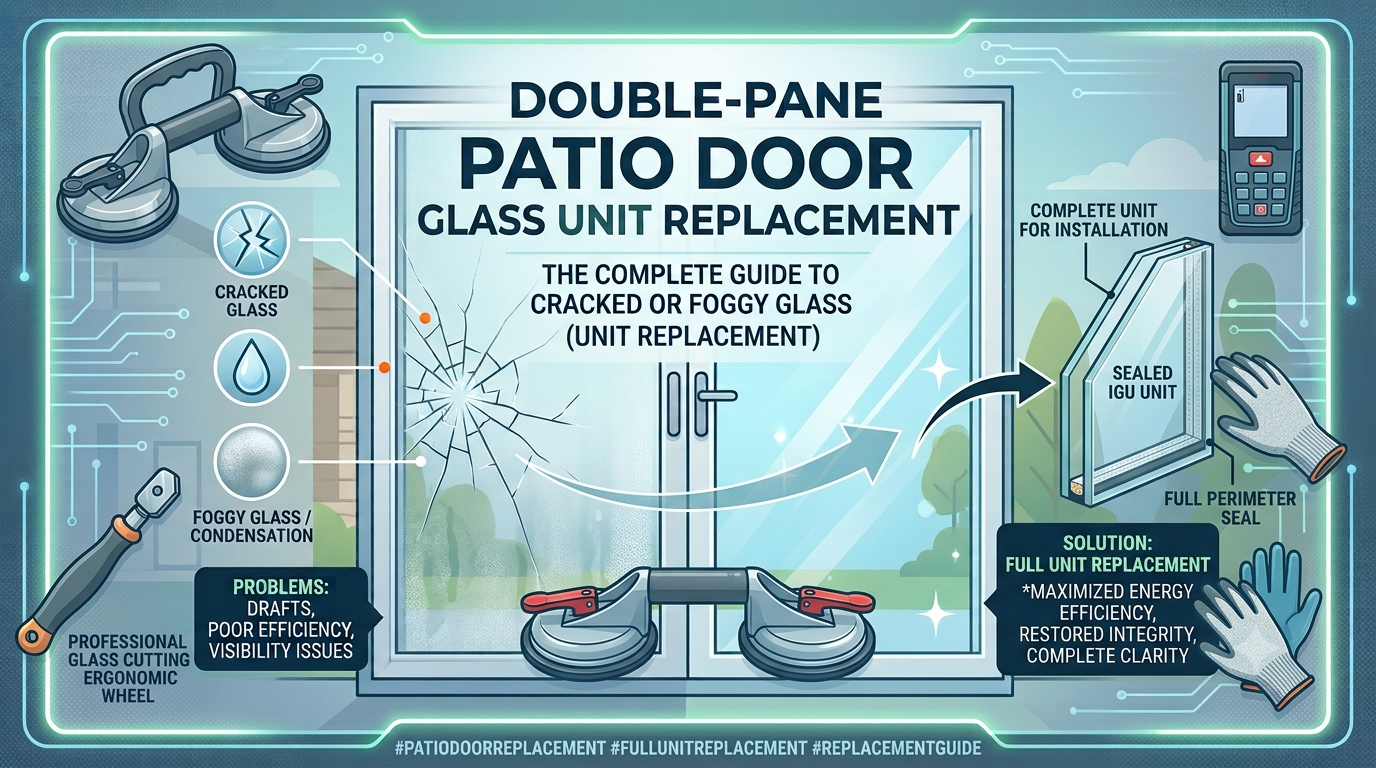
Most modern patio doors use an insulated glass unit, or IGU: two panes separated by a spacer and sealed around the perimeter. The cavity may hold air or insulating gas, and a pane may have a low-emissivity coating.
Because the panes, spacer, and edge seal form one factory-made assembly, replacing one piece does not recreate the unit. Double-pane glass replacement usually means ordering a complete new IGU to the door’s specifications.
Is the Glass Foggy, or Is It Surface Condensation?
Not every cloudy door has a failed seal. Room-side condensation can form when humid indoor air meets cold glass; exterior moisture can also appear with changing weather. If it wipes from an accessible surface, the IGU may be intact.
Foggy patio door glass is a replacement concern when haze, droplets, or deposits remain trapped between the panes. Cleaning exposed surfaces cannot reach this moisture. The National Fenestration Rating Council treats condensation resistance, U-factor, and solar heat gain as separate performance measures.[1] A professional inspection can distinguish IGU failure from humidity, air leakage, drainage, or frame problems.
Common Reasons Patio Door Glass Fails
Cracks and seal failure can have different causes, so an assessment should look beyond the visible symptom.
- Impact damage
Furniture, yard equipment, or debris can chip or break a pane; even a small edge chip may weaken it. - Stress on the glass
Uneven temperature exposure, a distorted sash, or pressure at the glass edge can contribute to cracking. - Insulated seal deterioration
Age, movement, edge moisture, or deteriorated glazing materials can allow vapor into the sealed cavity. - Door or frame movement
A sagging panel, worn rollers, or damaged frame can stress the glass and affect sealing. - Installation or drainage problems
Frame leaks, blocked drainage, or failed exterior sealant may imitate or contribute to glass problems.
When Patio Door Glass Replacement Is the Right Solution
Glass-only replacement often fits when the frame and panel are sound, the door operates correctly, and a compatible IGU can be made. A full sash, panel, or door may be better when damage extends beyond the glass.
Condition |
Glass-only replacement may fit |
Broader door replacement may fit |
|
One pane is cracked |
If the sash and frame are sound |
If impact also damaged the panel |
|
Moisture is between panes |
Often |
If frame or drainage damage is causing repeat failures |
|
Rollers or lock are worn |
With separate hardware work |
If parts are unavailable or the panel is badly worn |
|
Frame is rotted, corroded, distorted, or leaking |
Rarely by itself |
Often |
|
Major energy or design change is wanted |
Limited benefit |
More options |
For sliding door glass replacement, the technician must determine whether the movable panel can be safely reglazed or a replacement panel is required.
Can You Replace Glass in a Patio Door?
Yes, glass can often be replaced while retaining the frame. The new unit must match the door’s construction, dimensions, thickness, safety-glazing requirements, and relevant coating, tint, spacer, or grid details.
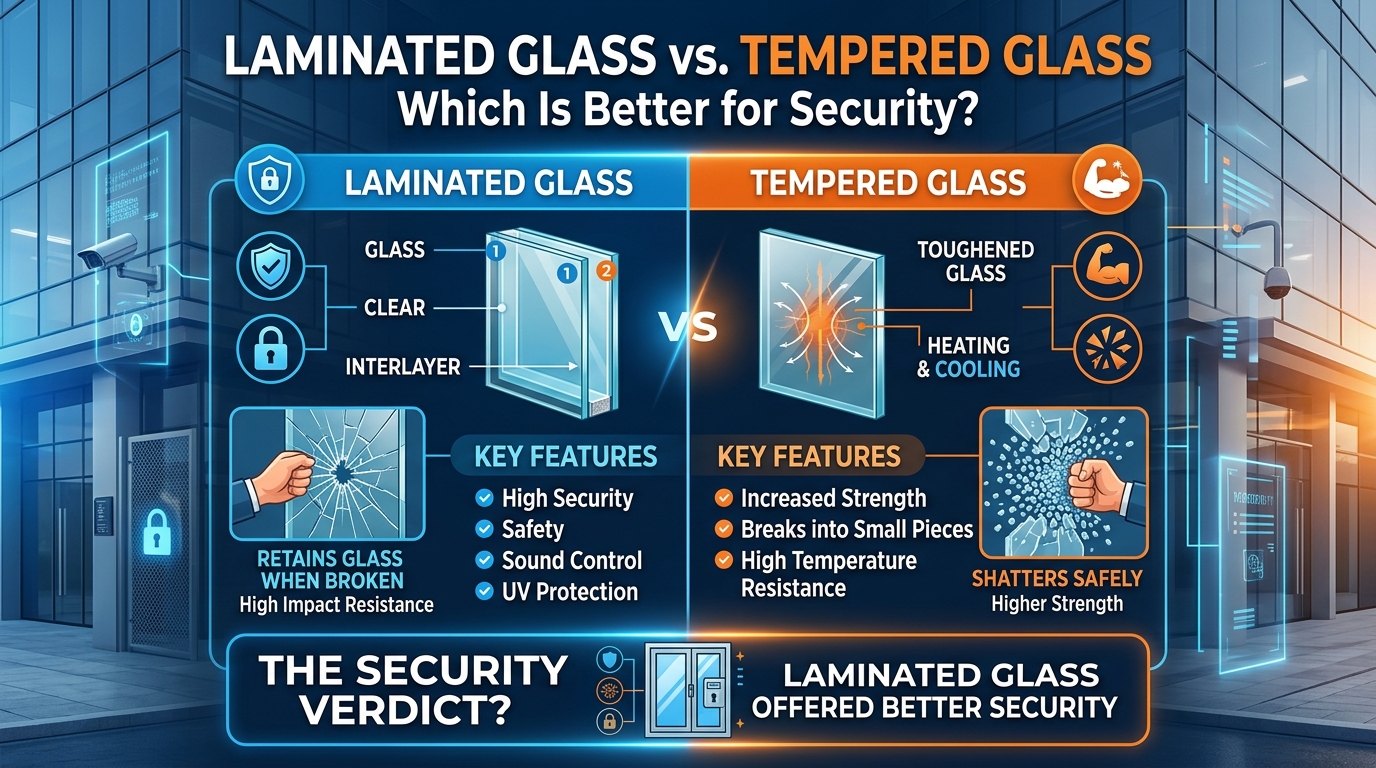
Patio-type sliding glass doors fall within the federal Safety Standard for Architectural Glazing Materials, 16 C.F.R. Part 1201.[2] A professional should identify the required safety-glazing makeup; tempered and laminated products behave differently, and ordinary glass is not an automatic substitute.
How to Replace Double-Pane Patio Door Glass Safely
If you are searching for how to replace double-pane patio door glass, focus on the professional process rather than removing a large, heavy panel yourself. Broken glass can release suddenly, and an intact IGU is difficult to control.
A typical professional process includes:
- Inspecting the damage and the full door system
The technician checks the glass, frame, sash, hardware, drainage, seals, and opening. - Identifying the original glass configuration
Safety marks, manufacturer details, coatings, tint, grids, and thickness help define a compatible replacement. - Taking precise measurements
The glazier measures without requiring the property owner to dismantle the panel. - Fabricating the replacement unit
Double-pane patio-door glass is commonly made to order, and safety glass cannot simply be field-cut to fit. - Removing and installing the glass with suitable equipment
Trained installers control the panel, remove damaged material, set the IGU, and reinstall the sash or panel as needed. - Checking operation and finishing details
The final review covers movement, locking, glass support, seals, and drainage; separate repairs should be documented.
Until cracked glass is assessed, keep people and pets away, avoid pressing on it, and do not operate the door if movement could destabilize the pane. Do not handle fragments or lift the panel.
Choosing the Right Replacement Glass
Before approving patio door glass replacement, discuss the complete specification, not appearance alone.
- Safety glazing: Use a suitable product for the application and applicable requirements.
- Thickness: The IGU must fit the sash pocket and glazing system.
- Low-e coating: Surface placement and compatibility affect performance.
- Gas fill and spacer: Both affect the sealed unit’s construction and thermal behavior.
- Tint or privacy: New glass may not exactly match an aged adjacent panel.
- Internal grids: Document pattern, color, spacing, and alignment before fabrication.
- Door limitations: Some designs require a replacement panel instead of reglazing.
The U.S. Department of Energy identifies pane count, gas fills, coatings, and frames as performance factors.[3] For a complete new door, NFRC labels support whole-product comparisons.[1] For IGU-only work, ask what can be matched; new glass does not automatically create a newly certified rating for the existing door.
What Affects the Cost of Double-Pane Glass Replacement?
There is no responsible universal price. An estimate depends on:
- Glass size, thickness, weight, and required safety makeup
- Coatings, tint, patterns, grids, edge details, and spacer color
- Access, equipment, crew, site protection, and disposal needs
- Sash-removal or rebuilding requirements
- Condition of stops, gaskets, sealants, hardware, and frame
- Matching requirements, fabrication schedule, and separate repairs
A written estimate should identify whether it covers an IGU, sash, panel, or full door and separate glass work from hardware, frame, leak, or finish repairs. The provider should state timelines, exclusions, and any warranty terms.
Portland-Area Considerations
Greater Portland’s wet seasons make it important to distinguish moisture between panes from water entering around a frame or threshold. A failed IGU needs a different remedy than defective flashing, sealant, drainage, or weatherstripping.
Oregon’s replacement-glazing interpretation shows why scope matters: same-size work and alterations to an opening are treated differently, while hazardous glazing remains relevant.[4] The contractor and local authority should verify requirements for the specific property and scope.
How to Choose a Glass Company
Look for a provider that will:
- Inspect the door and confirm measurements, glass makeup, and safety markings
- Evaluate the frame, sash, hardware, seals, and drainage
- Explain whether the proposal covers an IGU, sash, panel, or complete door
- Provide a written estimate with clear inclusions and matching limitations
- Explain site protection, installation, cleanup, and possible local approvals
For commercial or multifamily work, clarify access, tenant coordination, opening security, finish protection, and internal approvals.
Maintenance After Replacement
Maintenance cannot prevent every failure, but it can protect normal operation and reveal problems early.
- Keep tracks clean and address dragging or rough movement.
- Never block designed drainage or weep paths with caulk or debris.
- Inspect accessible gaskets and exterior sealant without disturbing the IGU edge.
- Use cleaning methods approved for coatings or films.
- Avoid aftermarket films that lack glass or door-manufacturer approval.
- Manage excessive indoor humidity when room-side condensation appears.
- Have recurring leaks, frame movement, or hardware problems assessed.
Frequently Asked Questions
1. Can you replace glass in a patio door?
Yes, if the frame and sash are sound and a compatible IGU can be made.
2. Can only one pane of a double-pane patio door be replaced?
Usually not; both panes, the spacer, and perimeter seals form one IGU.
3. What causes fog between patio-door panes?
Persistent internal fog generally means moisture has entered through a failed perimeter seal.
4. Does exterior or interior condensation mean the seal failed?
Not necessarily; accessible surface moisture can result from temperature and humidity.
5. Is it safe to keep using a patio door with cracked glass?
No assumption is safe; restrict access and arrange prompt professional assessment.
6. Will replacing the IGU stop every draft?
No; weatherstripping, frame gaps, alignment, or hardware may cause drafts.
7. Can new glass exactly match the panel beside it?
Sometimes, but age, coatings, tint, and lighting can reveal differences.
8. Is patio-door glass replacement a DIY project?
No; large safety-glass units are heavy, breakable, and installation-dependent.
9. When does the entire patio door need replacement?
Consider it when significant frame, sash, drainage, hardware, or opening damage exists.
Conclusion
Cracked glass, trapped fog, and surface condensation require different responses. A sound door can often be restored with a properly specified insulated glass unit, while structural, drainage, or hardware problems may justify a broader repair or complete replacement. A professional inspection is the most reliable way to define the safe scope and obtain a meaningful estimate.
Professional Glass Help in Portland, Oregon
Readers who need professional residential, commercial, or custom glass repair, replacement, or installation services can contact The Glass People in Portland, Oregon. The team can assess the existing glass and surrounding assembly, explain appropriate project options, and provide expert guidance and a project estimate based on the actual site conditions.