Can You Fix Broken Glass? A Complete Guide to Glass Restoration
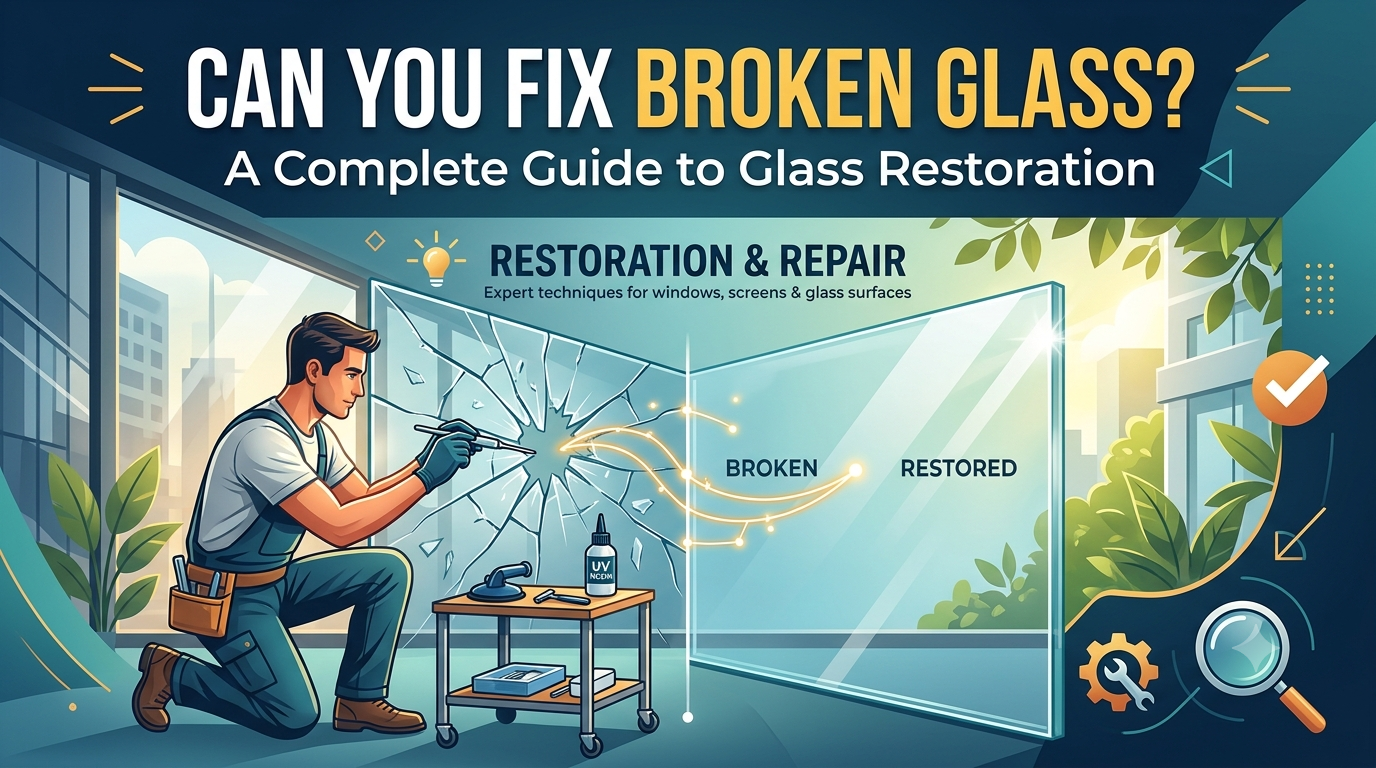
Broken glass does not always mean replacing an entire window, door, or frame. However, a fractured pane usually cannot be returned to its original strength with a simple patch. Broken glass repair may be possible when the problem involves minor surface damage, deteriorated glazing materials, loose hardware, or a damaged frame rather than a crack through the glass itself.
The right solution depends on the type of glass, the extent and location of the damage, and how the glass is used. This guide explains when restoration makes sense, when replacement is safer, what professional service involves, and what Portland property owners should consider before requesting an estimate.
Can Broken Glass Be Repaired?
The short answer is that some glass-related damage can be repaired, but genuinely broken architectural glass usually requires replacement.
A glass professional distinguishes between damage to the pane and damage to the surrounding glazing system. A window may leak or rattle because of failed putty, worn gaskets, damaged seals, loose stops, or a deteriorated sash even though the glass remains intact. Repairing those components can restore the window without replacing the pane.
A crack that passes through a pane presents a different problem. Adhesives may make it look temporarily less noticeable, but they do not reliably restore the pane’s original strength, edge stability, optical quality, or weather resistance. In most residential and commercial applications, replacement is the responsible long-term solution.
Automotive windshield resin repair should not be treated as a model for architectural glass. Windshields use specialized laminated construction, and vehicle repair standards differ from those for windows, doors, shower enclosures, storefronts, and custom glass.
When Is Broken Glass Repair Possible?
Broken glass repair is most practical when the pane remains structurally intact and the damage affects its surface or supporting components.
Light Surface Scratches
Some shallow scratches can be reduced through professional polishing. Whether polishing is appropriate depends on the scratch’s depth, location, glass thickness, coating, and viewing conditions.
Aggressive polishing can create visible distortion or damage a treated surface. Replacement may therefore produce a better result when scratches are deep, extensive, close to an edge, or present on coated, tinted, mirrored, or specialty glass.
Deteriorated Glazing Putty or Seals
Older windows may develop cracked putty, failed caulking, loose glazing beads, or worn gaskets. If the pane is intact, a technician may be able to restore the glazing system while retaining the existing glass.
National Park Service guidance on historic wooden windows discusses preserving intact glass while repairing the sash and renewing appropriate glazing compound [4]. This approach can be particularly valuable when original glass contributes to a building’s historic character.
Loose or Damaged Window Components
Glass may rattle, shift, or leak because the frame, sash, setting materials, or hardware has deteriorated. Correcting the surrounding problem may restore function without replacing an undamaged pane.
The technician should still inspect the glass edges carefully. Hidden edge damage can weaken a pane even when its central surface appears intact.
Minor Damage to Decorative or Historic Glass
Certain stained, leaded, etched, or otherwise distinctive glass may qualify for specialized glass restoration. A conservator might repair joints, reinforce the supporting system, or replace an individual damaged element while preserving the rest of the design.
These projects require case-by-case evaluation. Methods appropriate for a decorative interior panel may not be suitable for an exterior window, door, railing, or other safety-sensitive application.
When Cracked Glass Repair Is Not the Right Solution
Most cracks indicate that the pane has already lost its original integrity. Replacement is generally the safer choice in the following situations.
- The crack passes through the pane.
A through-crack can spread because of temperature changes, frame movement, wind pressure, impact, or normal operation. - The damage reaches an edge.
Glass edges play an important role in overall performance. Edge cracks and chips deserve prompt professional evaluation. - Tempered glass has broken.
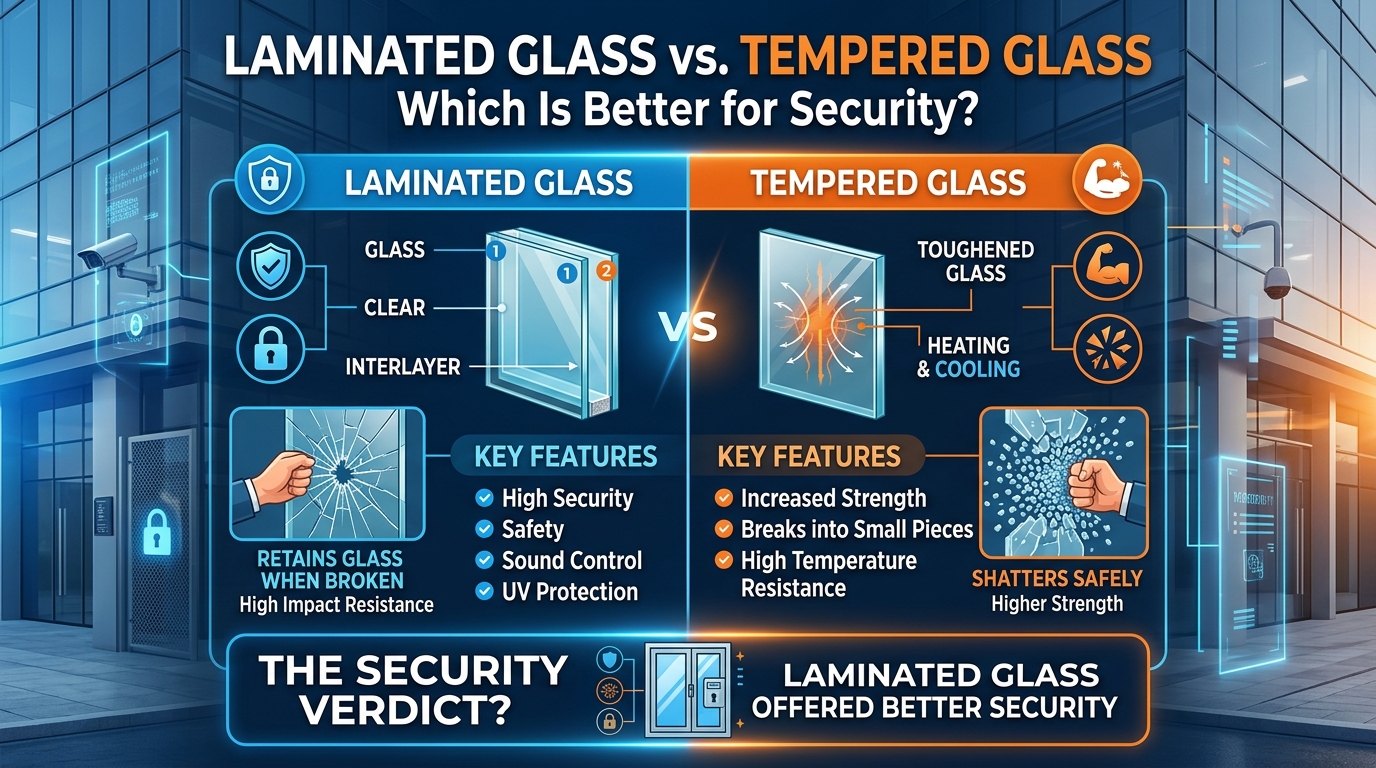
Tempered glass receives heat treatment after fabrication and cannot be cut or refabricated afterward. Once it fractures, the complete pane must be replaced. - A laminated pane is cracked.
The interlayer may hold fragments together, but that does not mean the damaged panel has been restored. A professional must evaluate the application and arrange replacement when necessary. - A sealed glass unit is cracked or fogged internally.
Condensation or fogging between panes can indicate insulated glass unit seal failure [3]. The sealed unit often needs replacement, although the existing sash or frame may still be reusable. - The glass is in a safety-sensitive location.
Doors, shower and bathtub enclosures, and patio-type sliding doors are among the architectural products addressed by the federal safety glazing standard [1]. The replacement must be properly specified for the particular opening. - The opening is large, elevated, or structurally demanding.
Storefronts, overhead glazing, railings, partitions, and large custom panels require application-specific evaluation. A cosmetic glass crack repair should not be used as a substitute for proper replacement.
How Glass Type Affects the Repair Decision
Identifying the existing glass is essential because different products respond to damage in different ways.
Annealed Glass
Annealed glass is commonly used where safety glazing is not required. When it breaks, it can form large, sharp fragments. A cracked annealed pane generally requires broken glass replacement rather than adhesive repair.
Tempered Glass
Tempered glass is heat-treated to change its strength and breakage behavior. It may be used in doors, shower enclosures, tabletops, partitions, and other applications.
A damaged tempered panel cannot be trimmed, drilled, or patched into an undamaged panel. The new glass must be measured and fabricated with required holes, notches, edgework, and other features before tempering.
Laminated Glass
Laminated glass contains an interlayer between glass layers. The interlayer can help retain fragments after breakage, but visible cracks still require professional assessment.
The panel may remain temporarily in place after an impact, yet its intended appearance and performance may have been compromised. Replacement specifications should match the application rather than relying only on overall thickness.
Insulated Glass Units
An insulated glass unit contains two or more panes assembled as a sealed unit. It may also include coatings, spacers, gas fill, decorative grids, or other performance features.
When one pane breaks or the perimeter seal fails, replacing only one layer at the property is generally not a practical restoration of the factory-sealed assembly. A replacement unit can often be installed into the existing sash if the sash and frame remain serviceable.
Coated, Tinted, Mirrored, and Decorative Glass
Low-emissivity coatings, tint, patterns, textures, mirror backing, and decorative finishes affect both appearance and performance. A replacement should be matched as closely as reasonably possible, but differences may remain between new glass and material that has aged or is no longer manufactured.
Fire-Rated and Other Specialty Glazing
Fire-rated, security, acoustic, structural, and other specialty glazing systems have project-specific requirements. They should not be replaced with ordinary glass based only on visual similarity. The complete assembly and its intended use must be evaluated before selecting a product.
Repair or Replace Broken Glass? A Practical Comparison
The following comparison can help property owners understand the likely direction of a professional assessment.
Glass condition |
Repair or restoration may be possible |
Replacement is generally appropriate |
|
Light, isolated surface scratch |
Professional polishing may be considered |
Deep, extensive, or edge-adjacent scratches |
|
Intact pane with deteriorated putty or gaskets |
Renew appropriate glazing materials |
Replace if hidden cracks or severe edge damage are found |
|
Loose intact pane |
Repair supporting components where suitable |
Replace if movement has damaged the pane |
|
Through-crack in a single pane |
Usually no structural repair |
Replace the affected pane |
|
Broken tempered glass |
No |
Replace the complete panel |
|
Cracked laminated glass |
Specialized evaluation may determine temporary handling |
Replacement is commonly required |
|
Fog between insulated panes |
Exterior cleaning will not correct internal seal failure |
Replace the insulated glass unit where appropriate |
|
Damaged historic or decorative glass |
Specialist conservation may preserve original material |
Replace only what cannot be safely retained |
|
Shattered, missing, or unstable glass |
No |
Secure the area and arrange professional replacement |
This table provides general guidance, not a diagnosis. The final decision should account for the opening, glass identification, frame condition, exposure, safety requirements, and intended use.
How to Fix Broken Glass Safely
Searching for how to fix broken glass often produces instructions involving tape, resin, household glue, or do-it-yourself pane removal. These methods should not be treated as permanent architectural repairs.
If a pane is cracked, loose, shattered, or partially missing:
- Keep people, pets, customers, and workers away from the affected area.
- Do not press on the glass or repeatedly operate the damaged window or door.
- Do not attempt to cut, drill, remove, or reinstall the pane without appropriate training and equipment.
- Avoid relying on tape, film, or adhesive to restore strength.
- Arrange professional securing or board-up service when an opening cannot remain safely exposed.
- Provide photographs and basic project details to the glass company without touching unstable material.
A damaged storefront, entrance door, shower enclosure, railing panel, or overhead installation deserves especially prompt attention because movement or public access can increase the risk.
What Professional Glass Restoration Involves
A professional assessment generally follows several major steps.
- Evaluate the immediate condition
The technician identifies unstable glass, exposed edges, loose fragments, access concerns, and any need for temporary securing. - Identify the application and glass type
A bathroom enclosure may require a different solution from a bedroom window, storefront, mirror, tabletop, or decorative partition. - Inspect the complete glazing system
The assessment should include the frame, sash, stops, gaskets, sealants, setting materials, drainage, hardware, and surrounding construction. - Determine whether restoration is appropriate
If the glass remains intact, repairing putty, seals, hardware, or framing may be sufficient. Cracked or shattered panes generally move the project toward replacement. - Document the replacement specifications
Measurements alone are not always enough. Thickness, glass type, coating, tint, pattern, safety designation, edgework, holes, notches, and insulated-unit construction may all matter. - Review project-specific requirements
The contractor may need to consider safety glazing locations, permitting, accessibility, historic review, or other requirements based on the property and scope. - Prepare a project estimate
A reliable estimate should reflect the verified condition and specifications rather than assuming that every broken pane uses standard glass. - Complete installation and final inspection
After fabrication, the new unit is professionally installed, sealed, cleaned, and checked for secure fit and proper operation where applicable.
Glass Restoration Options by Application
Residential Window Glass Repair
Window glass repair may involve replacing a single broken pane, ordering a new insulated glass unit, renewing glazing materials, or repairing a damaged sash. The entire window does not necessarily need replacement if the frame remains sound and compatible with the new glass.
If moisture appears on the room-side surface, the cause may involve indoor humidity or temperature conditions. Moisture trapped between insulated panes points more directly toward a failed sealed unit [3].
Sliding and Patio Doors
Sliding doors combine large glass surfaces with frequently operated hardware. A damaged panel should be evaluated along with rollers, tracks, locks, framing, and alignment. A door that binds or strikes the frame can place additional stress on the glazing.
Federal safety glazing requirements address patio-type sliding glass doors [1]. A replacement should therefore be selected for the actual door system and verified application.
Shower and Bathtub Enclosures
Cracked shower glass should not be patched or repeatedly used while awaiting failure. Enclosure panels often require precise measurements, finished edges, and pre-fabricated holes or notches for hardware.
The federal architectural glazing standard includes bathtub and shower doors and enclosures among its covered products [1]. Professional measurement is particularly important because tempered glass cannot be modified after tempering.
Commercial Storefronts and Entry Systems
Storefront glass affects security, weather protection, accessibility, appearance, and business operations. The assessment may need to coordinate glass replacement with aluminum framing, door hardware, locks, closers, sealants, and temporary securing.
Large commercial panels can also require specialized access and handling. Estimates should account for the complete installation rather than the glass dimensions alone.
Mirrors, Tabletops, Shelves, and Custom Glass
A small imperfection in a decorative mirror is different from an edge chip in a load-bearing shelf or tabletop. Broken tabletops, shelves, and other exposed-edge panels often require full replacement with suitable fabrication and edge finishing.
Mirror discoloration or backing deterioration is not the same as a structural crack. Depending on the condition and value of the piece, replacement or specialist restoration may be considered.
Historic and Decorative Windows
Historic windows deserve an assessment of the complete assembly before replacement is proposed. Intact original panes may sometimes be retained while the sash, putty, weatherstripping, or surrounding materials are repaired [4].
If the glass itself is rare, curved, stained, leaded, or otherwise significant, a restoration specialist may recommend conserving usable material and replacing only irreparable components.
What Affects the Cost of Broken Glass Replacement?
Glass project costs vary too widely for a general article to provide a dependable estimate. Important cost factors include:
- Pane dimensions, thickness, shape, and weight
- Annealed, tempered, laminated, insulated, or specialty construction
- Low-emissivity coatings, tint, texture, patterns, or decorative grids
- Required edgework, holes, cutouts, notches, or custom fabrication
- Condition of the frame, sash, stops, seals, and hardware
- Ground-level, elevated, interior, or restricted access
- Temporary securing or emergency board-up needs
- Number of matching units required
- Availability of older or discontinued glass
- Commercial coordination and site-access requirements
- Potential permitting, design review, or historic-property considerations
A broken glass repair estimate should follow an accurate assessment. Measurements or photographs may support an initial conversation, but they may not reveal coatings, glass composition, hidden frame damage, access limitations, or code-related considerations.
Portland Considerations for Glass Repair and Replacement
Portland properties range from older homes with traditional wooden windows to modern residences, multifamily buildings, offices, storefronts, and custom developments. The best approach should reflect the building’s age, use, construction, and location.
Portland Permitting & Development publishes guidance on window permits and tested and labeled safety glazing in certain locations, including qualifying windows near doors, walking surfaces, stairs, landings, and ramps [2]. These requirements depend on the opening and project conditions, so property owners should not assume that a visually similar pane is automatically suitable.
Changes to window openings or work on properties in design or historic areas may involve considerations beyond a straightforward glass-only replacement [2]. Confirming the project scope early can help prevent incorrect ordering or avoidable delays.
During Portland’s wetter periods, property owners should also watch for deteriorated glazing materials, damaged frames, water entry, and fogging between insulated panes. Internal fogging can indicate seal failure, while exterior moisture may have a different cause. An on-site assessment can distinguish the glass problem from surrounding frame, flashing, or building-envelope concerns.
How to Reduce the Risk of Future Glass Damage
Not every break can be prevented, but basic property maintenance can reduce avoidable problems.
- Address sticking or misaligned windows and doors before repeated impact damages the glazing.
- Repair deteriorated frames, loose stops, failed putty, and worn gaskets promptly.
- Avoid placing hard furniture, equipment, or movable objects where they can strike exposed glass.
- Do not drill, cut, or modify installed glass without confirming its type.
- Use cleaning products and tools appropriate for coated, tinted, decorative, or mirrored surfaces.
- Inspect commercial entrances and sliding doors when operation becomes noisy, rough, or uneven.
- Have recurring moisture, fogging, or leakage professionally evaluated instead of assuming the pane is the only problem.
Frequently Asked Questions
-
Can broken glass be repaired?
Minor surface or glazing-system damage may be repairable, but a pane with a through-crack or shattering generally requires replacement.
-
Can a cracked window be sealed instead of replaced?
Sealant may address a surrounding joint, but it does not restore the strength of cracked window glass.
-
Can tempered glass be repaired?
No; damaged tempered glass requires complete panel replacement.
-
Can a foggy double-pane window be repaired?
Fog between panes commonly indicates seal failure, so the insulated glass unit may need replacement even when the frame remains usable.
-
Does window film fix a glass crack?
No; film may hold some fragments temporarily, but it does not restore the pane’s original strength or performance.
-
Must the entire window be replaced when one pane breaks?
Not always; a professional may be able to replace the pane or insulated glass unit while retaining a serviceable frame or sash.
-
Can historic window glass be preserved?
Intact historic glass can sometimes be retained while surrounding putty, sash, seals, or supporting components are restored.
-
How long does broken glass replacement take?
Timing depends on glass type, dimensions, fabrication requirements, access, material availability, and the condition of the opening.
-
Should cracked glass be replaced immediately?
Glass that is unstable, exposed, safety-sensitive, or accessible to people should receive prompt professional attention.
Conclusion
Glass restoration can solve surface, seal, frame, hardware, and historic-preservation problems when the pane remains intact. Once glass develops a through-crack, shatters, loses an insulated seal, or becomes unsafe for its application, replacement is usually the more dependable solution.
The correct choice comes from identifying the glass, inspecting the full glazing system, and considering the opening’s location and purpose. A professional assessment can determine whether the project calls for restoration, glass-only replacement, a new insulated unit, or more extensive window or door work.
Professional Glass Help in Portland, Oregon
Property owners who need professional residential, commercial, or custom glass repair, replacement, or installation services can contact The Glass People in Portland, Oregon. Their team can assess the affected glass, explain suitable options, and prepare a project estimate based on the property, application, and verified scope of work.
General Information Disclaimer
This article is provided for general informational purposes only. Glass requirements, product suitability, project costs, installation methods, and applicable building or safety codes may vary by property and location.
References Used
- U.S. Consumer Product Safety Commission — Safety Standard for Architectural Glazing Materials, 16 CFR Part 1201.
- Portland Permitting & Development — Adding Windows or Replacing Windows and associated residential window permitting guidance.
- U.S. Department of Energy, Building America — Wood Window Repair, Rehabilitation, and Replacement.
- National Park Service — Preservation Brief 9: The Repair of Historic Wooden Windows.